June Blooms

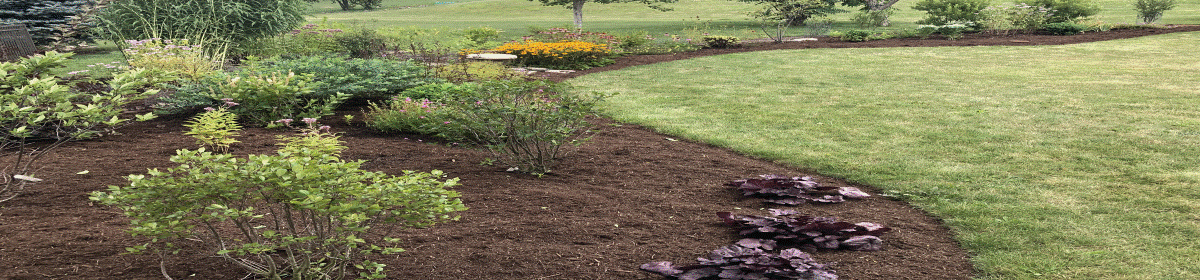
One of the great features of the native garden is that each month new plants come into bloom. Not everything blooms at once, nor do all plants stay in bloom throughout the summer. Rather, plants reveal their colors in turn and with that, only for a limited time.

This is certainly the advantage of having multiple types of plants. You are more likely to have something in bloom throughout the season.

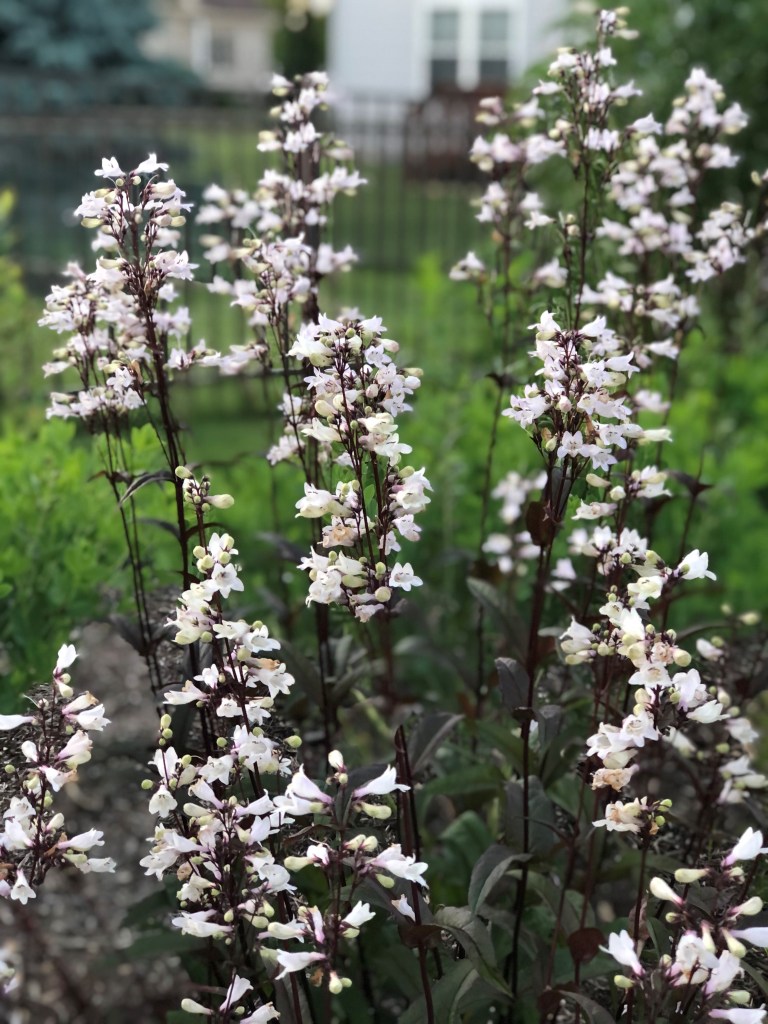
Beardtongue (white) – Penstemon digitalis Husker Red
Beardtongue (pink) – Penstemon digitalis Red Rocks
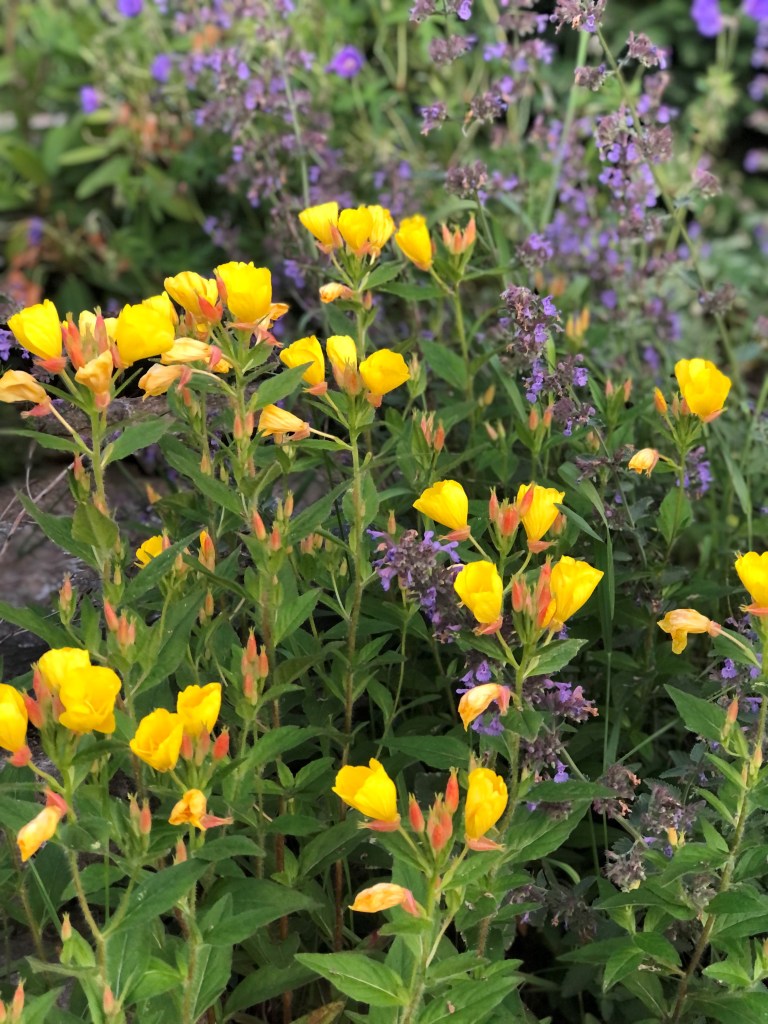
Meadow Evening Primrose – Oenothera pilosella
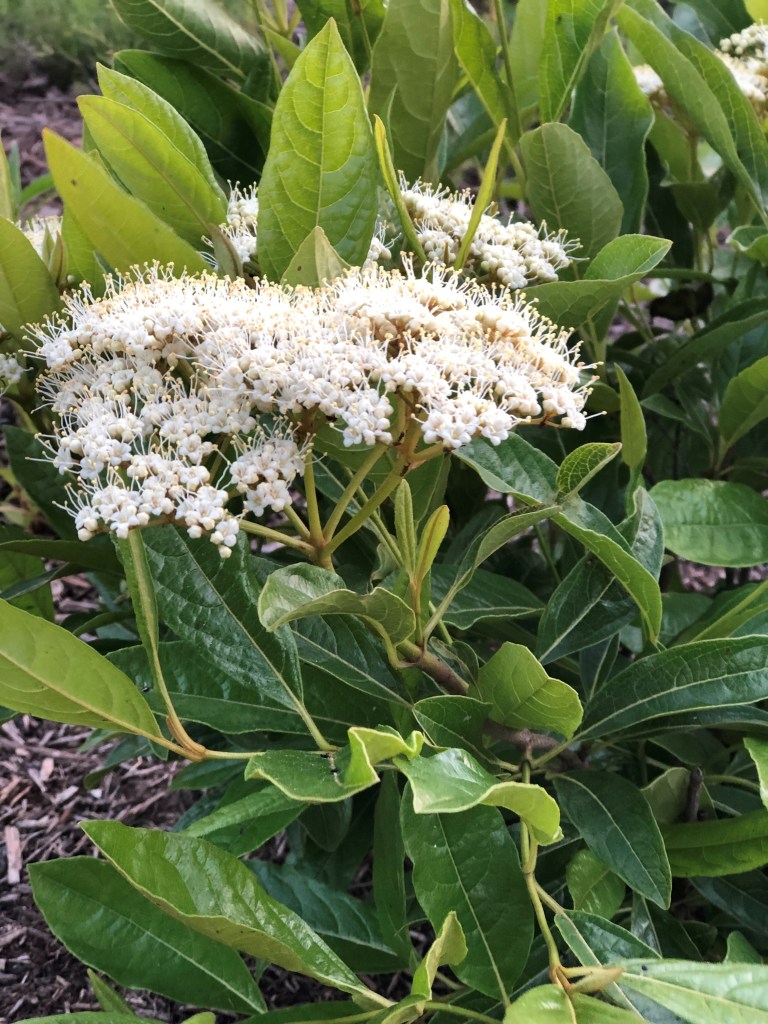
Viburnum Witherod Brandywine Viburnum nudum

Wild Bird Notes for Mid-May

From mid-spring through mid-summer, the species of birds has been pretty consistent.

Grackles predominate the scene, not so much in number as much as in assertiveness and consumption. At this point, I have restricted the feed to primary safflower seed and a small bit of mix in the caged feeder.

In addition to the Grackles, we have (with the top five being the most numerous):

  • Robins
  • Mourning Doves
  • House Finches
  • Chipping Sparrows
  • [House Sparrows]
  • Song Sparrow
  • Goldfinch
  • Black Capped Chickadee
  • Bluebirds (occasional)
  • Crows
  • Starlings

The bird baths are heavily used and could easily be refilled 2 to 3 times per day.

Black Capped Chickadee ready to jump in.

Garden Notes – Mid May

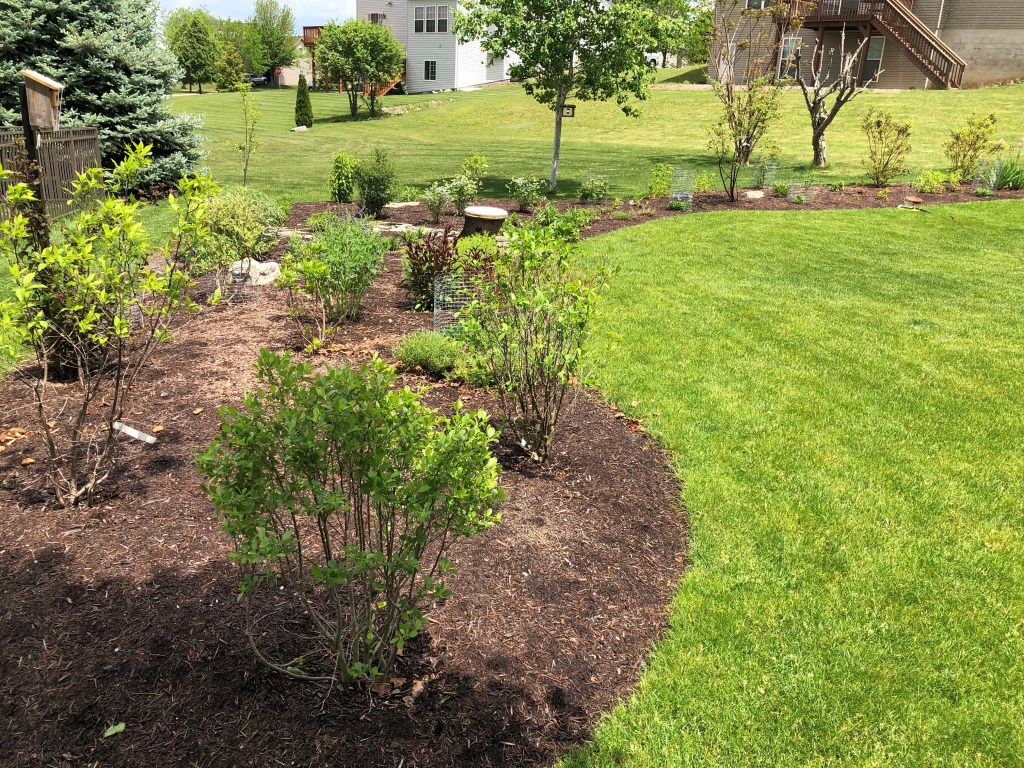
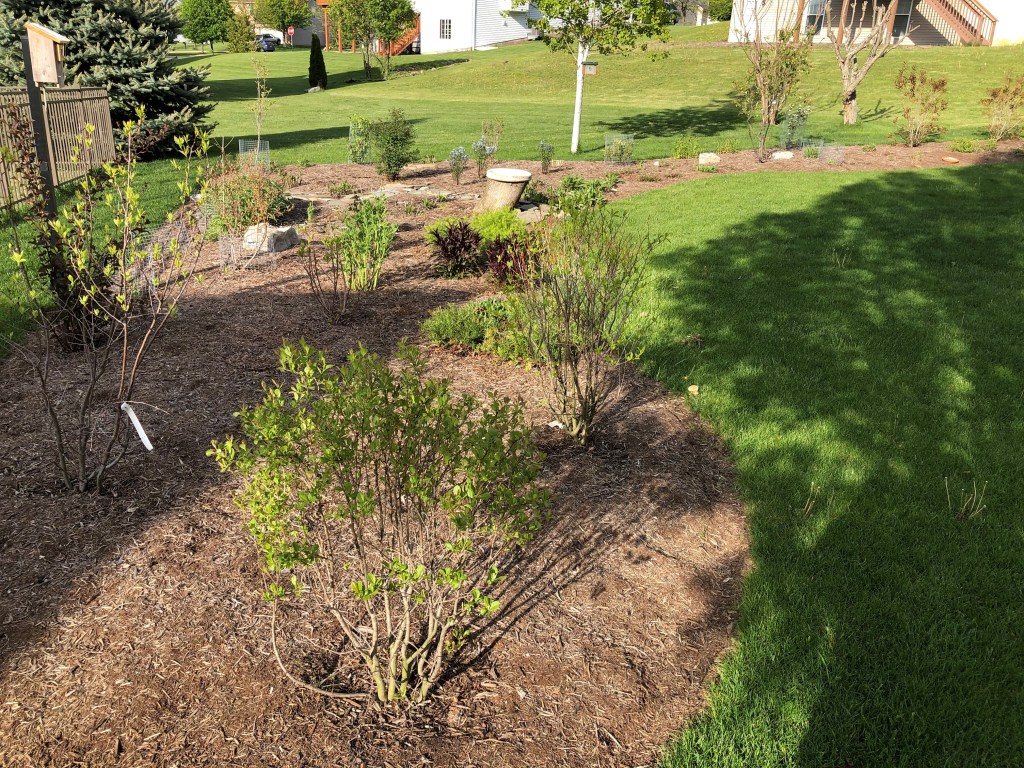
It is great to see the garden coming back to life, although not without some challenges. For one, the weather has been very dry, especially the past few weeks. Today, I watered the garden area with approximately 1/2 inch of water. Too many plants with less than 1 season in the ground.

Second, the rabbits have taken their toll on some of the plants. I had to move the circular / wrap-around fences to protect those getting abused.

May 23, 2021
April 16, 2021

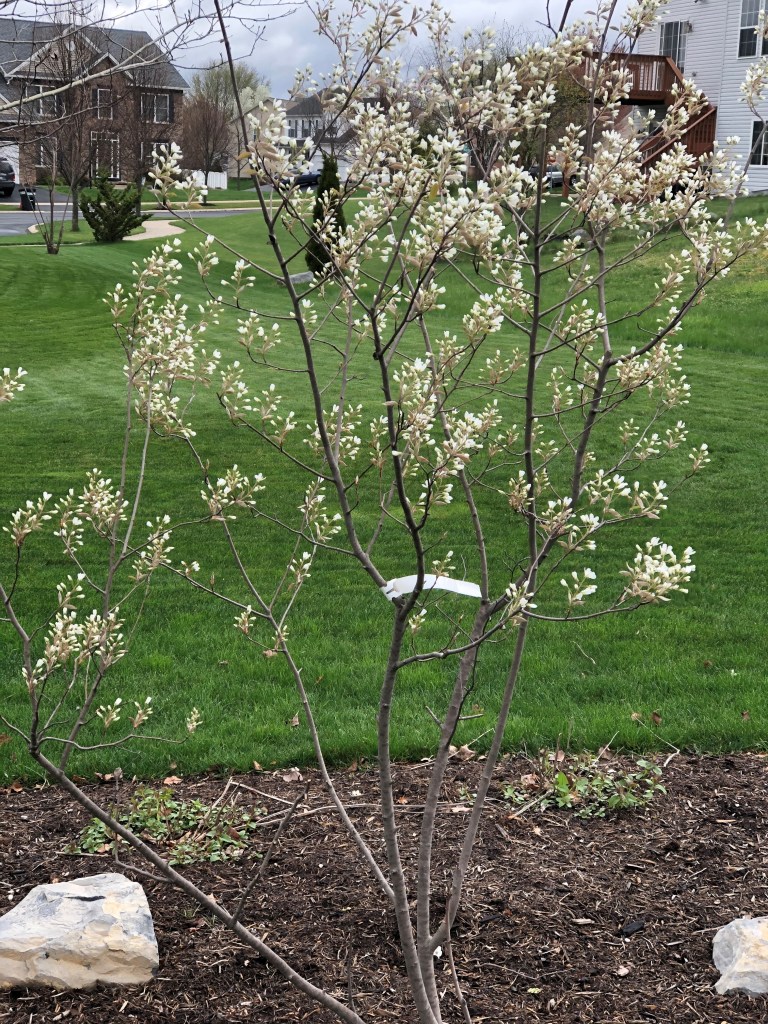
A few plants have bloomed to this point.

Serviceberry – April 2021
Red Chokeberry – May 2021 (as well as Black Chokeberry)
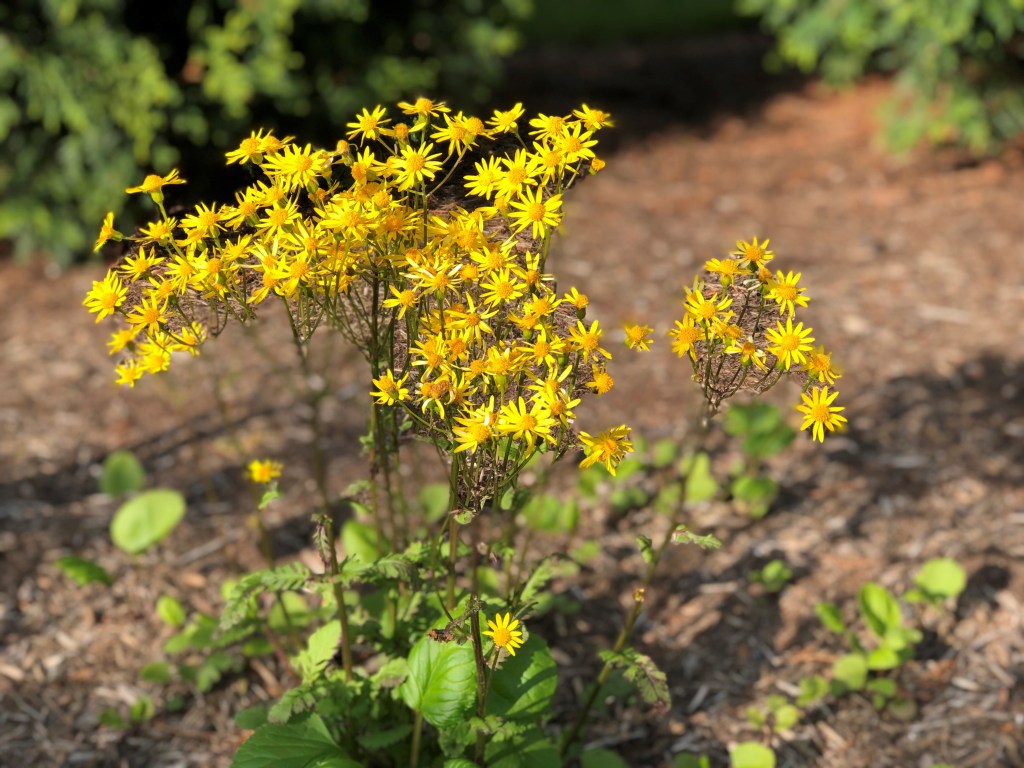
Golden Ragwort – April, 2021
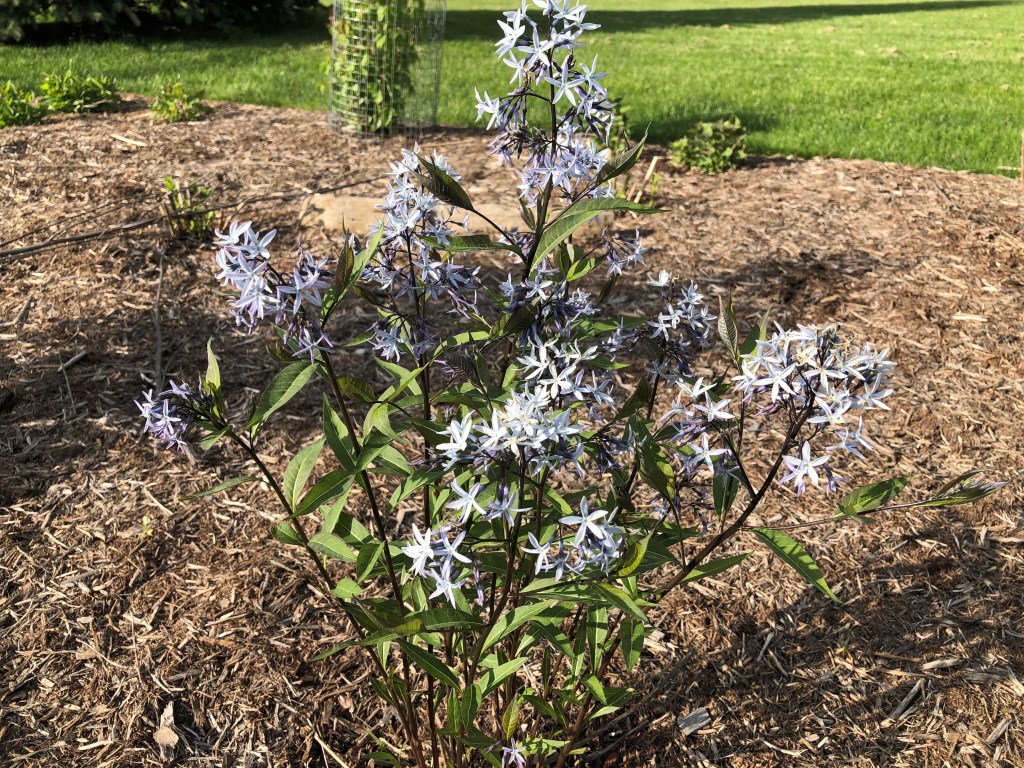
Bluestar – May, 2021
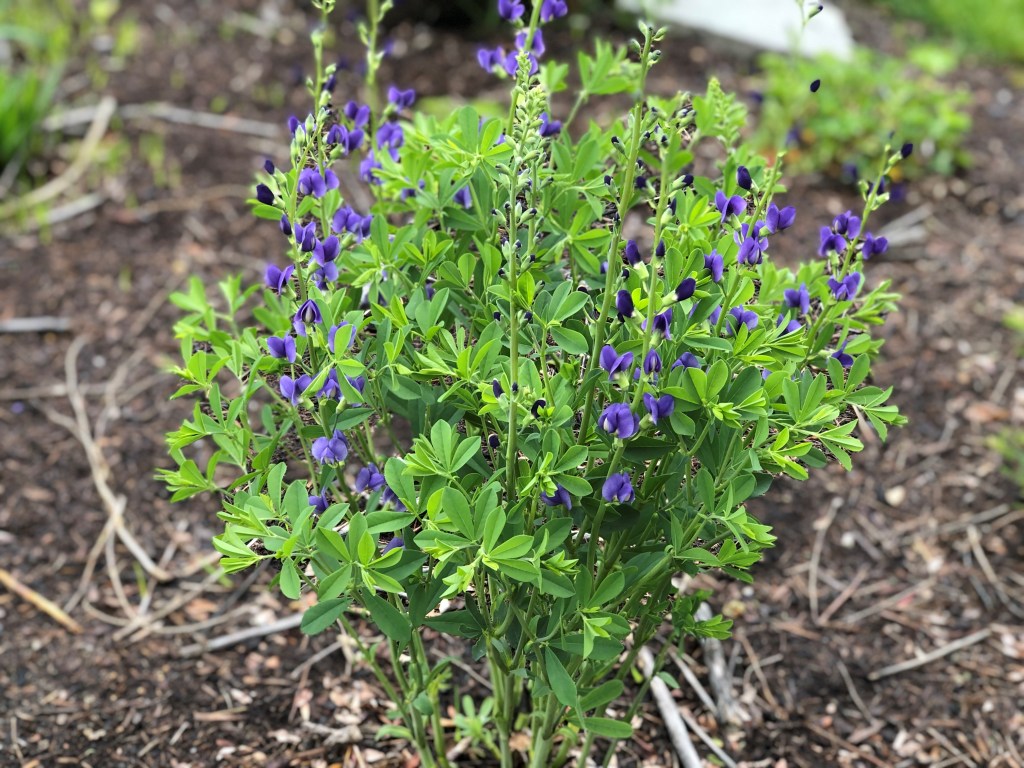
Blue Indigo – May, 2021

Garden Notes – Mid-April, 2021

March through the beginning of April was warm, but very dry, that is up until this weekend when much needed rain arrived.

Wild Bird Sightings

The Grackles have landed – Each spring we get a heavy dose of grackles, and this spring is no different. They will clean out feeders quickly, and for that reason, the black sunflower feeder has not been put back into service after being knocked over by the bear. I primarily use just two feeders now…the caged tube with a no mess blend and the tube feeder with safflower, because otherwise, it is just paying to keep the Grackles around.

Robins and Bluebirds – Each Spring, the Robins return in good number. I have noticed that they are territorial against the Bluebirds, and for that reason, there has not been much activity at the bluebird feeder.

Out with the Black-eyed Juncos and in with the Chipping Sparrows – Within the past two weeks, the Juncos have moved on and the Chipping Sparrows have arrived. We have also seen the arrival of the White-Crowned Sparrows.

The Regulars – The Northern Cardinals, Song Sparrows, Goldfinch, House Finches, Downy Woodpecker, House Sparrows, and Mourning Doves continue to feed at the feeders. And of course the Crows.

Infrequent Sightings – The Chickadees are seen only occasionally. I have not recently seen the Carolina Wren, White Breasted Nuthatch, or Blue Jays.

Native Plants

A good portion of the native plants were added just last year, so it is always a worry if the various plants survived the winter. Having little rain for the month was a also concern. However within the past two to three weeks, most plants have shown a sign of life in terms of buds or shoots. At this point, only a few plants are yet to show themselves. These include the shrubs – Summersweet, Blueberry, and Beautyberry, and for perennials – Liatris, Joe Pye Weed, and the milkweed species. The heavy rain over the past two days will certainly help these species.

I have been monitoring the new growth to see if there is any rabbit activity. Nothing so far.
Early Spring Native Plant Additions

I checked out a local nursery that was having native plant sale this weekend and came away with some native plants that are not currently in the garden. These included:

  • 2 New Jersey tea, Ceanothus americanus – a 2 to 3 foot shrub that can a handle dry soil and partial sun.
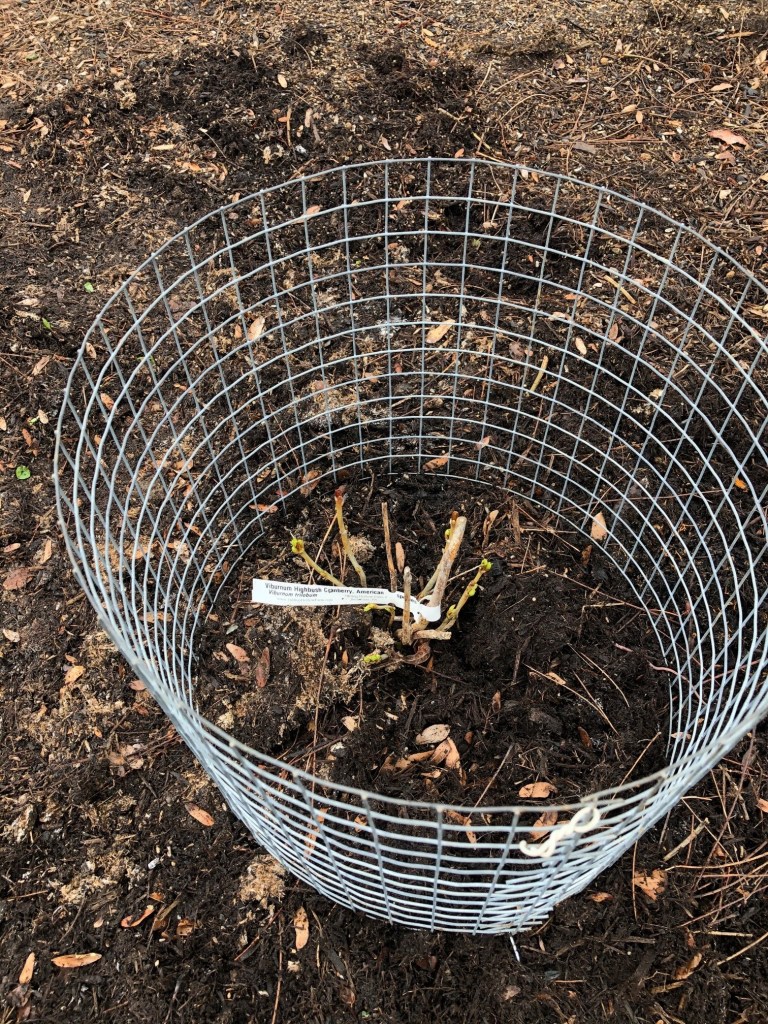
  • Highbush cranberry, Viburnum opulus var. americanum, formerly known as Viburnum trilobum. This is a tall shrub, 8 to 10ft, that produces an edible berry similar to a cranberry. I planted this as an eventual replacement for a burning bush. The berries are said to attract birds.
  • Blackhaw viburnum, Viburnum prunifolium, is another tall shrub, 12 to 15 ft that also produces an edible fruit that attracts birds.

These were added in the upper yard. I put all in cages to protect them from the rabbits.

I also added another Black chokeberry plant which was placed by the two spicebush in the lower yard.

New Jersey tea, Ceanothus americanus

Highbush cranberry, Viburnum opulus
Blackhaw viburnum, Viburnum prunifolium

Spring Has Arrived, along with the Robins and Grackles

Saturday was the first day of Spring. We have been blessed with a beautiful weekend of weather here in central PA, with subfreezing temperatures at night, but day time temperatures in the 50’s.

Birds – Since the beginning of March, we have seen the return of the Robins but also the Grackles and the Starlings. Both the Starlings and the Grackles will land en masse into the yard, crowding out the smaller birds from seed on the ground.

The Song Sparrows and Goldfinch are now constants and it is pleasant to hear their songs once again. The House Finch, Mourning Doves, and House Finch have been present through winter. There are still a few Dark-eyed Junco, but in less number.

The Bluebirds have been active with the use of the new feeder. This feeder has been a good addition. The new nest boxes are still empty.

A listing of the birds spotted over the past week.

  • House Finch
  • Song Sparrow
  • Goldfinch
  • Bluebirds
  • Mourning Doves
  • Downy Woodpecker
  • Red-winged Blackbird
  • Grackles
  • Crows
  • (House Sparrows)
  • (Starlings)

Garden

Most all shrubs are showing sings of life with buds present, but the garden is still generally brown. At ground level, some of the perennials have leaf formation.

I installed higher cages around the taller shrubs, especially the chokeberry bushes, as I noticed that the rabbits were causing some damage.

Bird Feeder – Preventing a Bear Raid

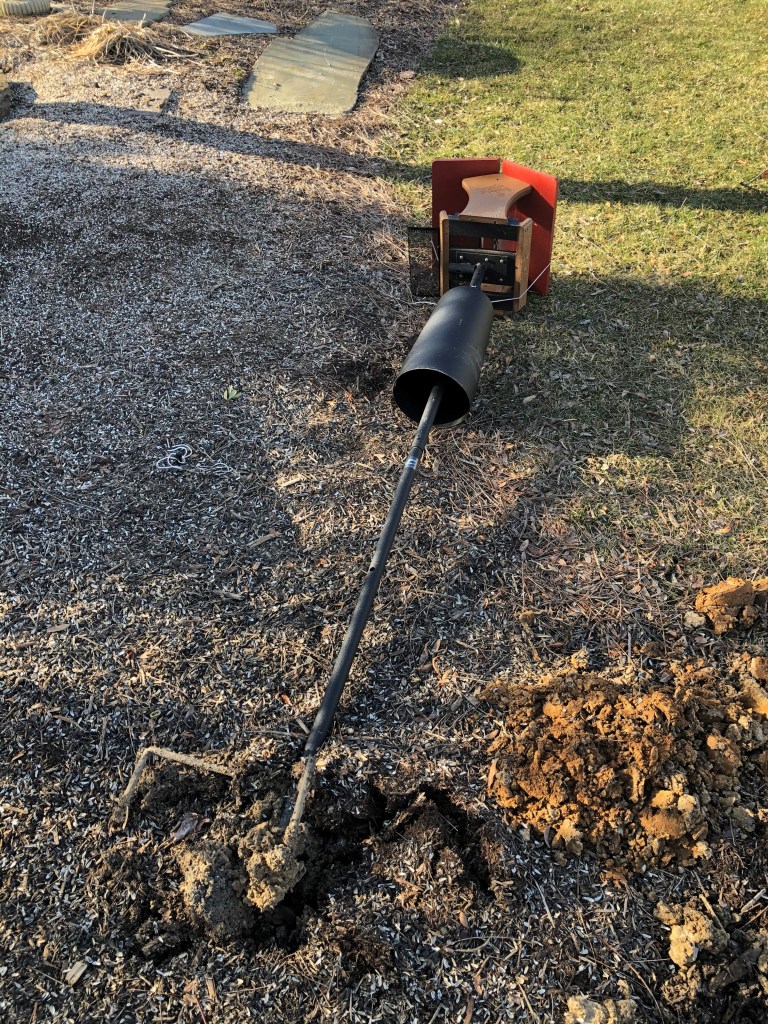
Over the past few years, the bird feeders have been raided by bears. These early morning raids have generally occurred in the first weeks of April, but this year, it was the third week in March.

I had planned to remove this feeder on Saturday for this reason, but the bear came on Friday. Luckily the ground was soft from the rain and the pole went down without a fight, so neither the pole or the feeder were damaged. (I had been filling this feeder with only a cup of black sunflower seed per day due to the fact the Grackles were emptying it out each day, so it was surprising there was enough seed in it for the bear to be that interested).

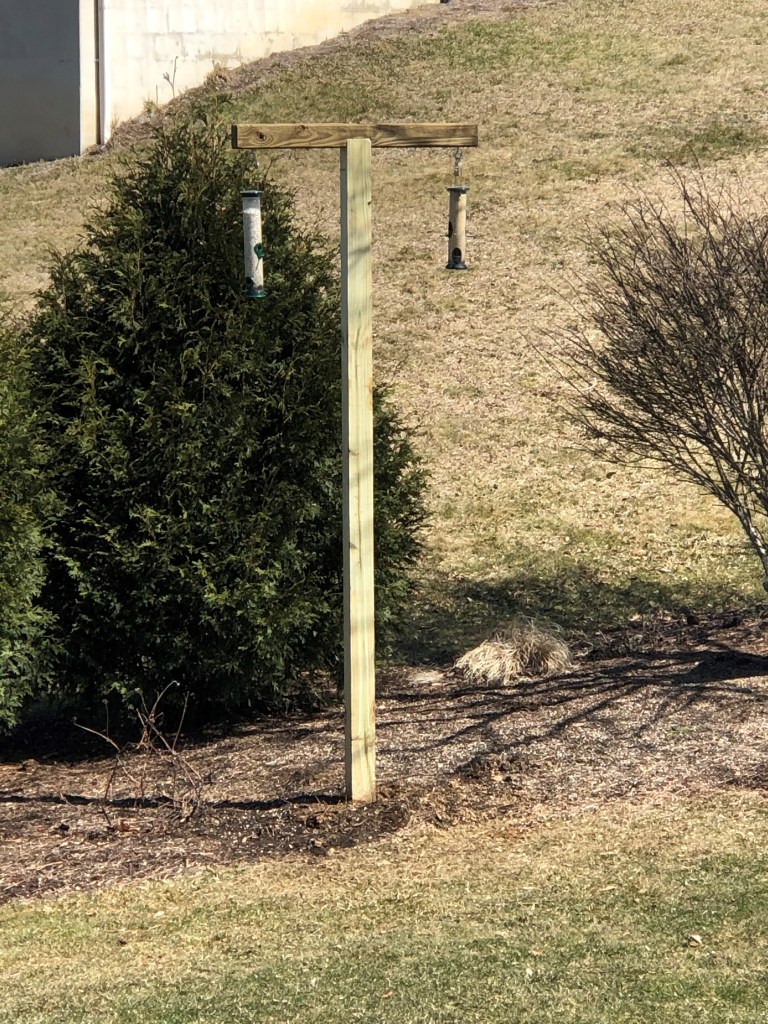
I had planned on putting in a higher pole to make the bear’s work harder if not impossible. So after putting this feeder away for a few months, I put in place a new pole from which tube feeder could be hung.

This is a 10ft long 4×4 of treated lumber. It was placed into a 2ft deep hole with about 1ft of that being a hard clay sublayer.

At this height, I am still able to remove the feeders for refill without aid. But a rope and pulley system can be incorporated for a shorter feeder.

The pole does stand out a bit more than I would like, so the pole with be painted brown at some point. Plus it will help once the tree leaves pop out.

Bird House Additions – Bluebird and Wren Nest Boxes

This week’s projects were to add two bird houses to the yard – a Bluebird nest box in the garden and a wren nest box to be attached to one of the River Birch trees.

A few years back, I had put up a Bluebird house in early Spring, but it was soon taken over by House Sparrows. I then read information from the PA Bluebird Society (after the house was up), that House Sparrows are aggressive and often kill Bluebirds if they are in a house that the Sparrows want. This occurs in areas that are frequently visited by Sparrows, such was and is the case with our location. Needless to say, I removed the house before the Sparrows could set up a nest and breed more Sparrows.

I had given up on the idea until I decided to try again using this house I had purchased, but using the modifications that Bluebird-support organizations suggest.

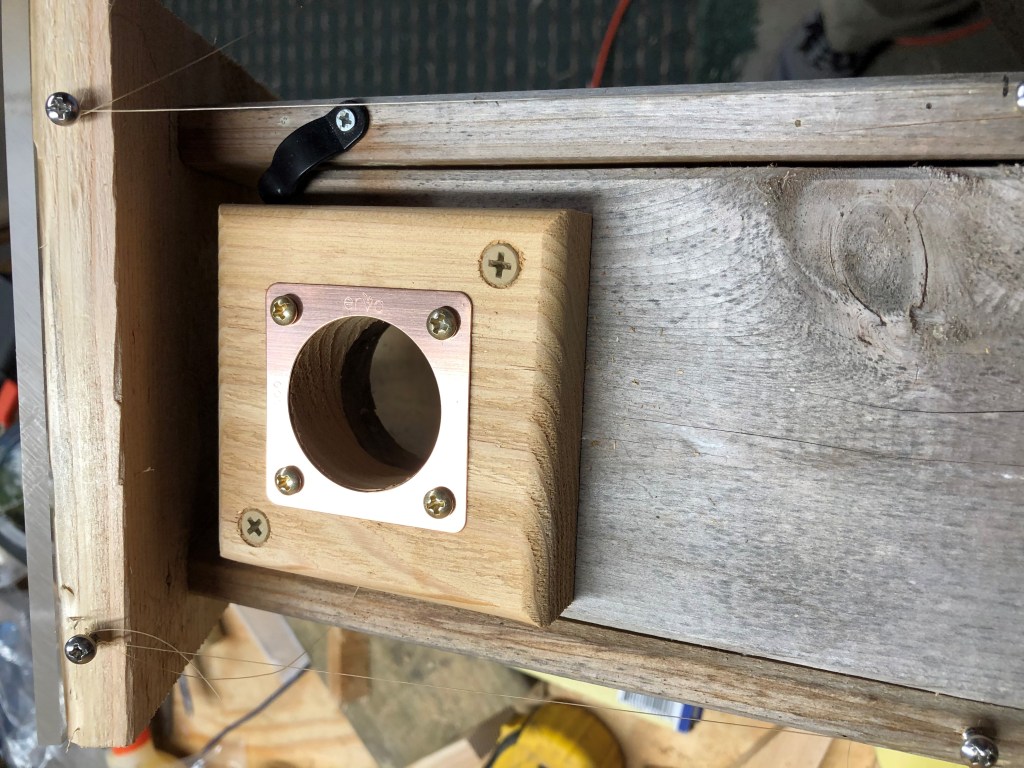
The first modification is the use of monofilament line, or fishing line, fixed to the front of the box and running down each side of the entrance. With a front opening door, the line was a bit wider than I wanted, but hopefully it will have the same effect (it reportedly scares off House Sparrows who cannot see the line).

Entrance guard and 6 lb test fishing line strung along each side of the opening.


I also added a entrance guard from Kettle Moraine Woodworking. The opening is 1 1/2 inch in diameter. The diameter is critical.

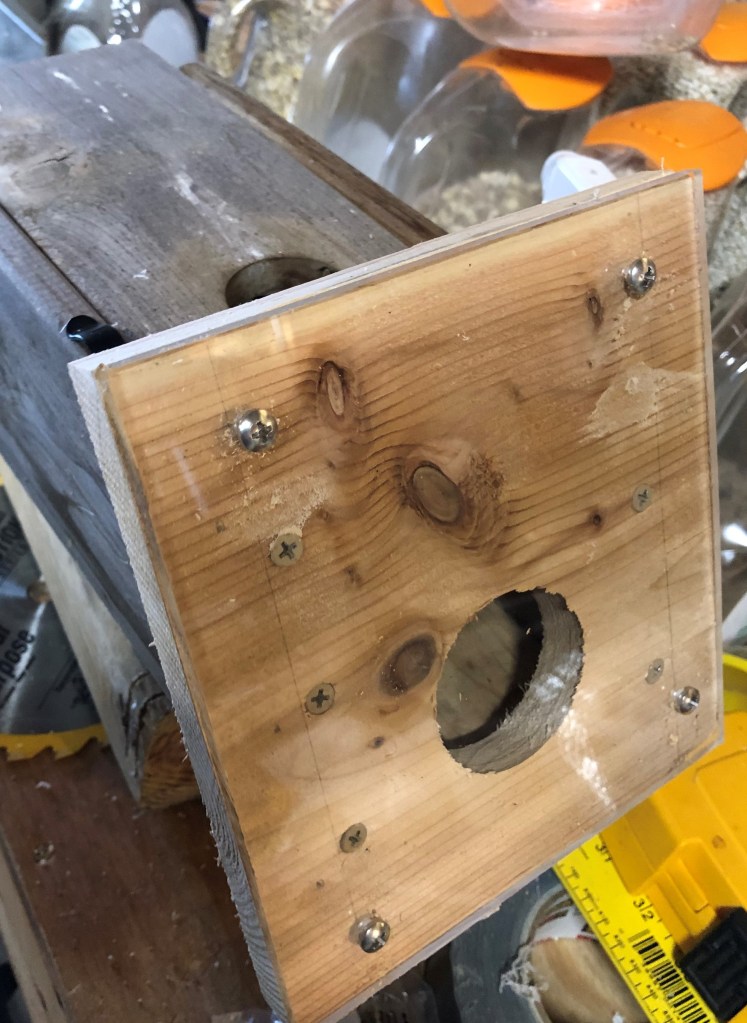
The other suggestion from Bluebird Conservation was to add a skylight – a hole in the roof covered with plexiglass. Evidently, House Sparrows like to next in a dark space while the Bluebirds to not care….or care as much…or perhaps even like it.

Skylight – hole in roof covered by plexiglass

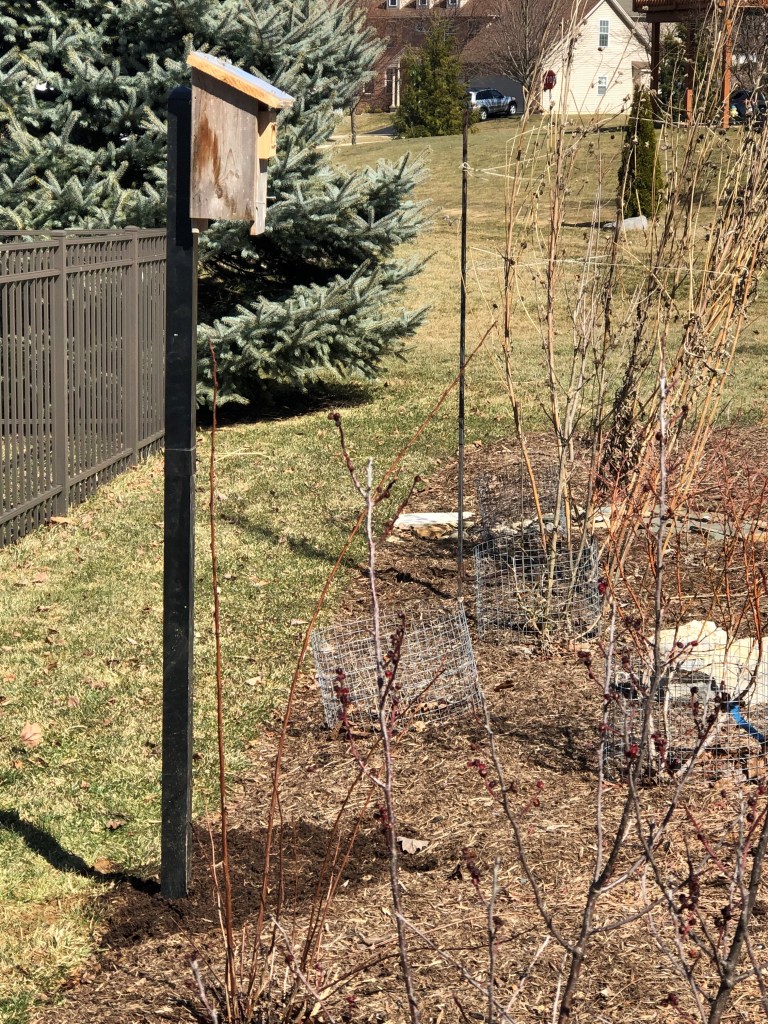
The house went in this second week of March. The ground was not frozen at this point, so the support was easy to get erected.

Modified Bluebird Nest Box with monofilament line and skylight.

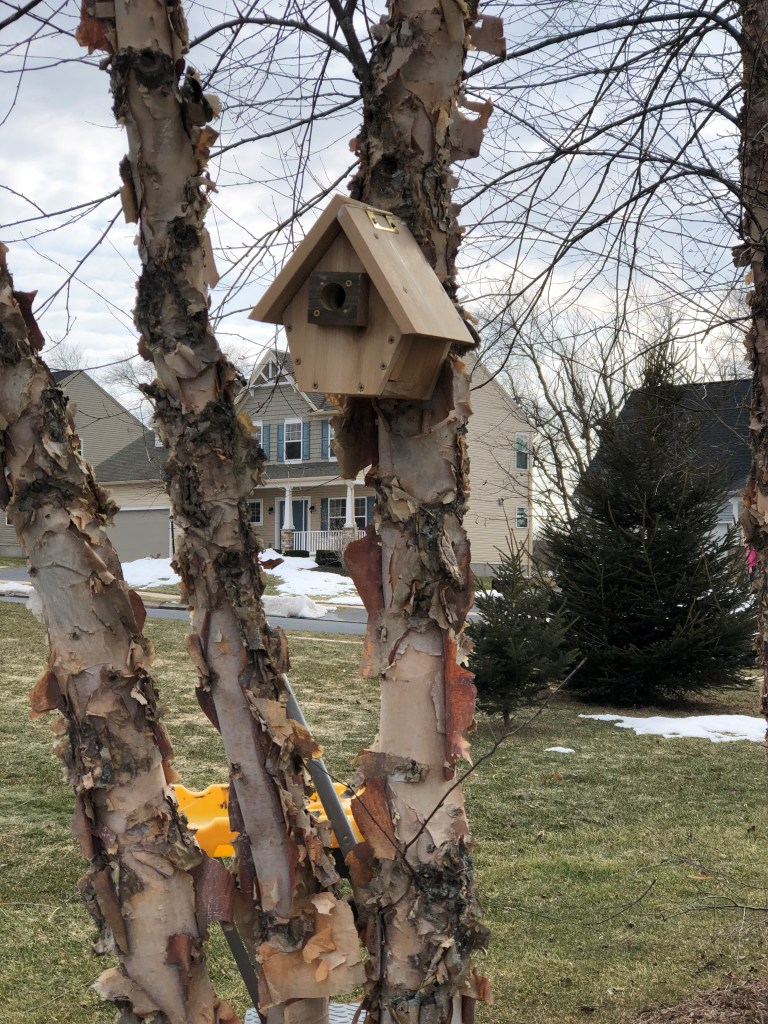
Having some extra cedar, I built a nest box that hopefully will be suitable for Wrens. The diameter of the entrance is 1 1/4 inches. I attached this to one of the River Birch trees on the upper side of the yard. Plastic zip ties straps were used to attach the box to the tree. The house was designed to have one side of the roof open to enable cleaning.

The location in the River Birch is not as isolated as it probably should be in that it is close to the street and sidewalk. It will be better once the leaves on the tree emerge.

I might have missed the timing window for Bluebirds nesting for this year. The timing for wren nesting is coming up however.

Snow and Cold, But Spring is On the Way – February, 2021

There has been plenty of snow and cold this February, but with the birds singing and flying about, one can tell that it will not be much longer until Spring.

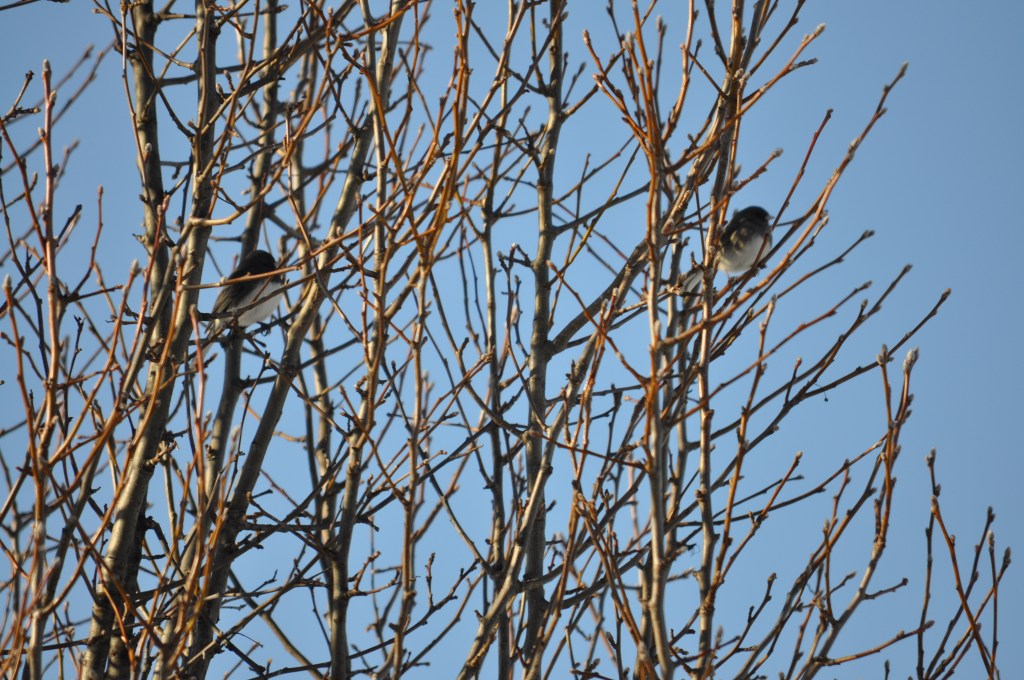
Dark-eyed Junco

Dark-eyed Junco are the most prevalent. Throwing feed on the ground each day has been helpful in keeping the birds around. Here are the species that have been spotted over the past week:

  • Dark-eyed junco
  • House finch
  • Goldfinch
  • Mourning Doves
  • Crows
  • Northern Cardinals
  • Bluebirds
  • Black Capped Chickadee
  • Carolina Wren
  • Downy Woodpecker
  • Coopers Hawk
  • (House Sparrow and Starlings – non-native)
Northern Cardinal (male and female on the limb above)

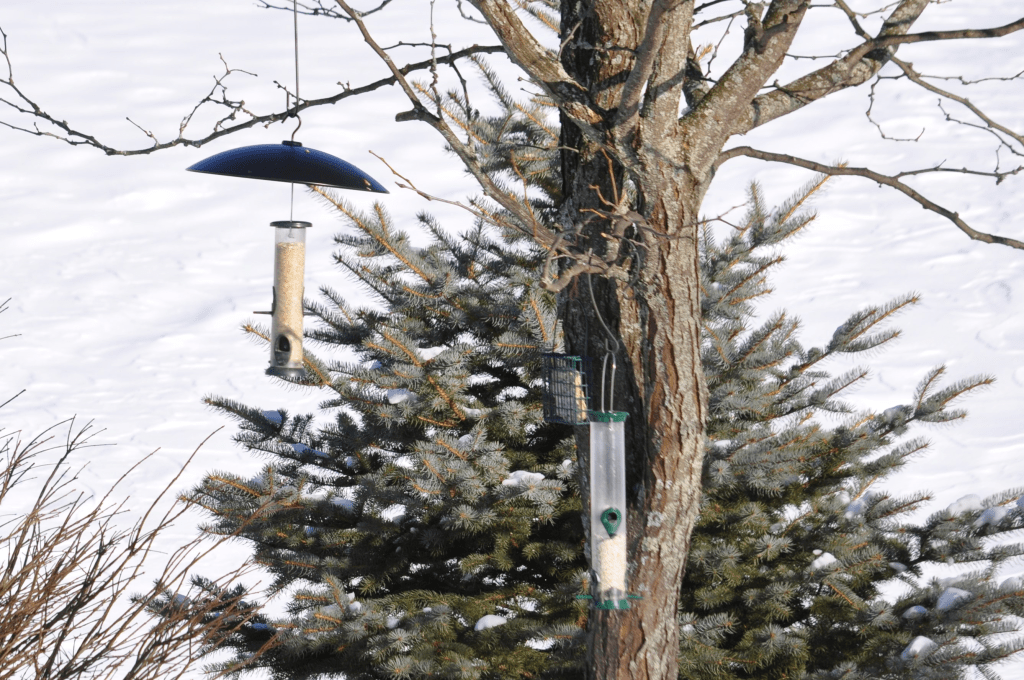
One tube feeder with WBU’s No Mess Blend was moved away from the house. A favorite feed for birds was also a favorite of the squirrels. The squirrel would hang down upside down off the support on the post. His get-away route was over the garage roof. So the feeder was moved to the tree with the other tube feeder. Once the ground thaws, I will come up with another location.

We have had more snow this year compared to most others. Currently, there is about a foot of snow on the ground, and it has been here throughout the month.

New Bluebird Feeder

Added a new Bluebird feeder into the bird feeder lineup!

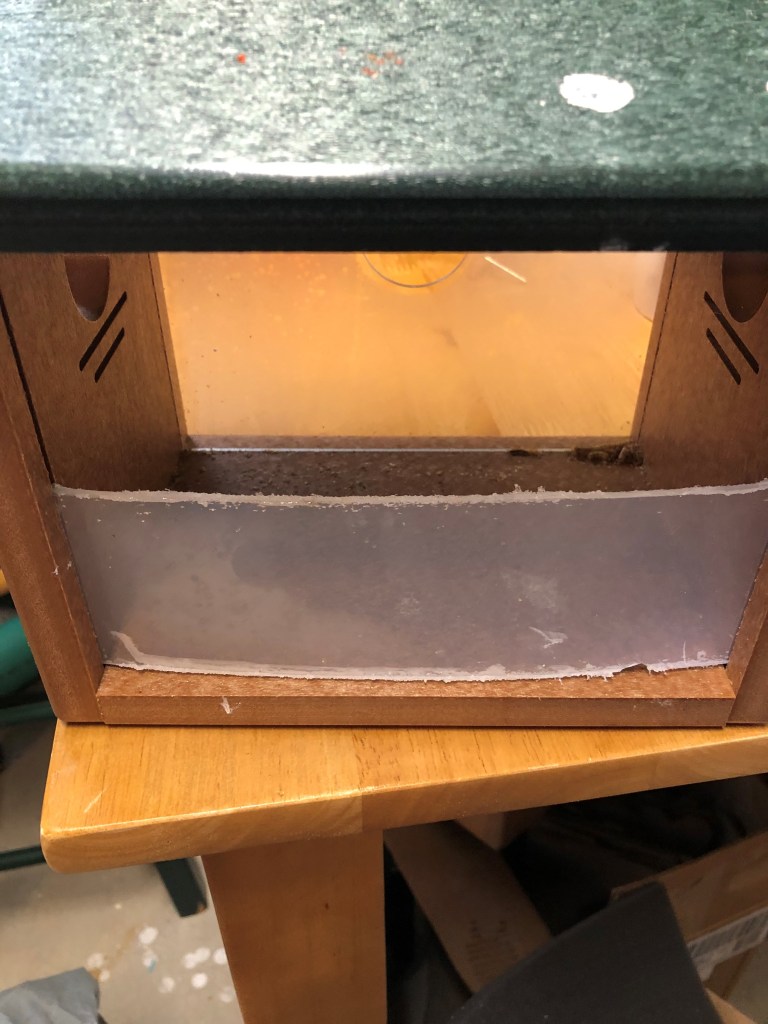
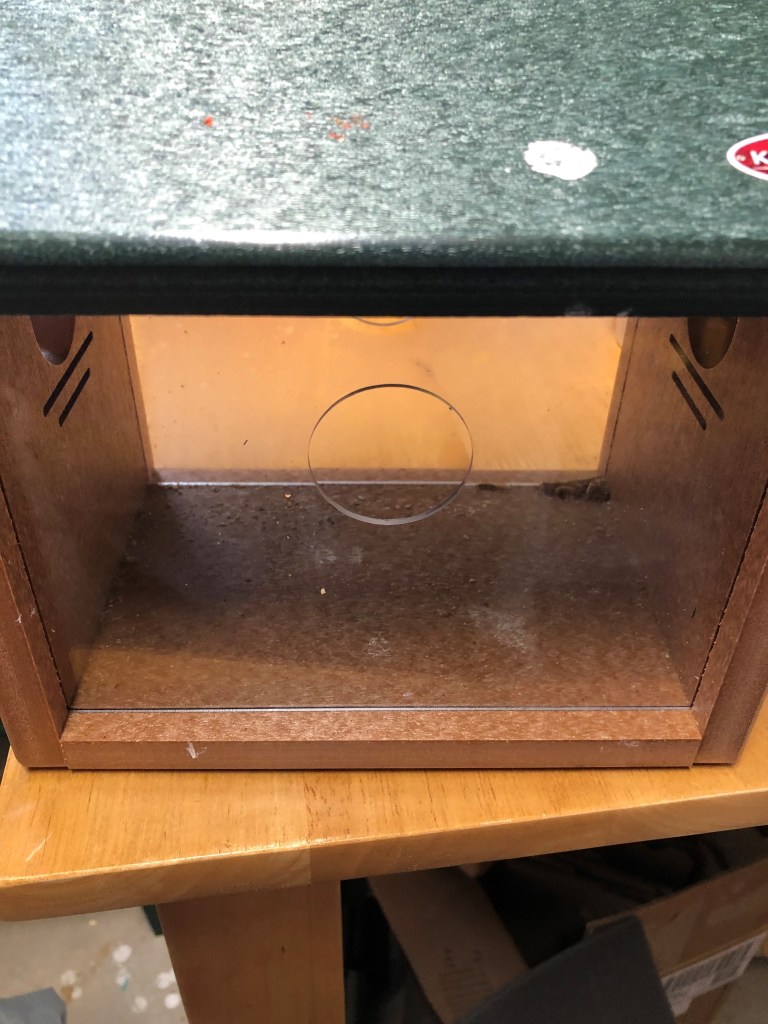
This unit is from Kettle Moraine Woodworking and it is quite sharp.  I started, as they suggested, with one of the clear plastic sides removed in order to allow the birds to more easily acquaint themselves with the feeder.   I did put the full plexiglass side back on, but had to remove it as the birds struggled to enter. I went to a partial side, but soon realized the Starlings were getting in, so went back to the full plexiglass side (with a hole).

I also started with dried worms, and bought a higher quality product compared to what I have used in the past.  Within a day, there was a set of Bluebirds munching away. And then there were a half dozen Bluebirds taking turn.

I started to grow live meal worms….more on that in a later post when I’ve had a chance to determine whether the effort was worth it.