Planting a native garden is not only visually attractive, but it helps to increase biodiversity of your space through supporting native insects and birds. This is not a how-to blog, but just follows the journey associated with my native garden. Maybe it will provide an idea on what to do, or not to do. Or perhaps it may provide some inspiration for going native in your own yard.
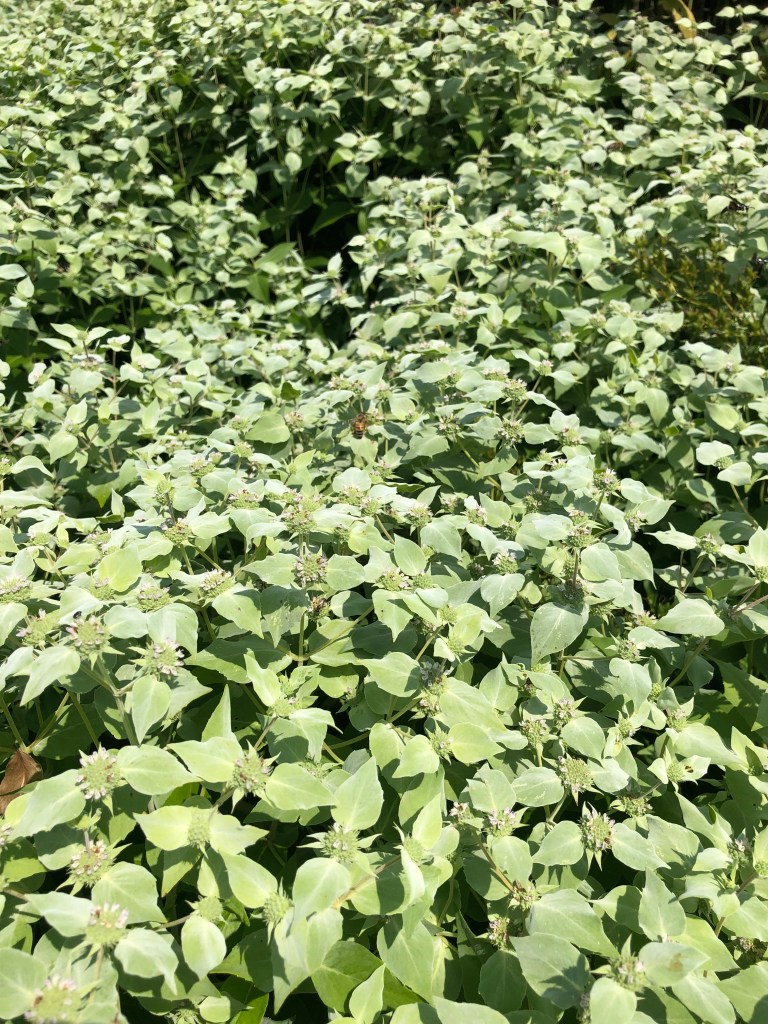
There was plenty of rain this May (2025) and it has had an impact on the type of plants growing or not growing. The mountain mint seems to be negatively impacted. I understand that they do not like ‘wet feet’. Foxglove Beardtongue has also had some issues with rot. Other plants have done well.
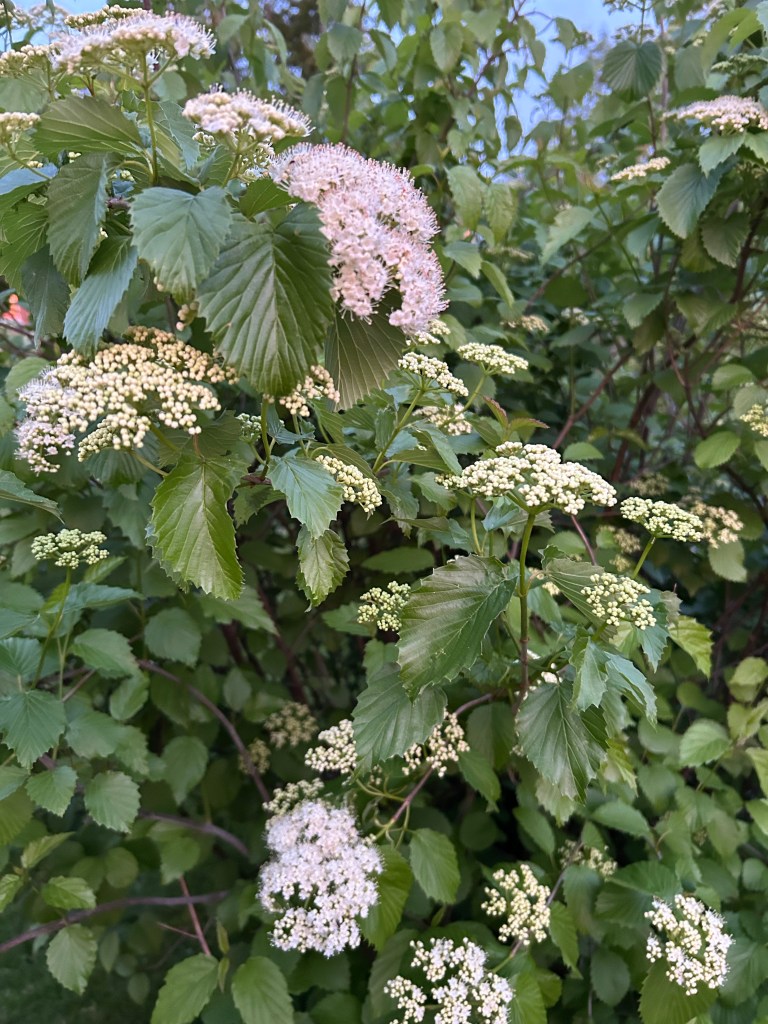
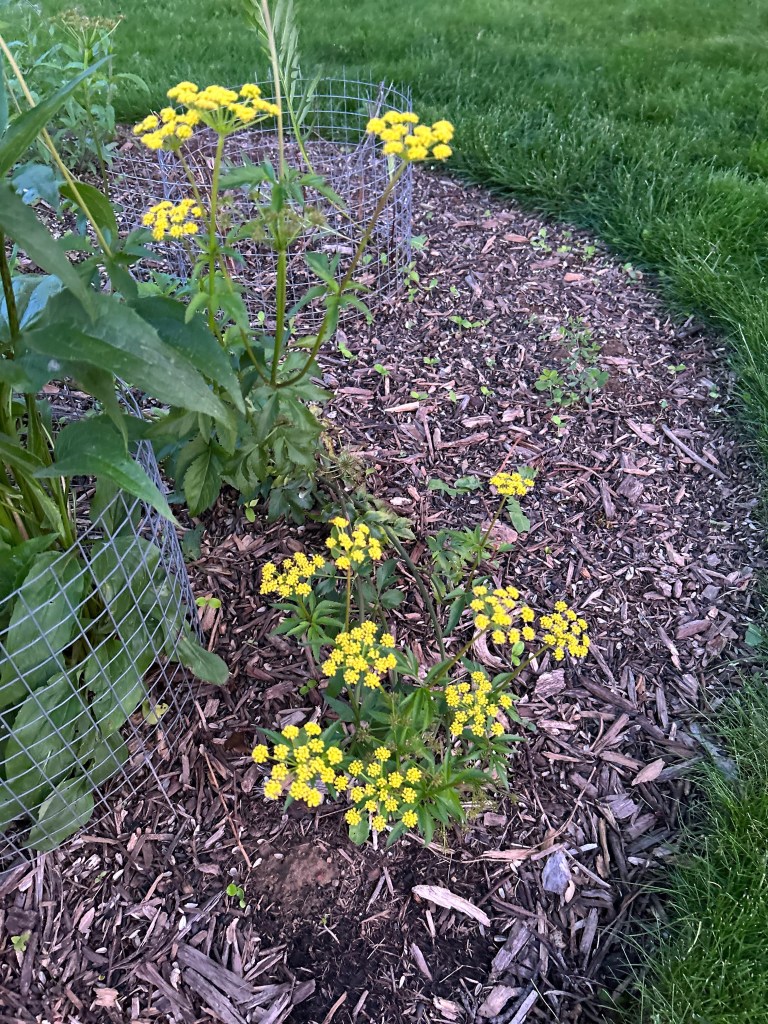
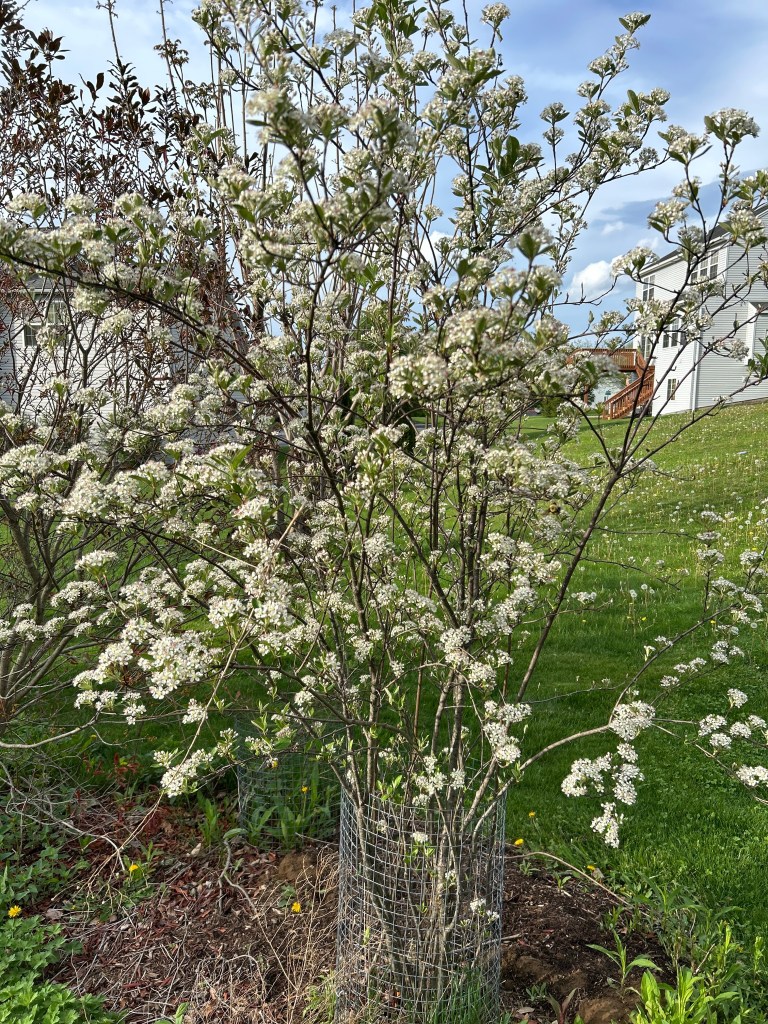
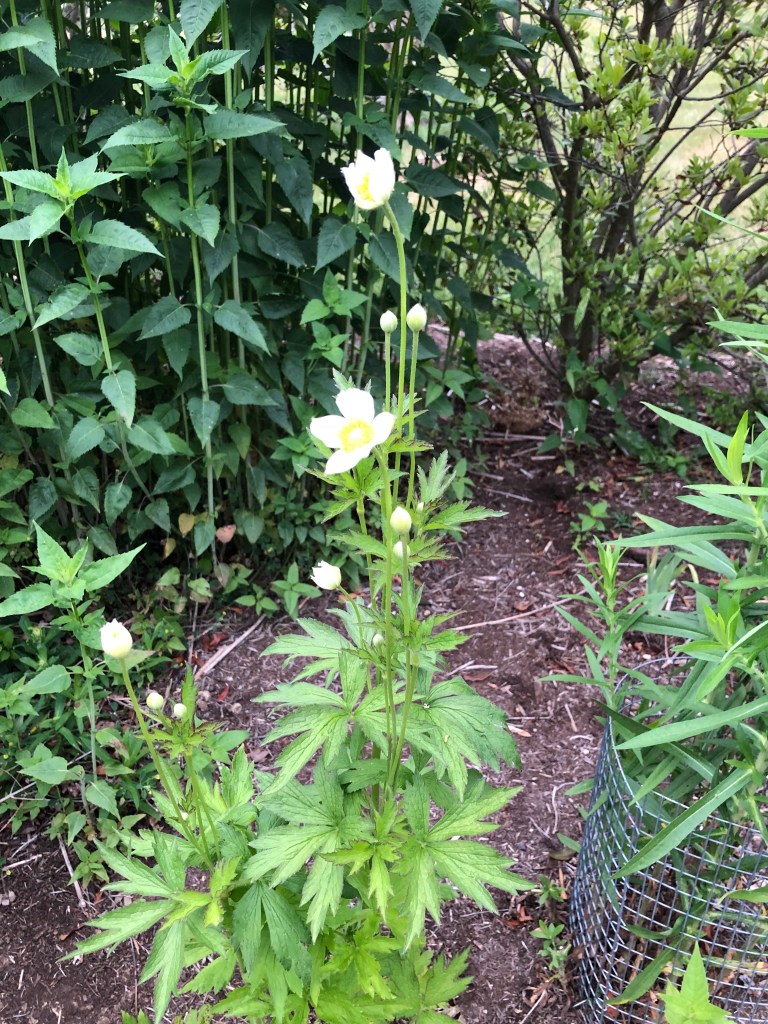
Arrowood viburnum (Viburnum dentatum) are in bloom (above) as well as Golden alexanders (Zizia aurea) shown below.
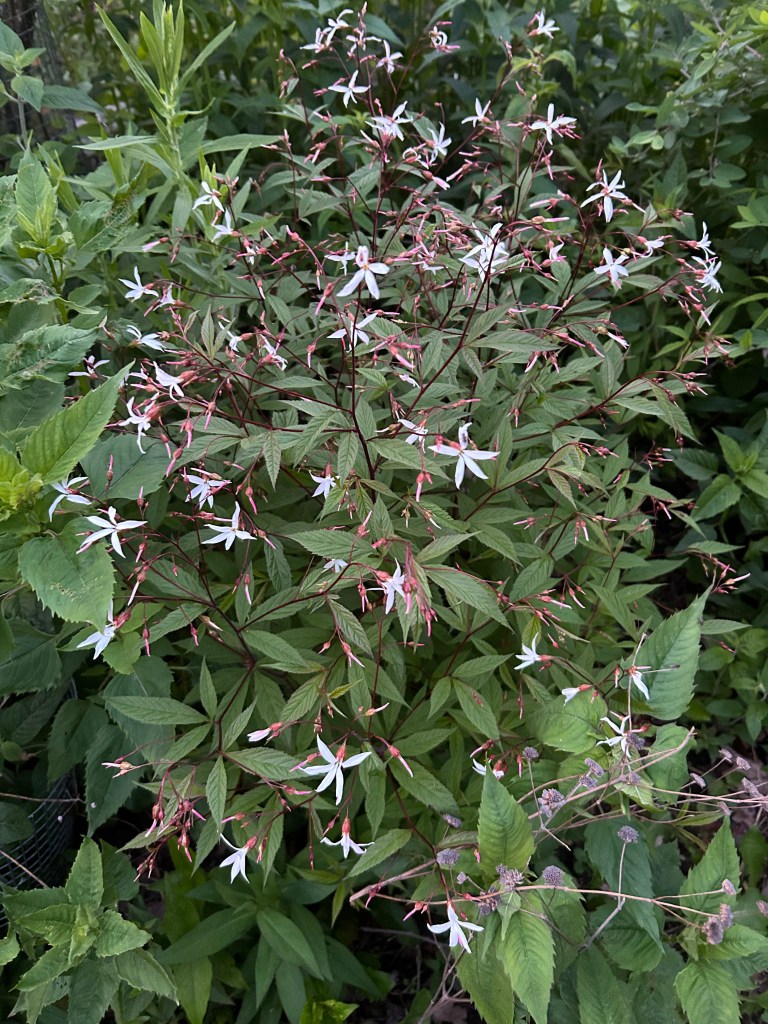
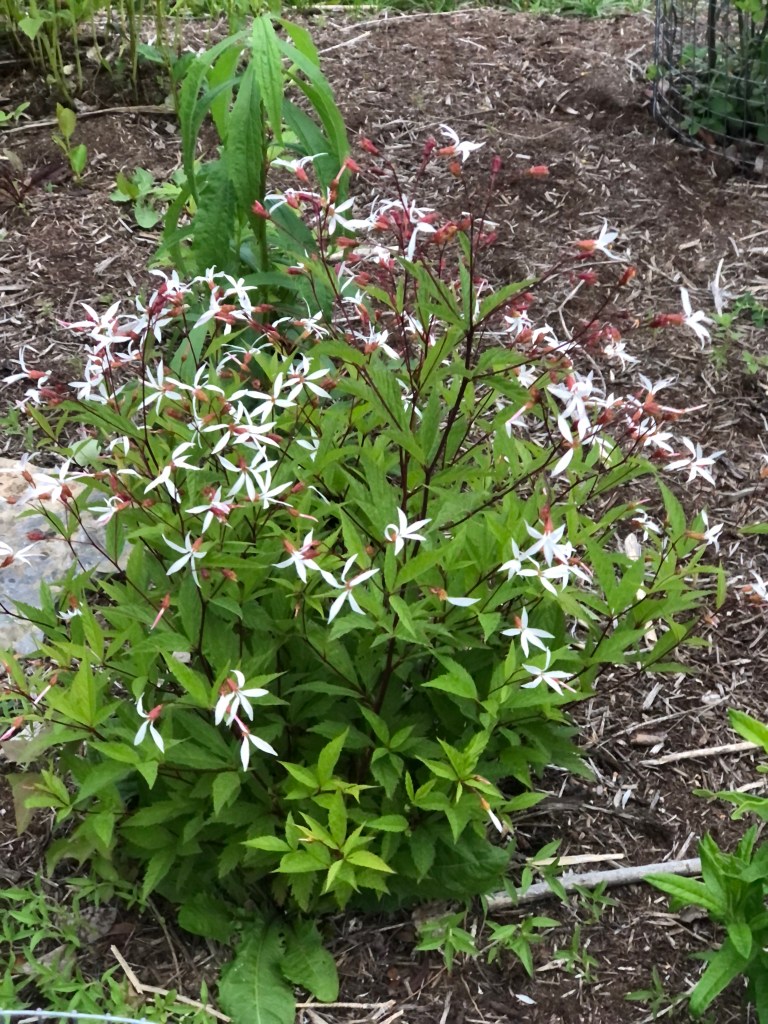
Bowman’s root (Gillenia trifoliata) has done surprisingly well, even though in a crowd of more aggressive plants.
I only have two rhododendrons, and the blooms of this one are pretty nice.
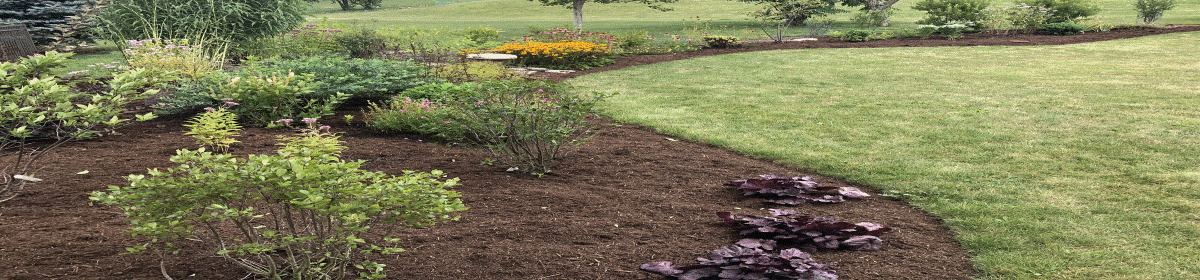
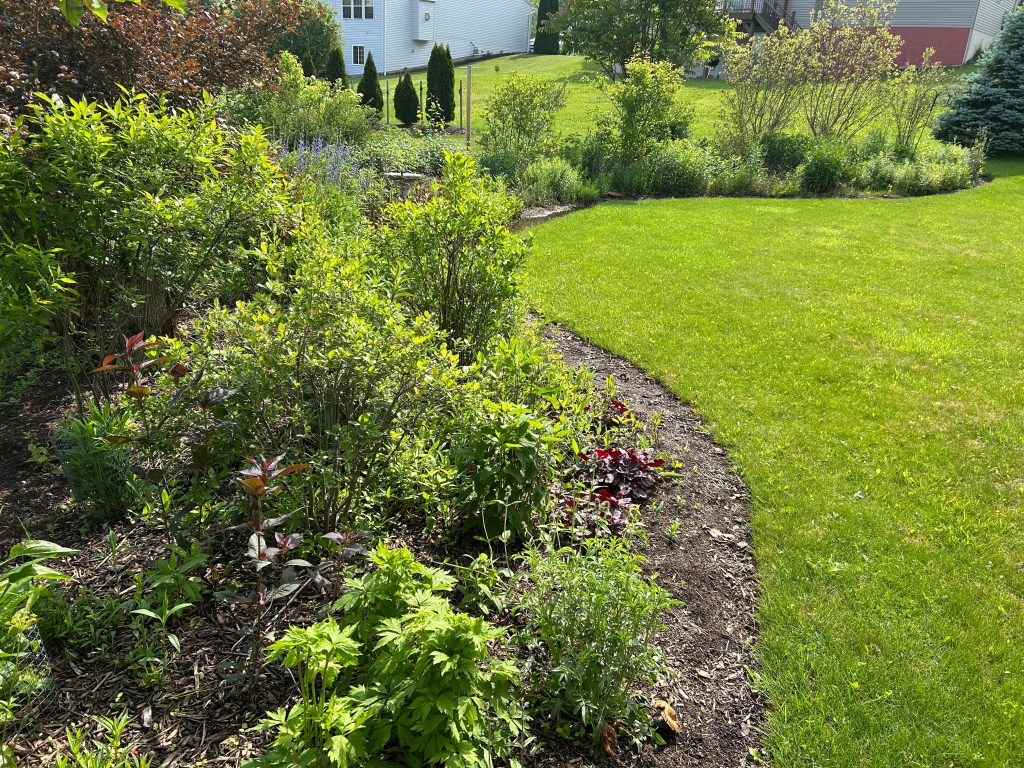
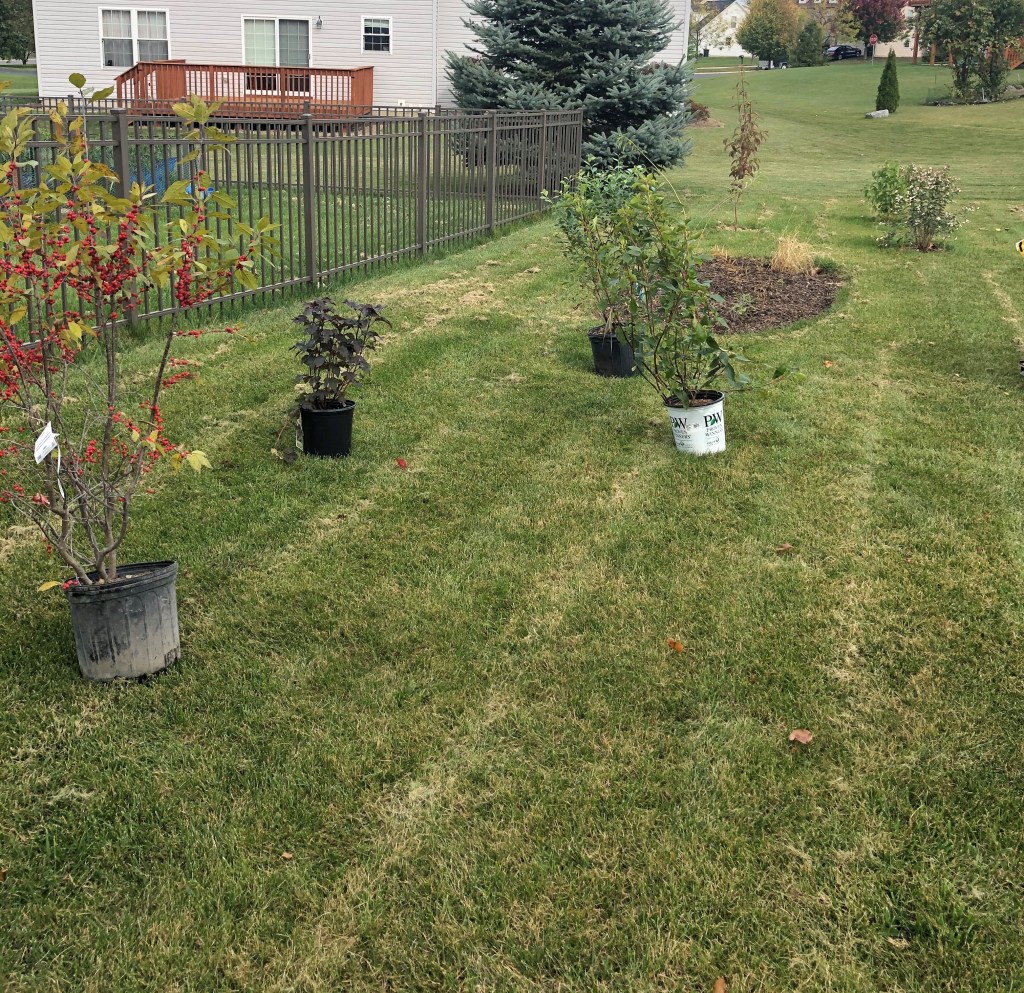
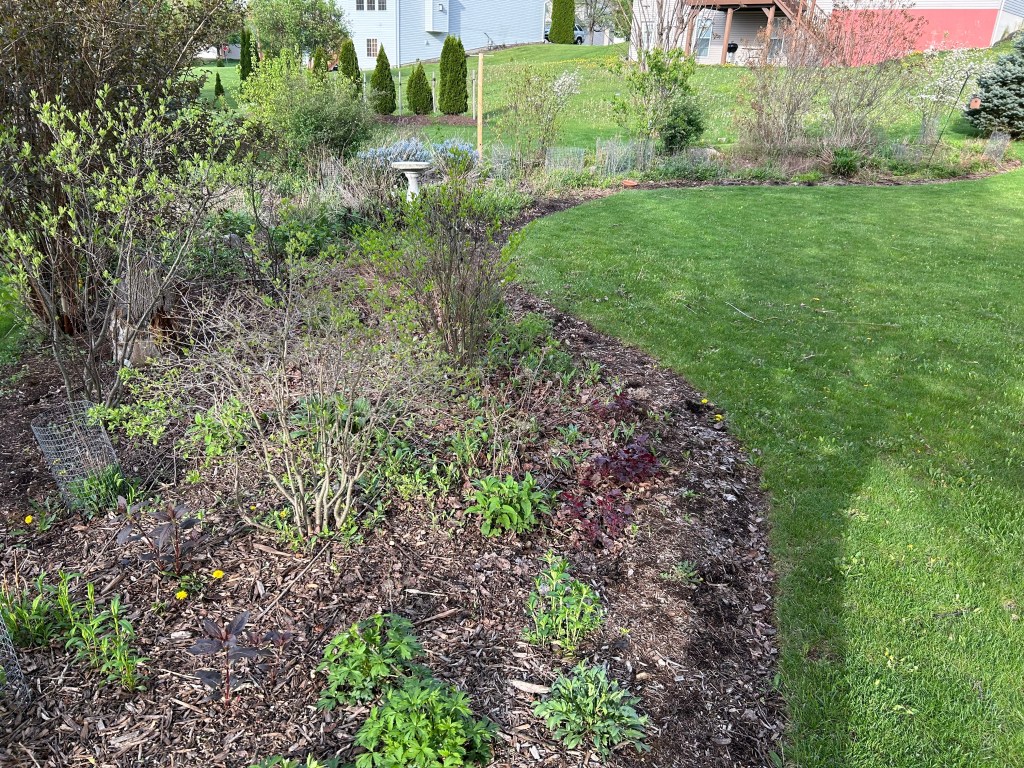
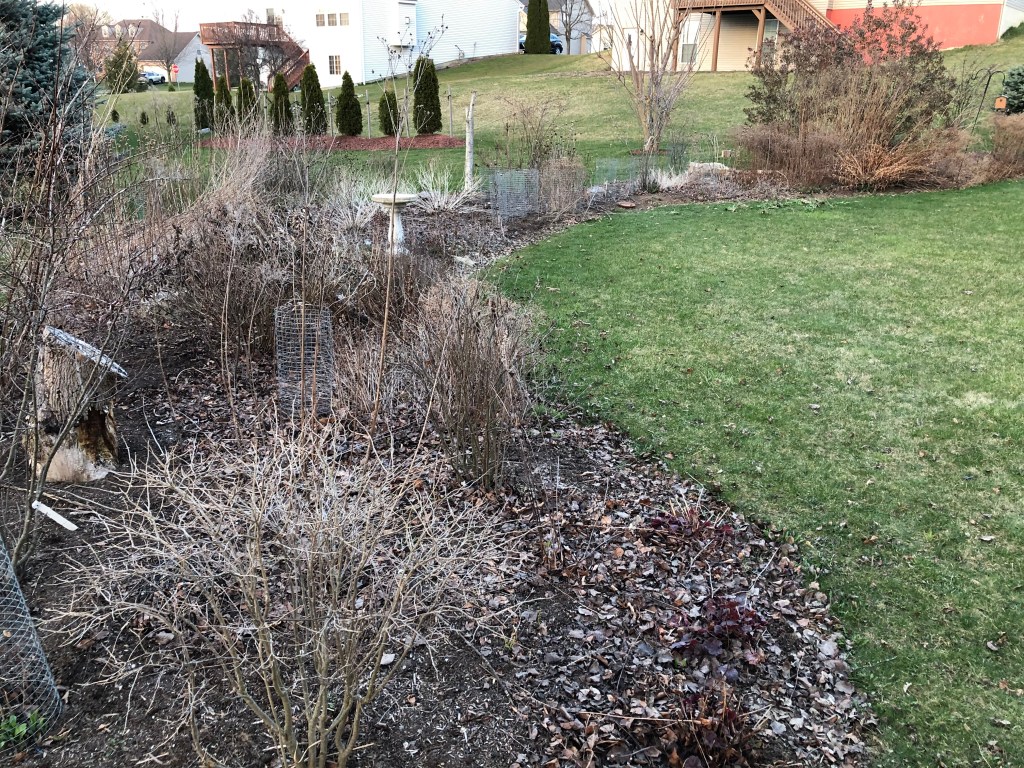
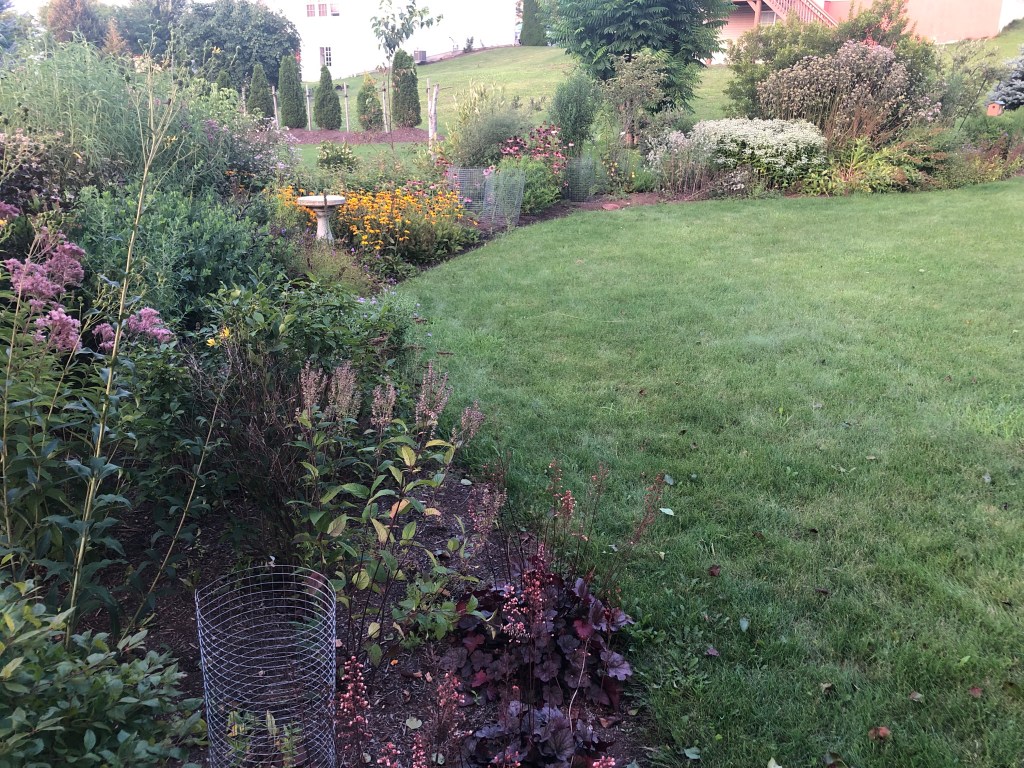
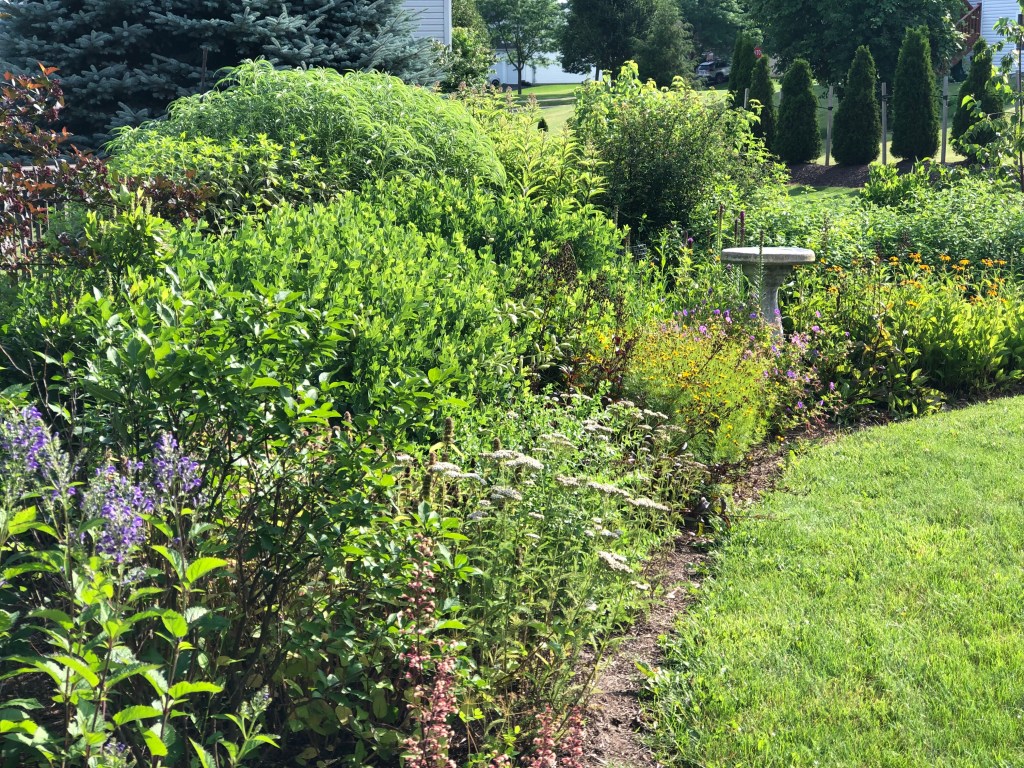
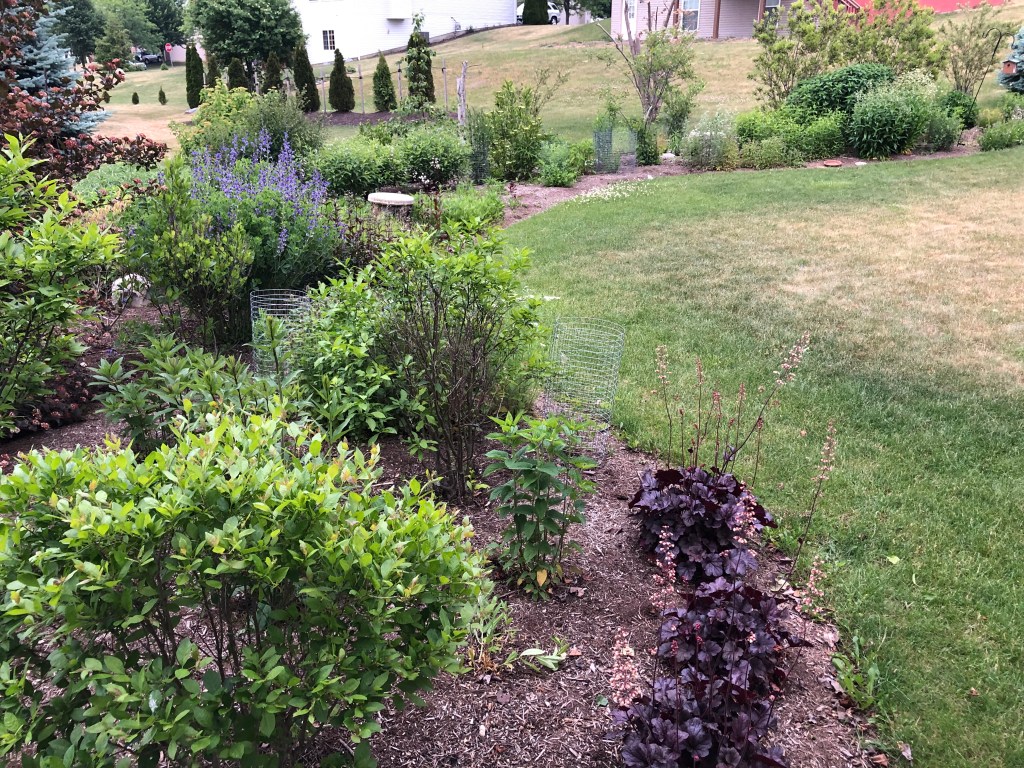
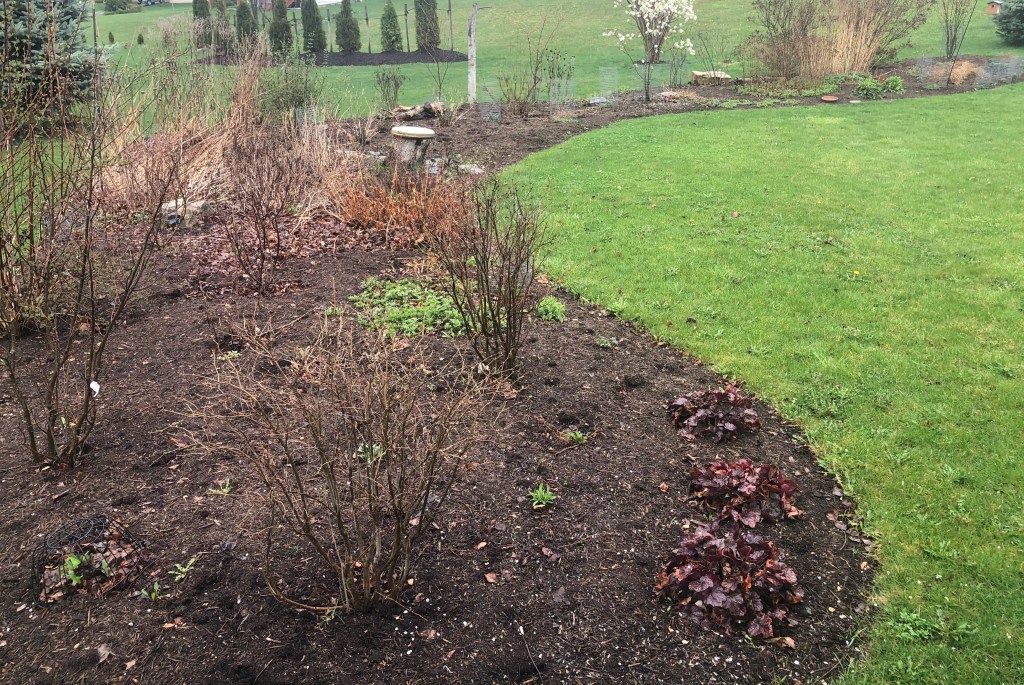
This photo was the starting point in the Fall of 2019. Quite a difference between this and the top photo.
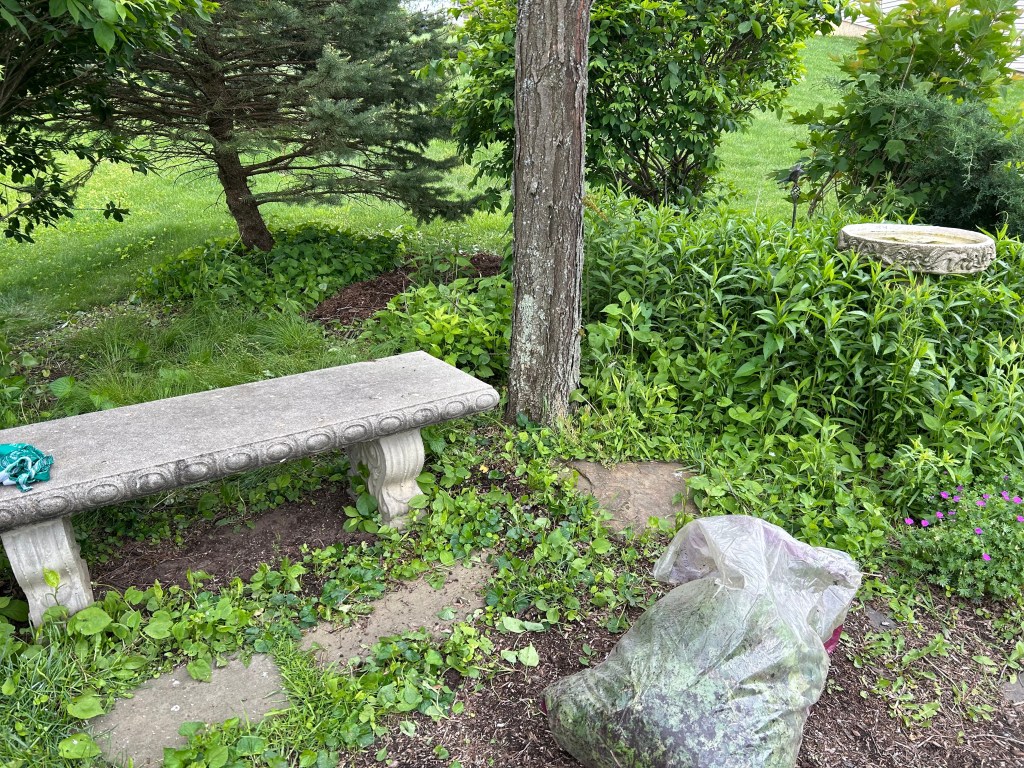
The corner of the yard has trees and shrubs that shade the ground a good portion of the day. With all of the rain, the common blue violets (Viola sororia) have taken over to a large degree, but there was wild ginger ((Asarium canadense) and sedge (Carex radiata) present, and these had to be uncovered. This area is normally very dry, so plant growth had been limited. There was more rain this spring so this area got a bit out of hand.
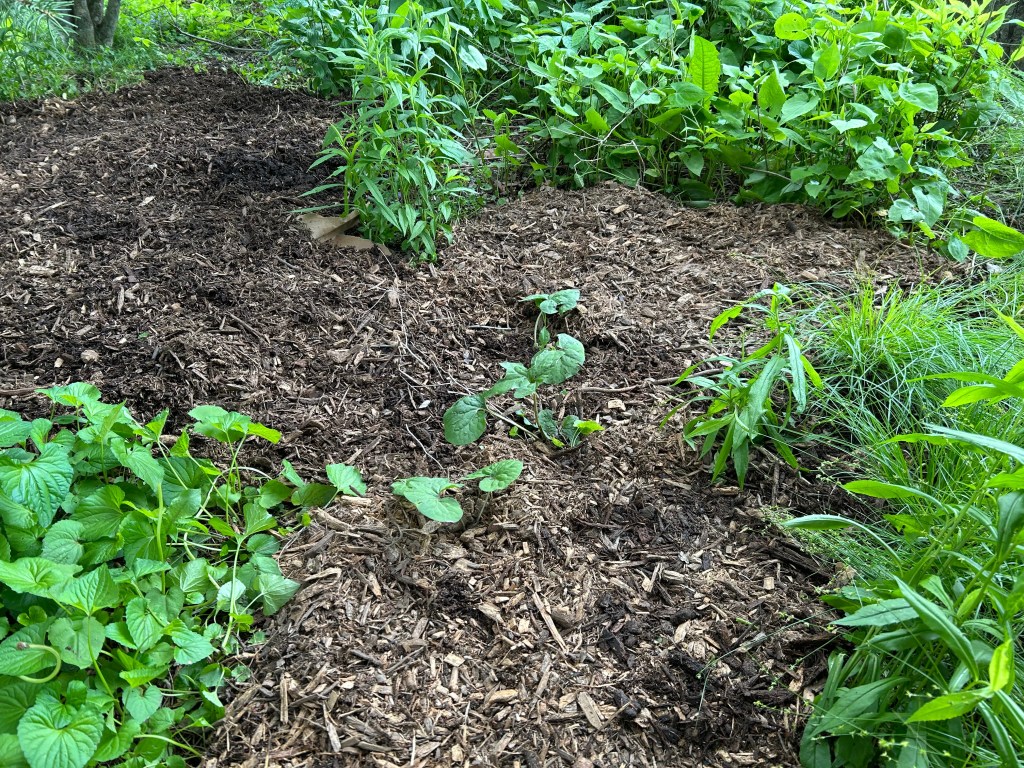
Three wild ginger plants sitting between the sedge on right, and common blue violets on left. An American Bellflower (Campanula americana) and Wood Asters are in the top of the photo.
This whole area had been covered in blue violets, and I thinned it out and then added mulch. I am hoping the wild ginger gets better established. I had planted 8 plugs last year, and these three were the only ones I could find.
Common blue violets are not a bad ground cover if you want a continuous carpet of them, but I do like having some variety. The sedge has done well, although the blue violets have grown up between the tufts.
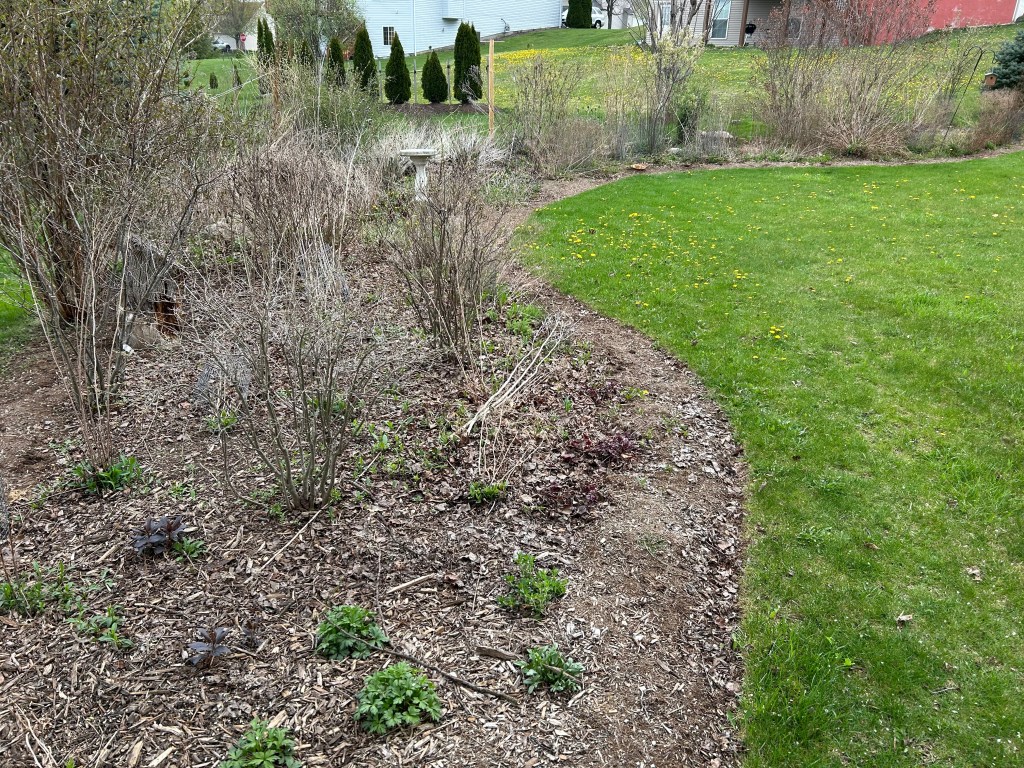
With temperatures on the cooler side with occasional rain, especially on the weekends, April did not provide much opportunity to get into the garden. But weather warmed in the first week in May, and it seemed that nature got jump started.
Below was the picture from 10 days earlier.
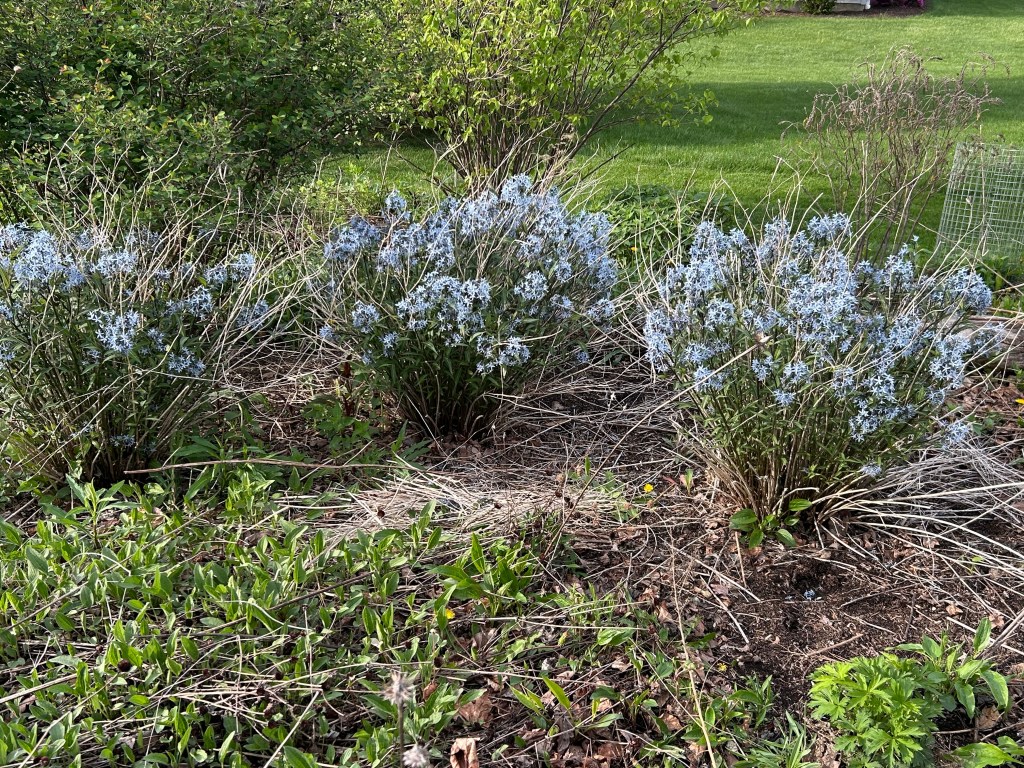
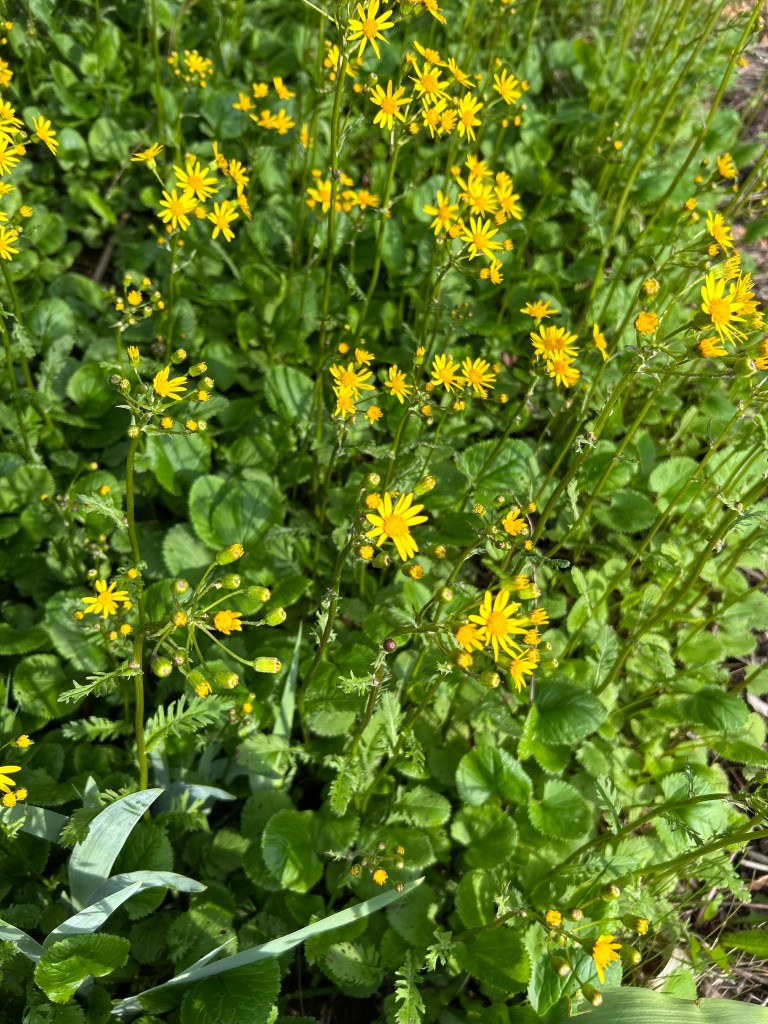
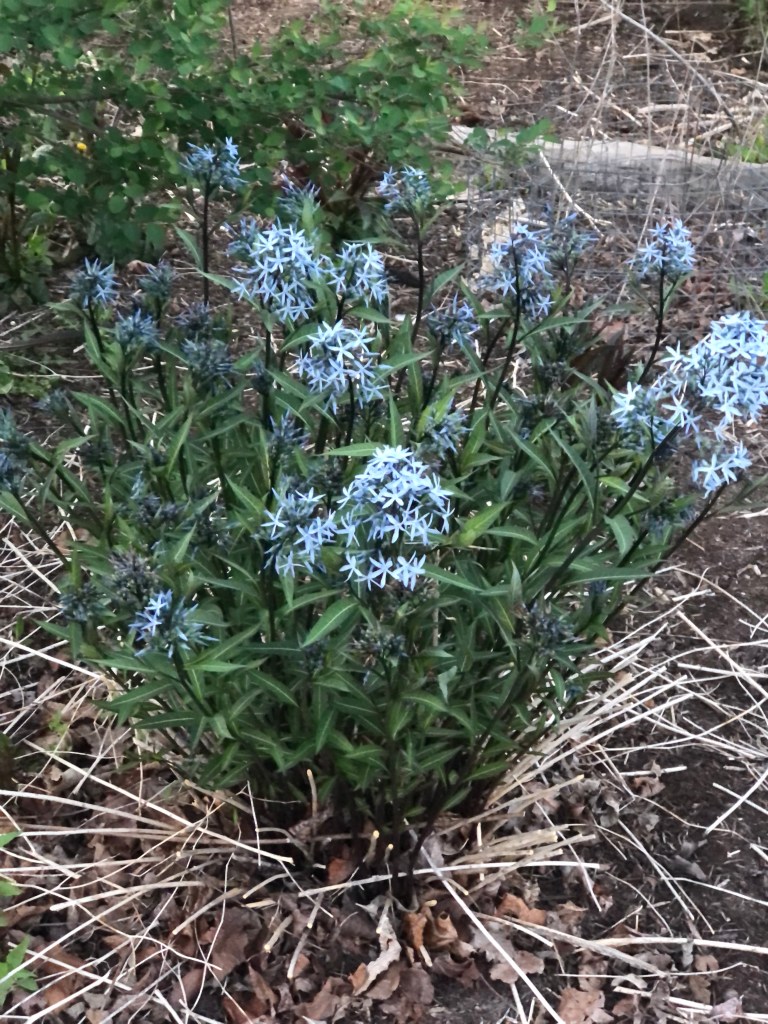
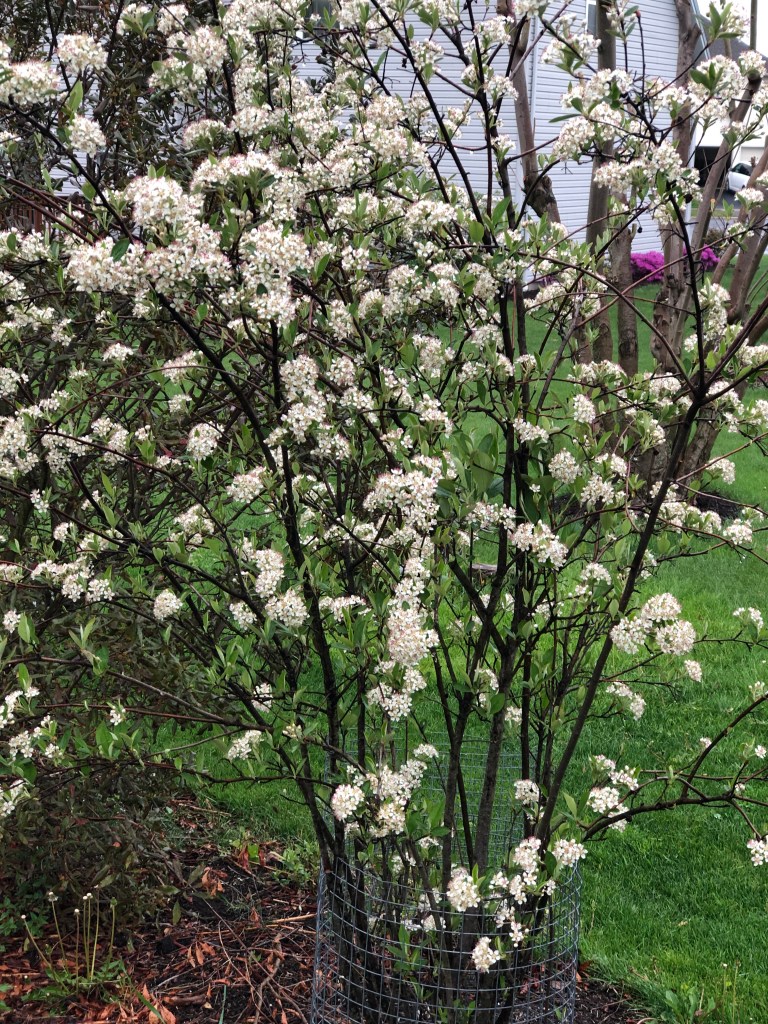
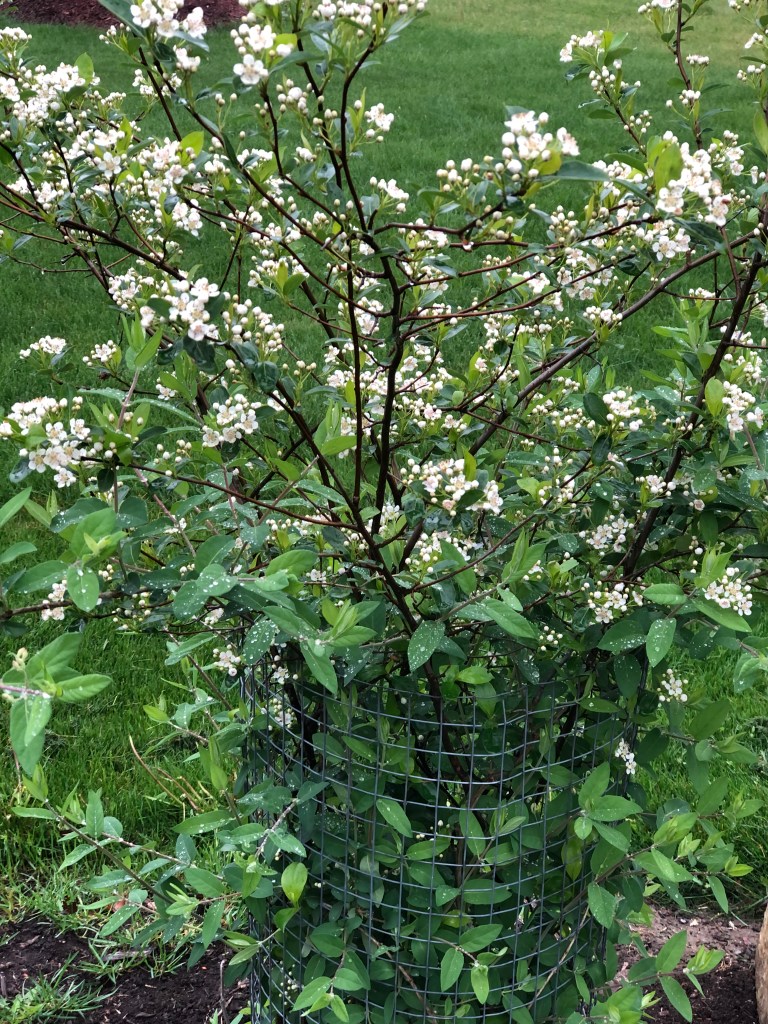
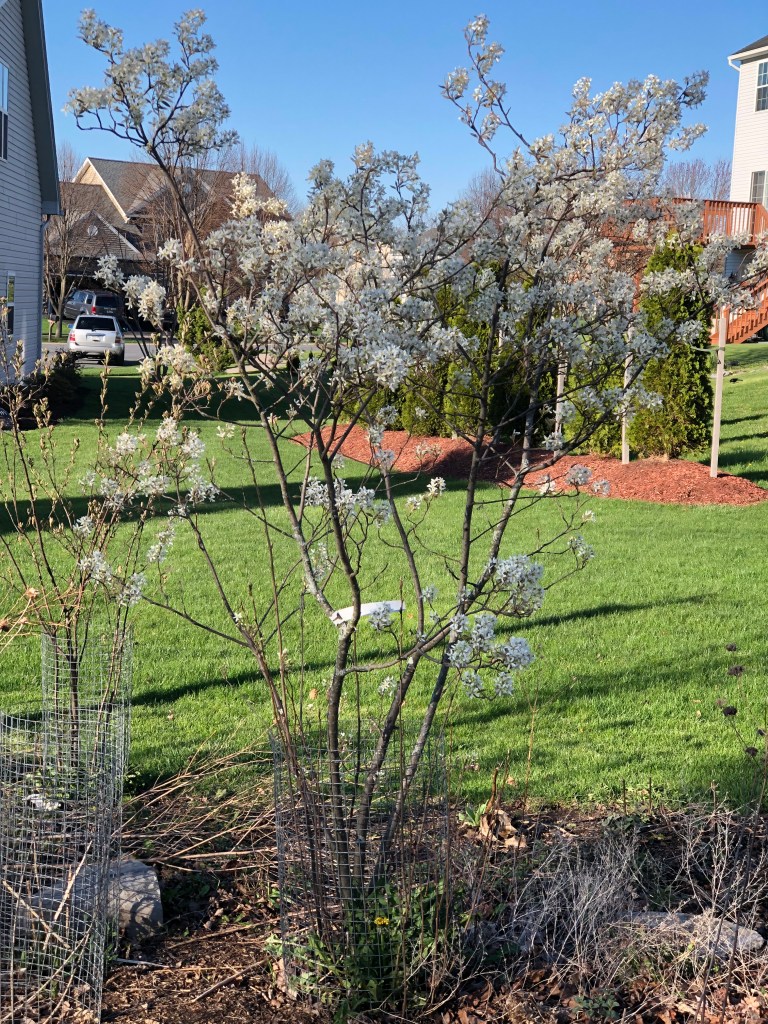
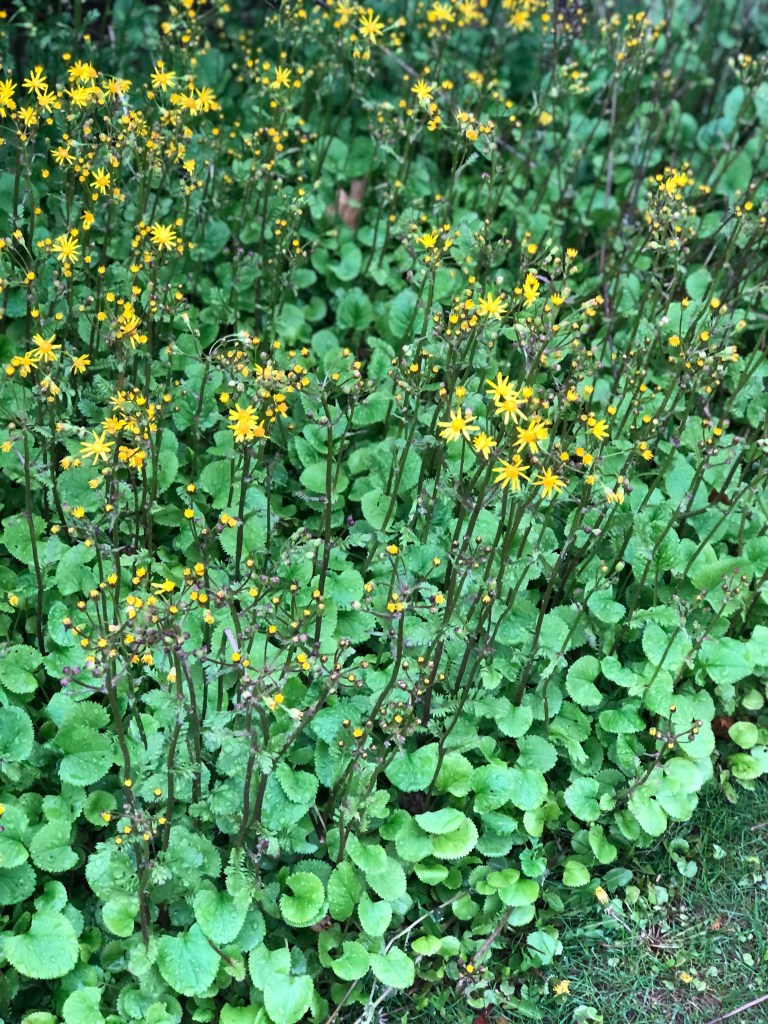
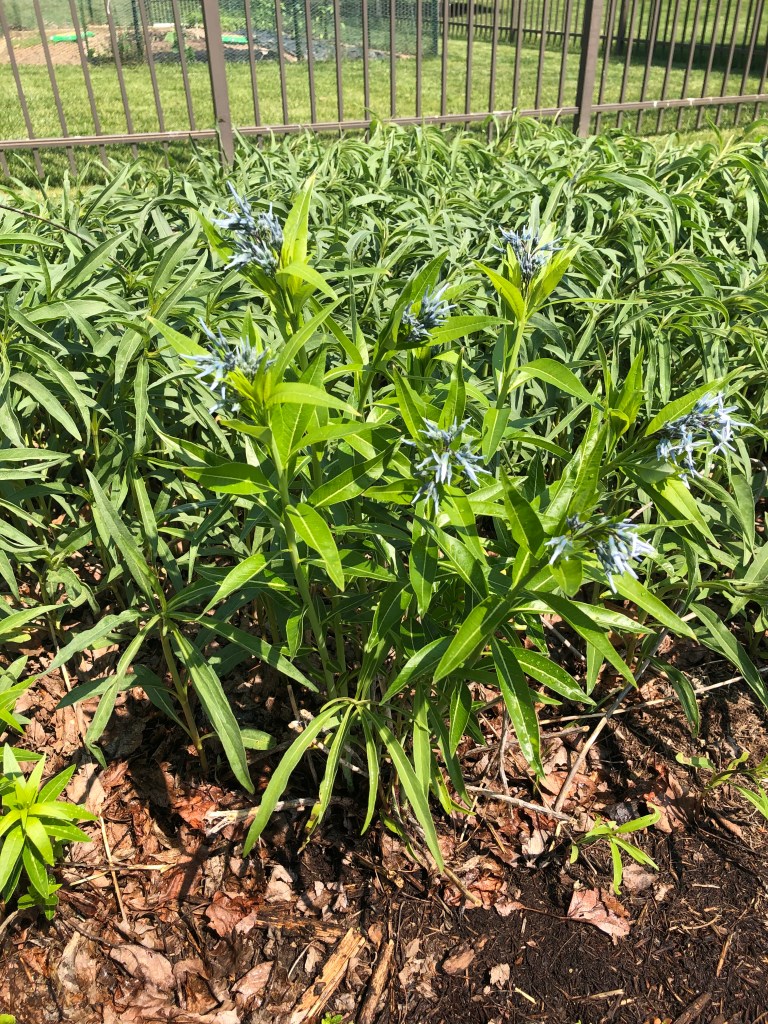
The early season bloomers included Bluestar (Amsonia tabernaemontana), Black and Red Chokeberry, and Golden Ragwort. The Serviceberry tree was the first to bloom and was complete by the beginning of May.
Bluestar – Amsonia tabernaemontana
Red Chokeberry – Aronia arbutifolia
Golden Ragwort – Packera aurea
The garden cleanup occurred this weekend, removing dead plant stems and pulling some of the many dandelions that should have been removed last year.
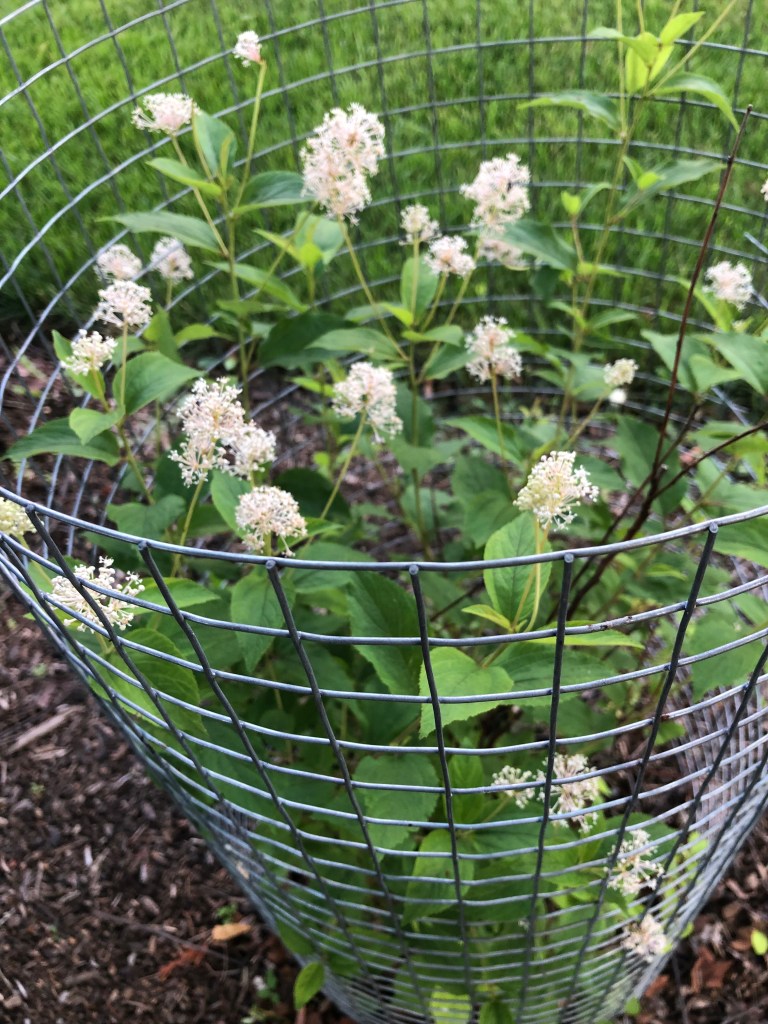
Dandelions are not the only nuisance. Grass from the lawn seems to make its way in and must be removed before it sets a more stable root structure. And then there are the rabbits. I have started placing in plant cages, although some plants, such as the New Jersey Tea (Ceanothus americanus) took a real beating.
The other challenge this year will be loss of plant boundaries. Now in the 6th year of this project, the garden has become almost a continuous mass where the plantings are no longer distinctive but meld together. I guess this is the way it occurs in nature, but identification becomes more difficult. I plan to clean up some of the lines if any one type of plant becomes overly aggressive.
Late April / Early May – These natives are the first to bloom. Of these, the Serviceberry was first to bloom and those blooms are already done by the time these others flower. The Golden Ragwort is now in full bloom with its yellow flowers. It is somewhat of an aggressive plant expanding its area.
I am a fan of the chokeberry plants. They provide height in the garden, but are not huge sun blocks. I do keep the cage around the base to prevent the rabbits from shredding them. The berries on the red chokeberry stayed on the plant throughout the winter, but were feed for the birds in the early spring.
Many of the other plants have popped out of the ground at this point. The problem with some of these shoots is the difficulty determining what plant it is and whether it is a weed.
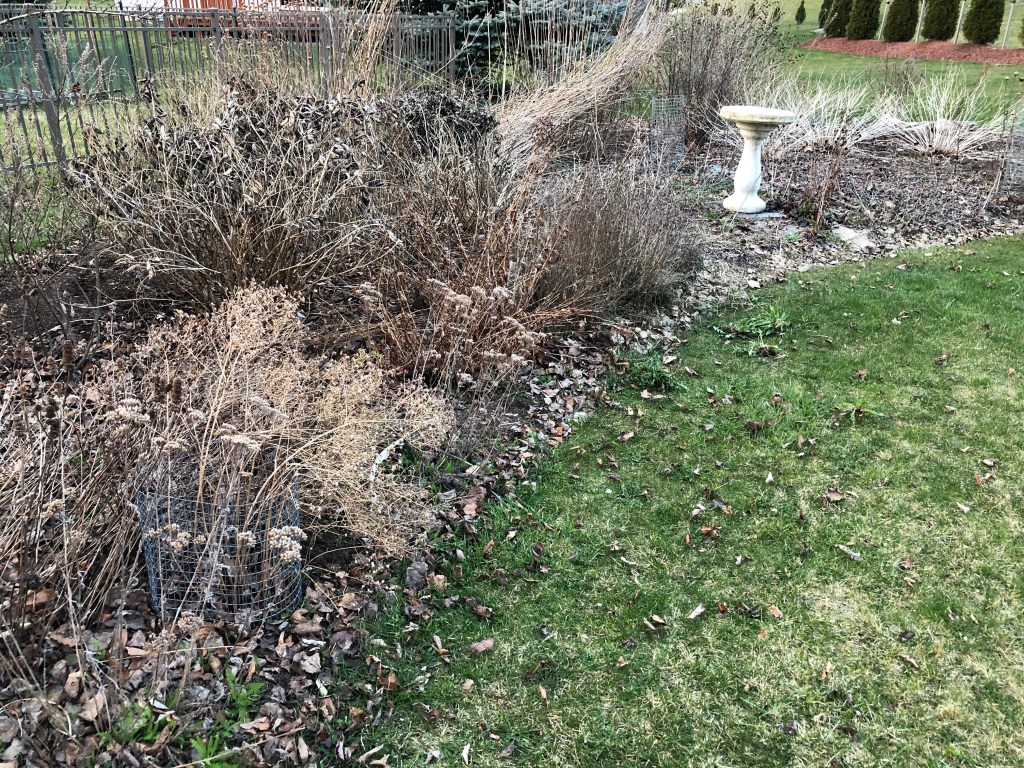
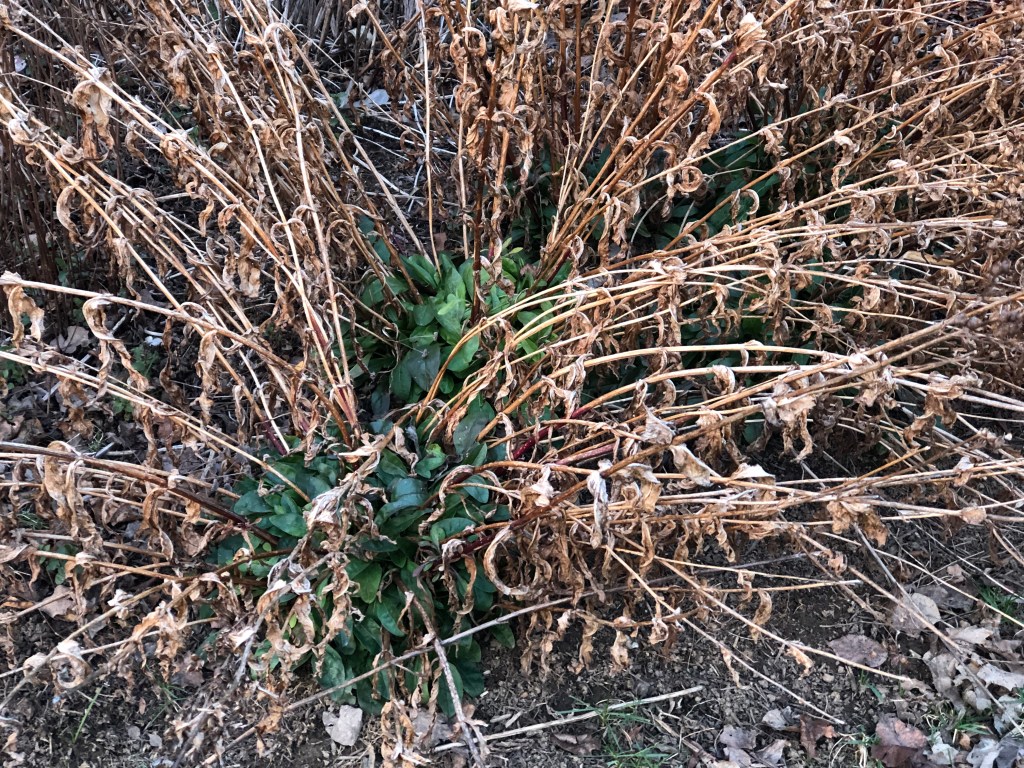
By the end of April, I had cut back all of the dried stems from the previous year’s growth. As much as possible, I broke it up into small pieces as left it on the ground as a type of mulch. It also seems to provide cover for the small birds.
Bluestar – Amsonia tabernaemontana
Red Chokeberry – Aronia arbutifolia
Black Chokeberry, Iriquiois Aronia melanocarpa
Serviceberry, apple Amelanchier × grandiflora ‘Autumn Brilliance
It has been a long wait. Weather has been cold and/or rainy to this point. But today was warm and sunny, good enough to pull some weeds and straighten up the rabbit fencing. The leafless stalks are still in place along with the leaf litter on the ground to support the soon to reemerge insects. But down under last year’s dead plant matter, the plants are beginning to rise up from the ground for version 2024. Very exciting to see.
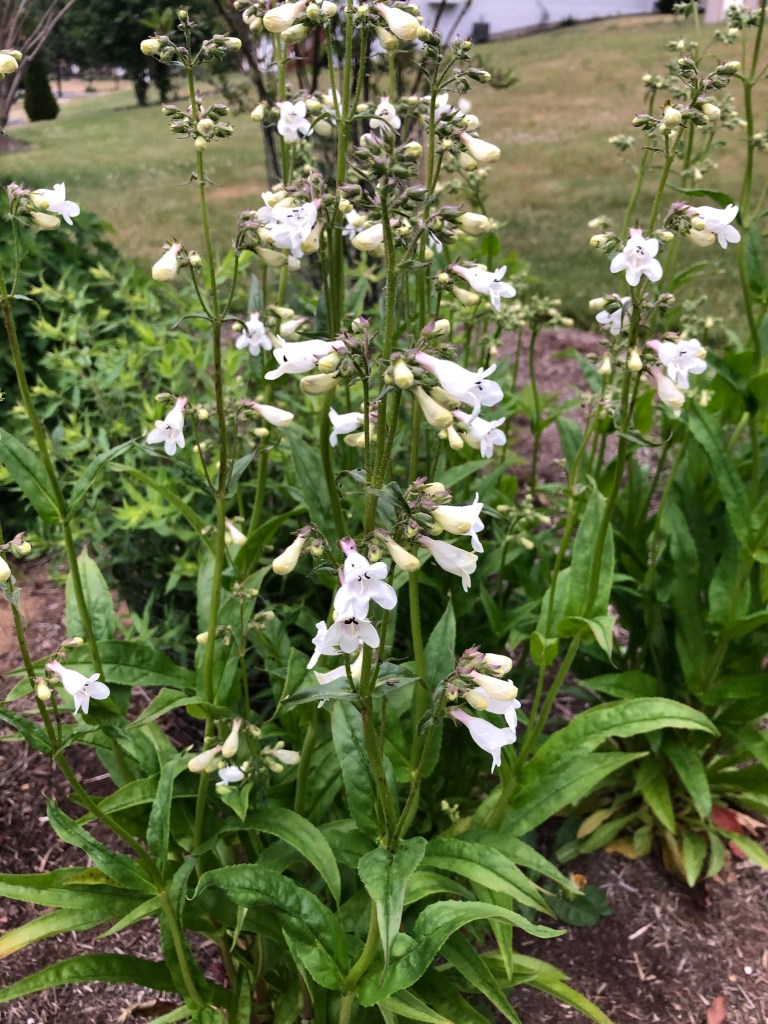
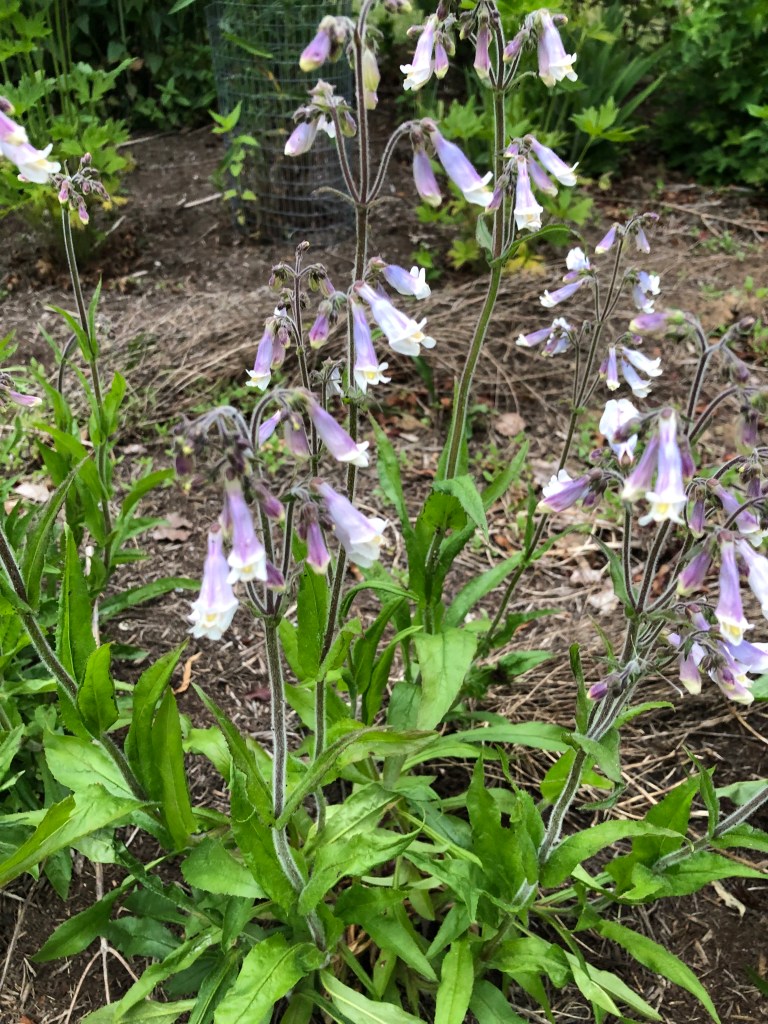
Penstemon digitalis – Foxglove Beardtongue
The Foxglove Beardtongue is one of the early risers. Many of the mint species are also coming up. Many other plants as well, but will need to wait a bit longer to figure out what the specific plants are.
As for the wild birds, the Robins and the Grackles have returned. Unfortunately, the Grackles will eat all the seed that is available to them. Using the caged feeder along with feeding safflower seed in the tube feeder ensures there is something for the smaller birds. Awesome to have an abundant bird life again.
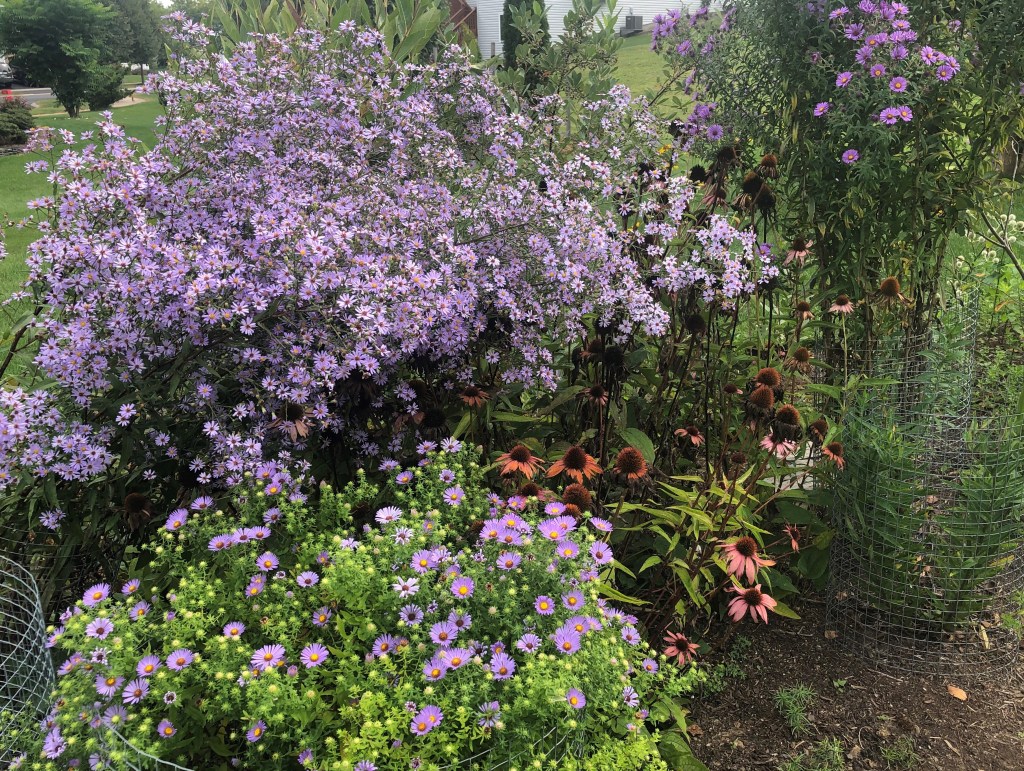
Like attending a fireworks display, it is great to marvel at the constantly changing blooms of the native garden. And for the fireworks finale, the asters, sunflowers, and golden rod create a true spectacle.
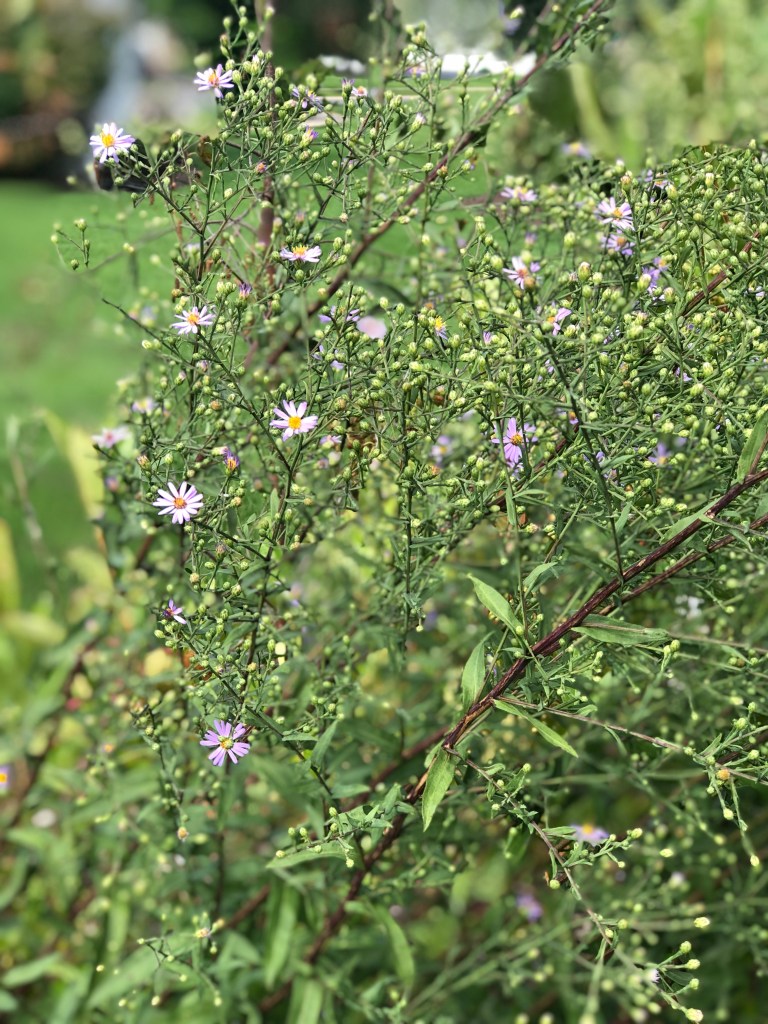
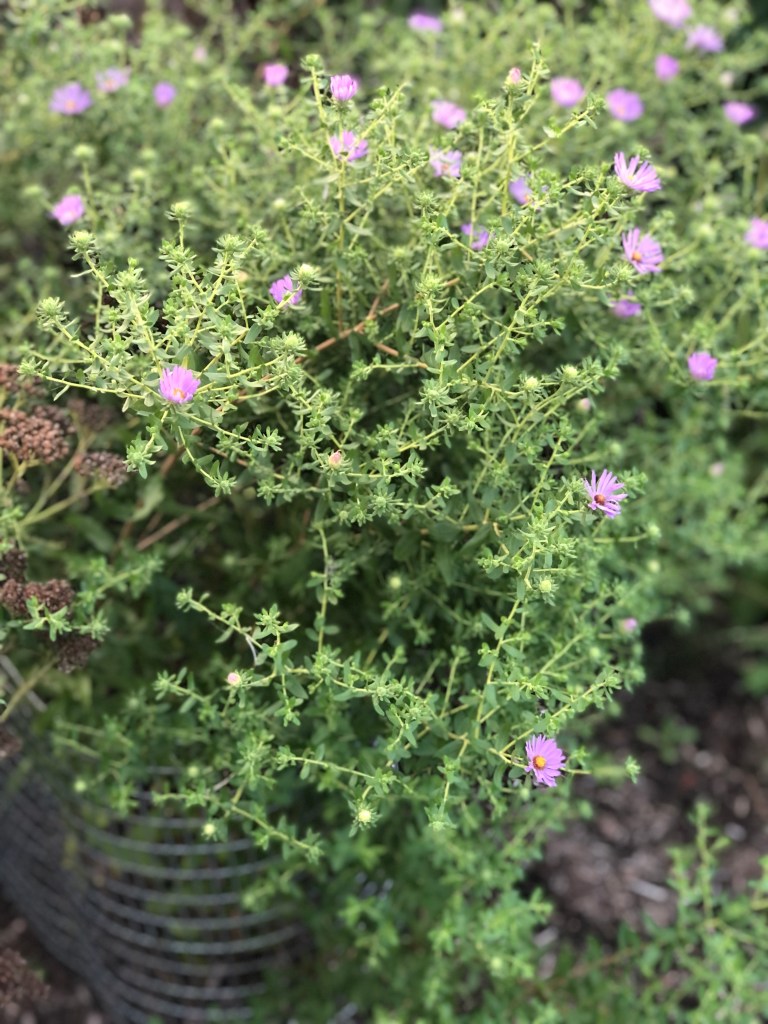
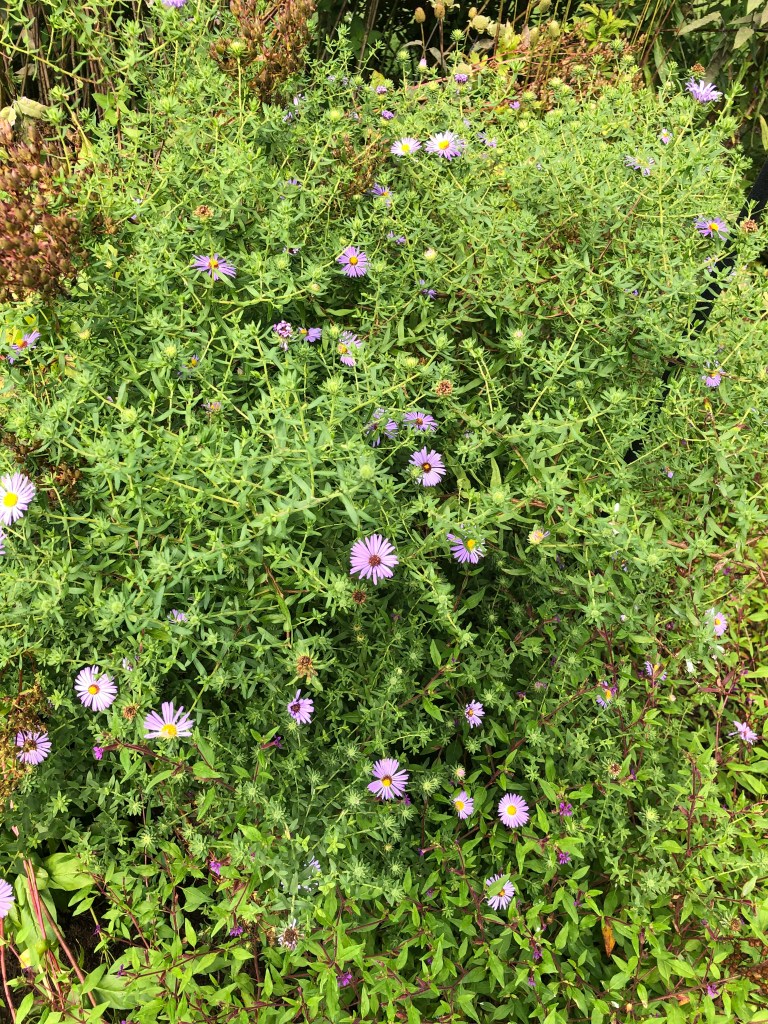
Aromatic, /Smooth, and New England Asters.
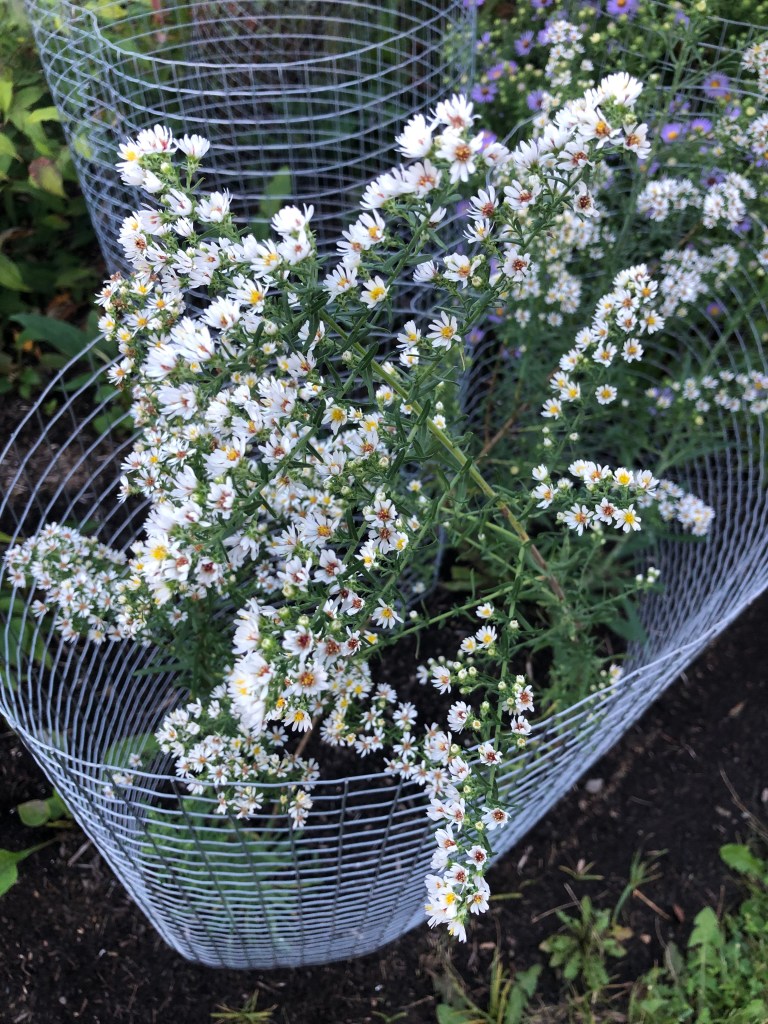
Calico Aster
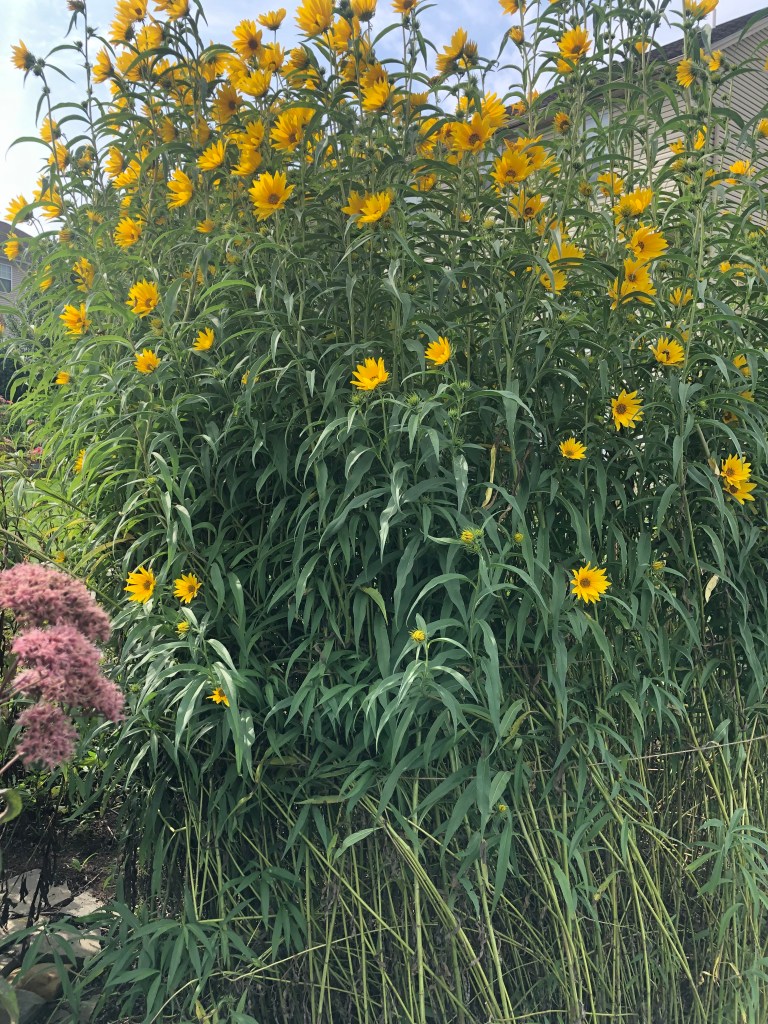
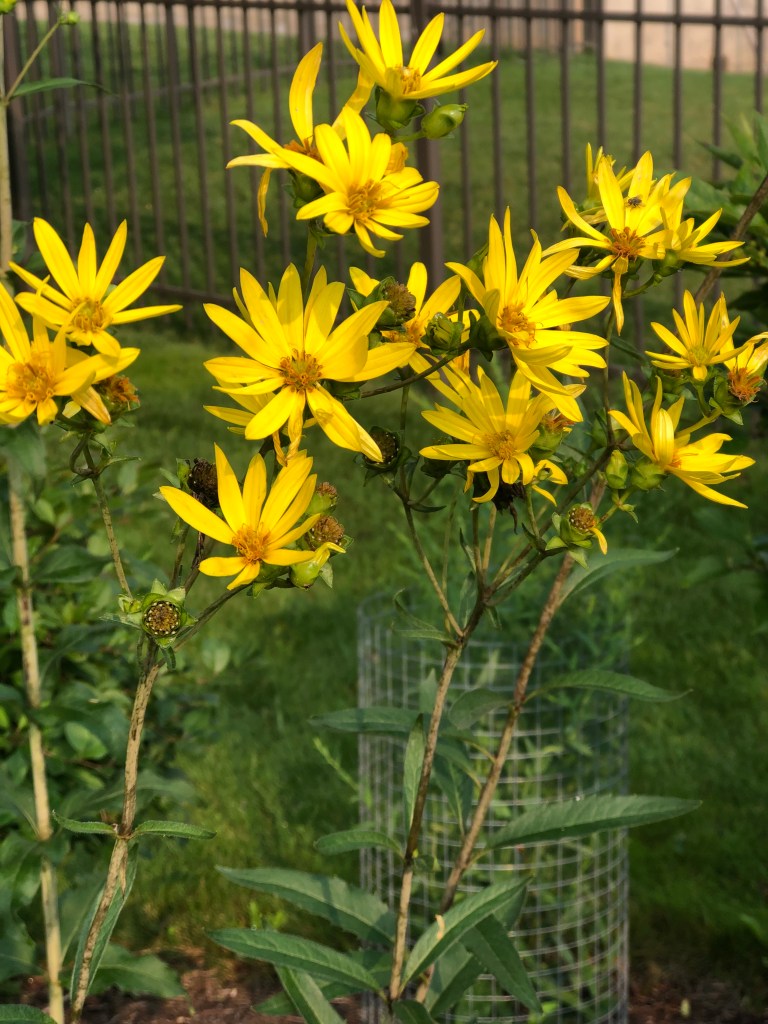
The Maximillian Sunflowers pictured here are over 8 foot tall. The greatest sight occurs when the flowers go to seed and then become a magnet for scores of Goldfinch.
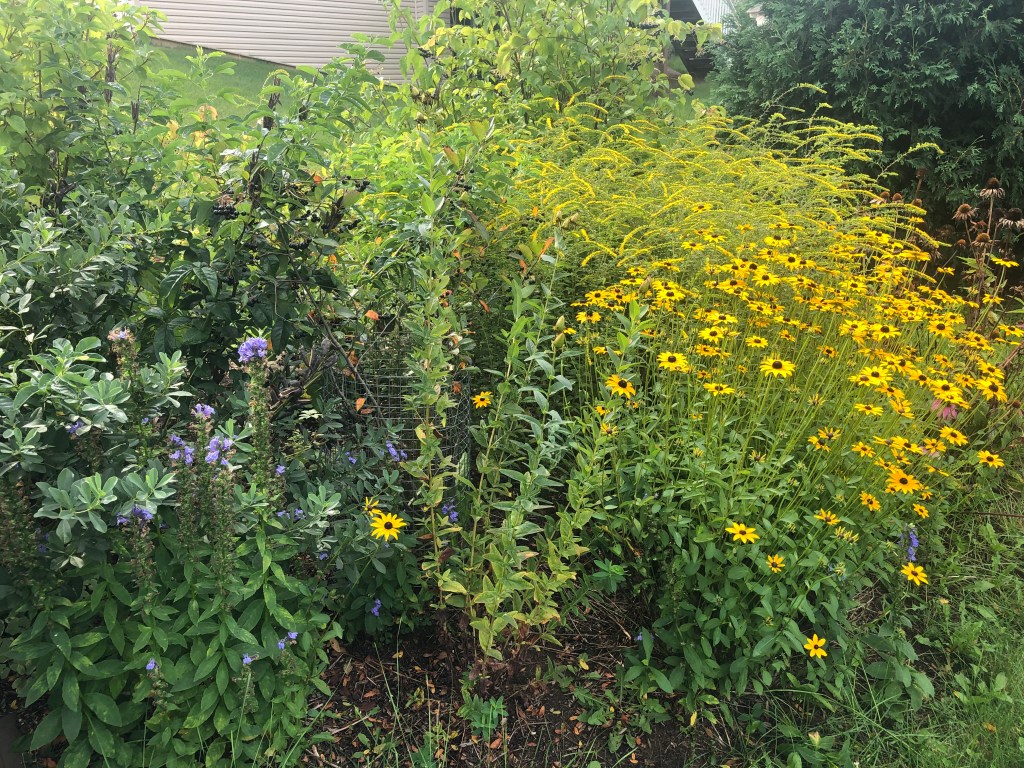
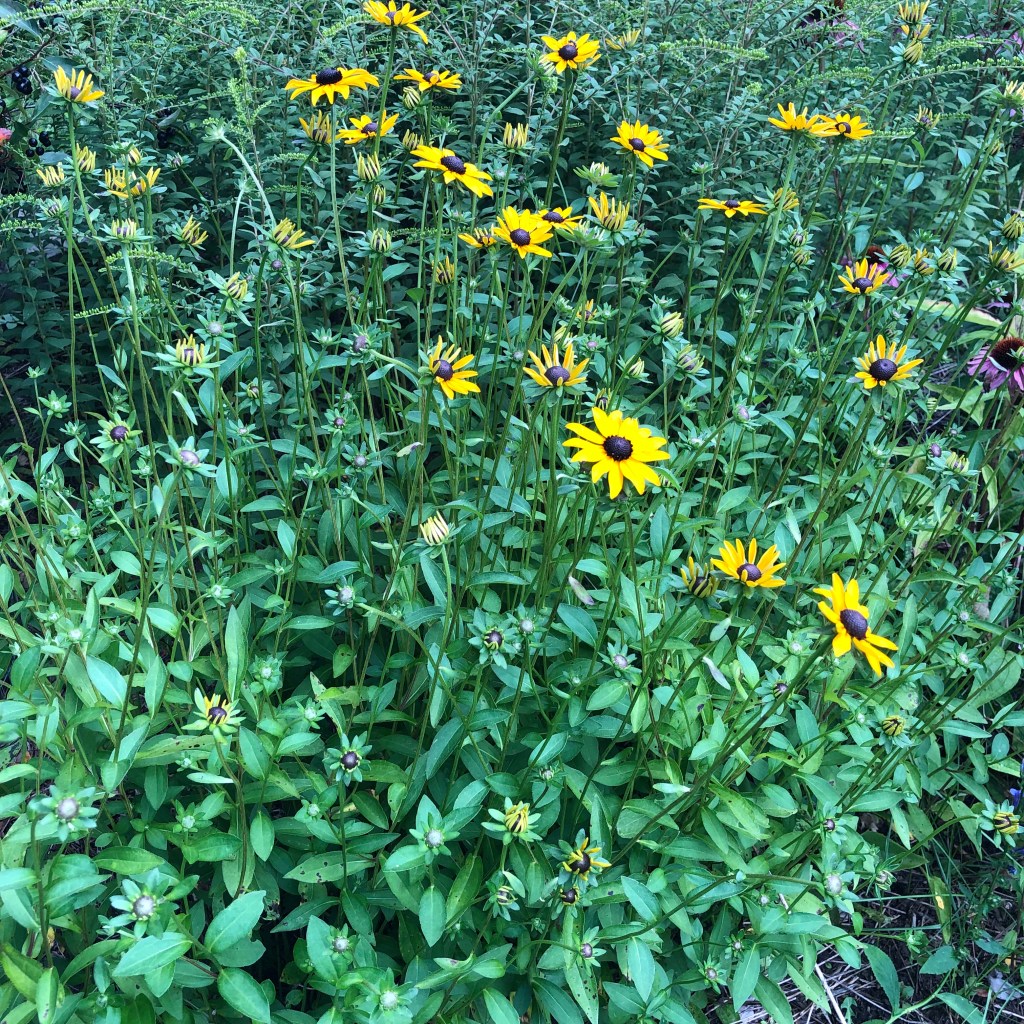
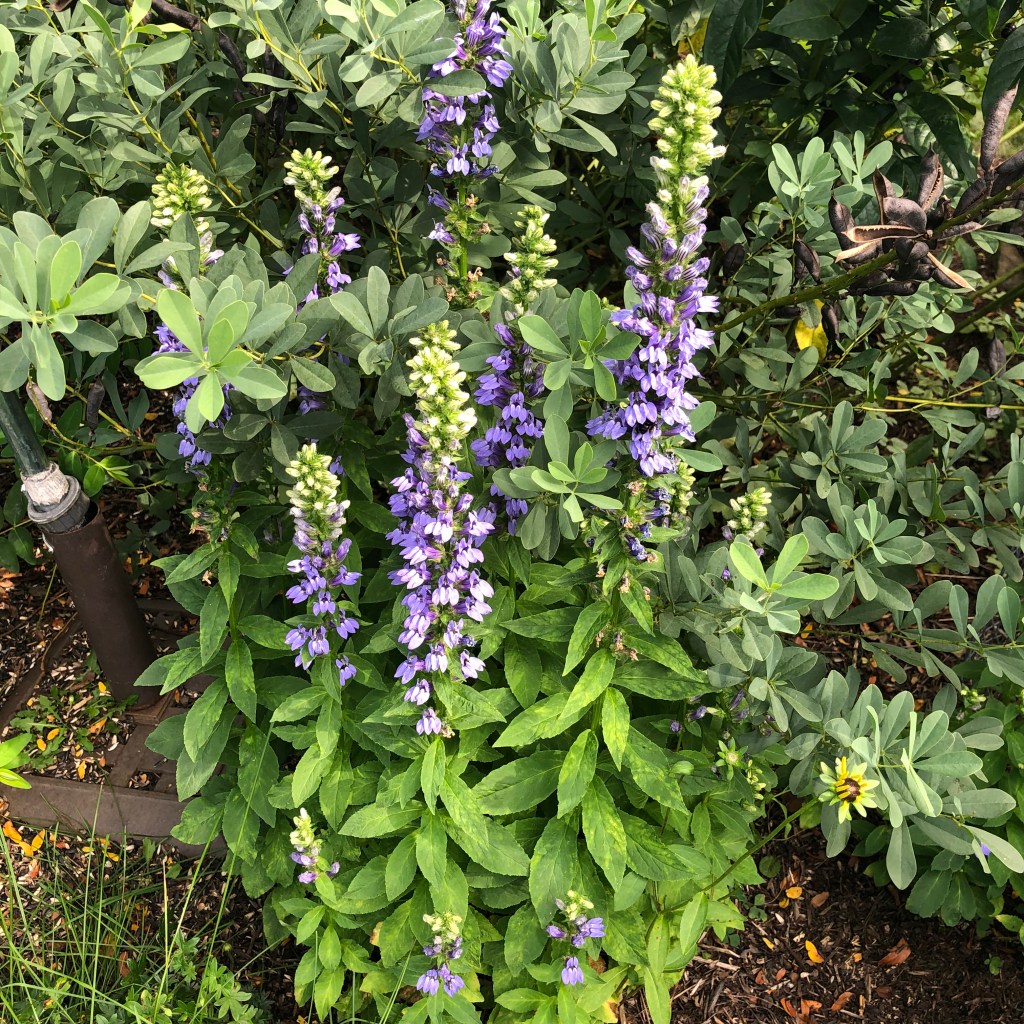
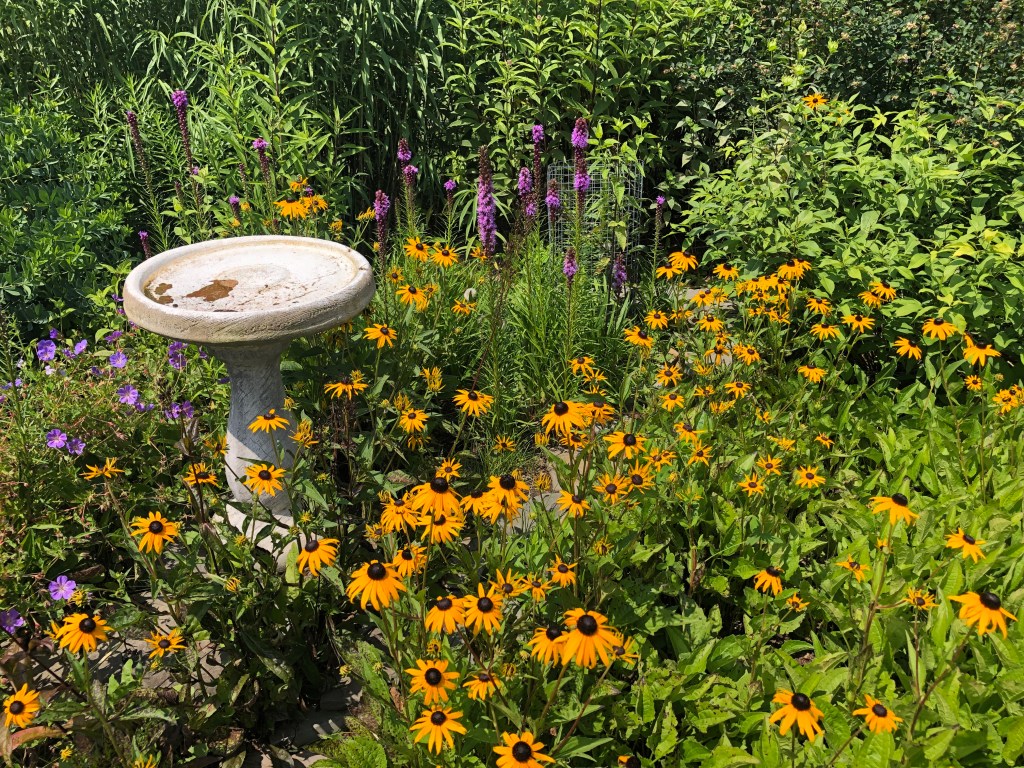
Black-eyed Susan in front of Golden Rod. Great Blue Lupin is to the left.
After a very dry June, there was plenty of rain in July. It was pleasing to see the garden really fill out.
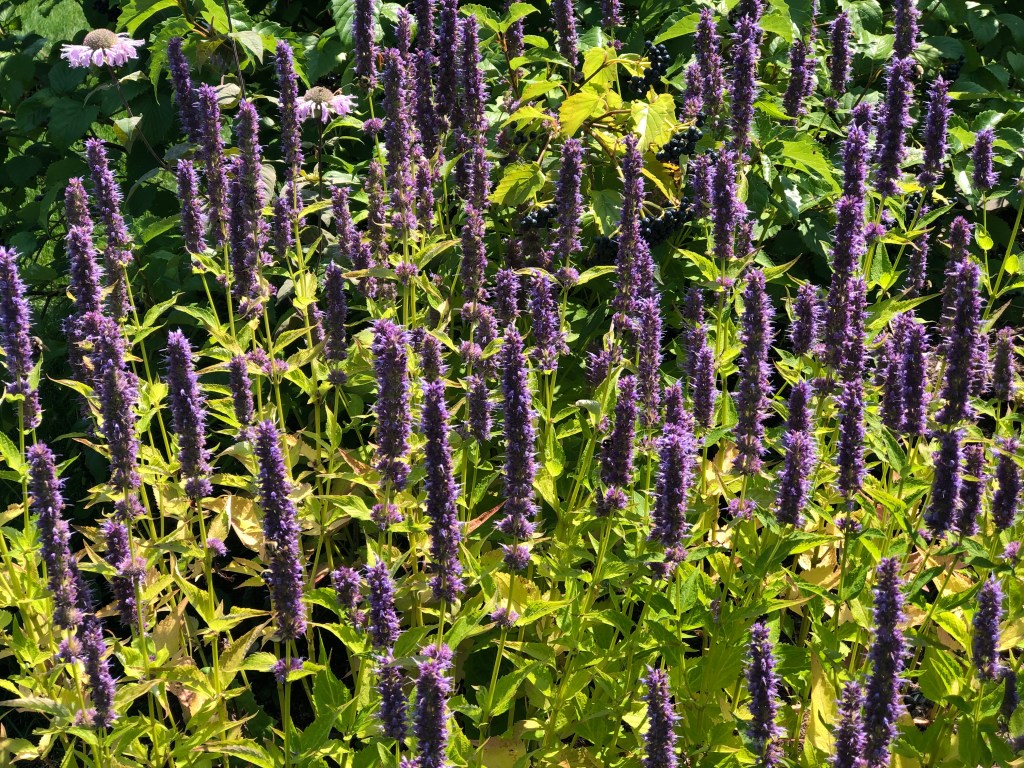
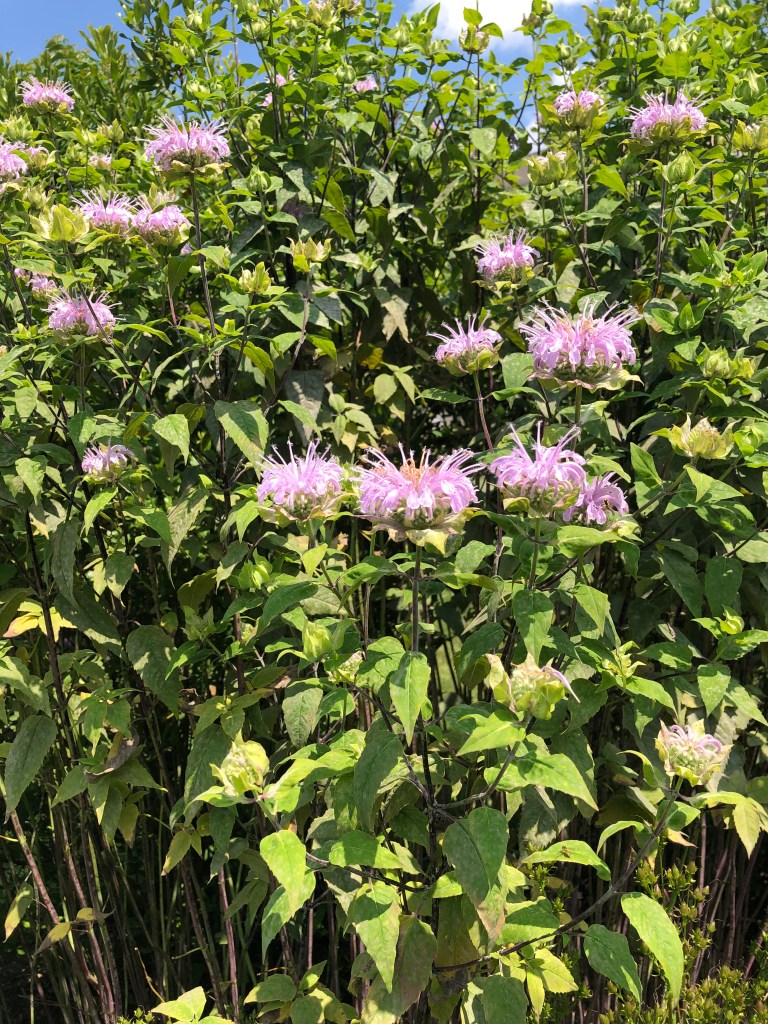
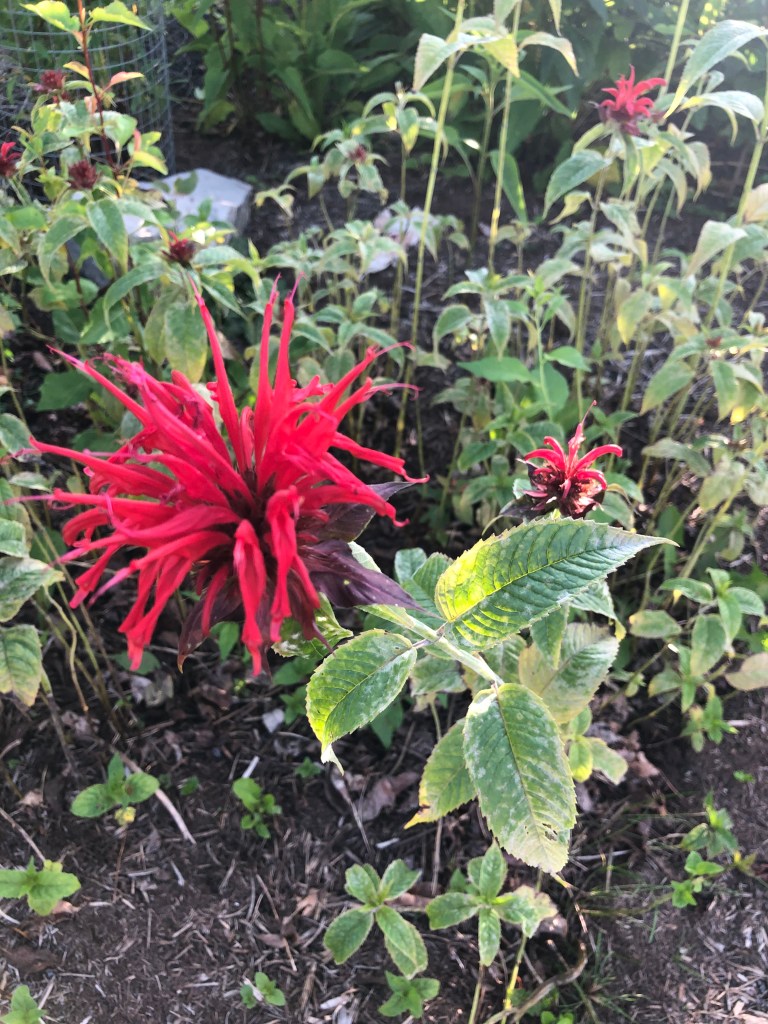
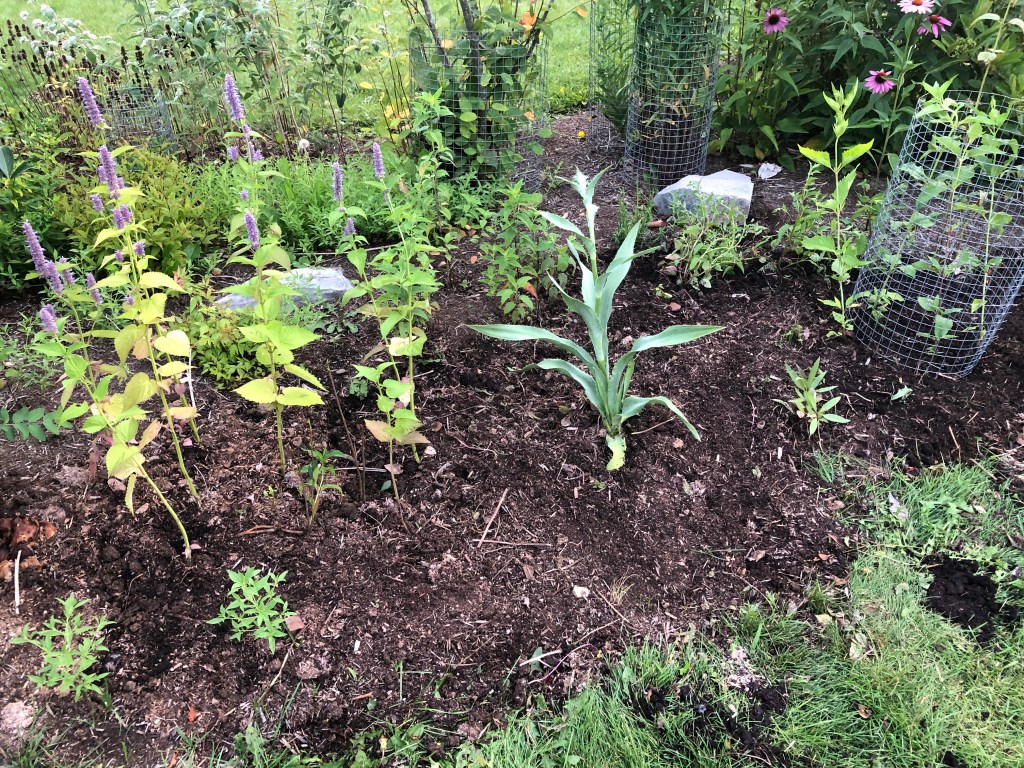
Did replace a few items. I took out the red bee balm and replaced it with Anise Hyssop and Rattlesnake Master. I am hoping these two will handle the dry clay soil better.
A patch of Red Bee Balm was removed…while it had nice color, its growth was spotty.
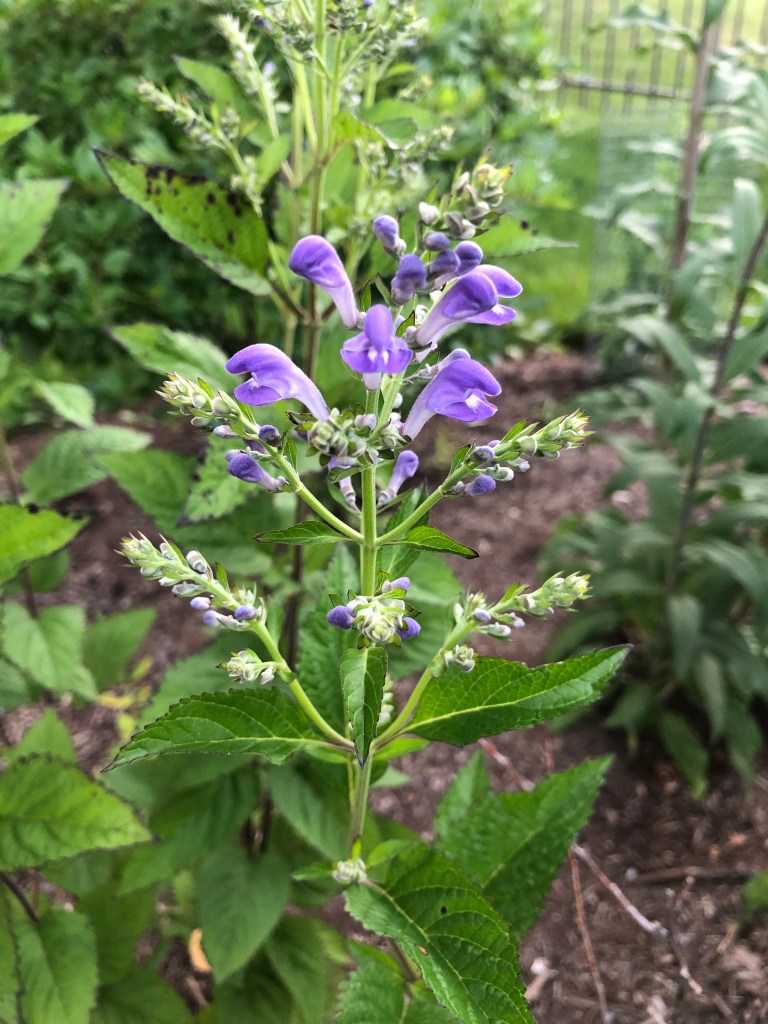
Anise Hyssop and Rattlesnake Master were added in that spot.. Also added close to fill in are ox-eye sunflower and mad dog skullcap (Sctuellaria laterifora). (Was looking to get downy skullcap – Scutellaria incana, but settled. I liked the downy skullcap, pictured above, as it had performed well in the garden conditions).
The first months of the garden season bring the renewal of life in the garden. Always a joy to watch plants reemerge, like old friends returning.
June 2023April 2023Serviceberry (Apr)
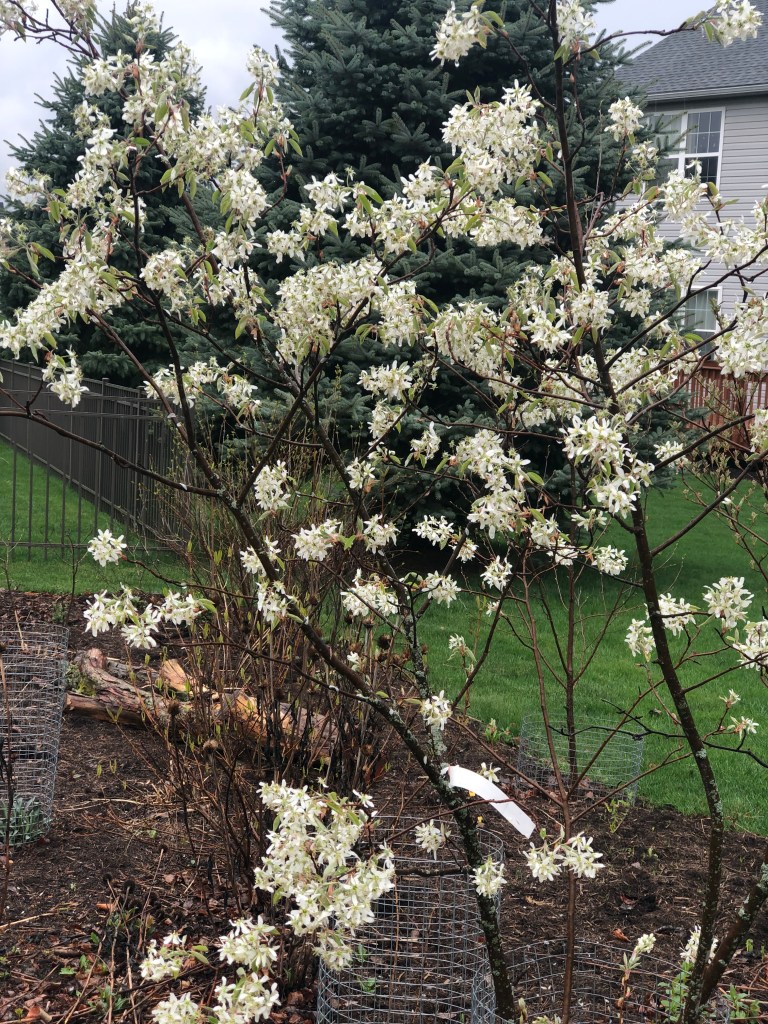
One of the first flowers to show is that of the Serviceberry. In June, these flowers will become berries, and once ripe, will be quickly eaten by the Robins. This tree has not grown much since planted, so it does not become a dominate presence. Its leaves do not block light from the plants below, so this has been an ideal small tree for the garden.
Amsonia tabernaemontana – Eastern Bluestar (May)
The Eastern Bluestar flowered in May through June.
The weather was cool and dry in May through the beginning of June. But warm weather finally came, and with that, additional plant growth and flowering.
Penstemon digitalis – Foxglove Beardtongue (June)
The Foxglove Beardtongue were added last year and at the time, were still pretty small. This year, they are more substantial. While I wished I had placed them back further in the garden, their awesome flowering display makes it a non-issue. It has been an good plant for attracting the hummingbirds.
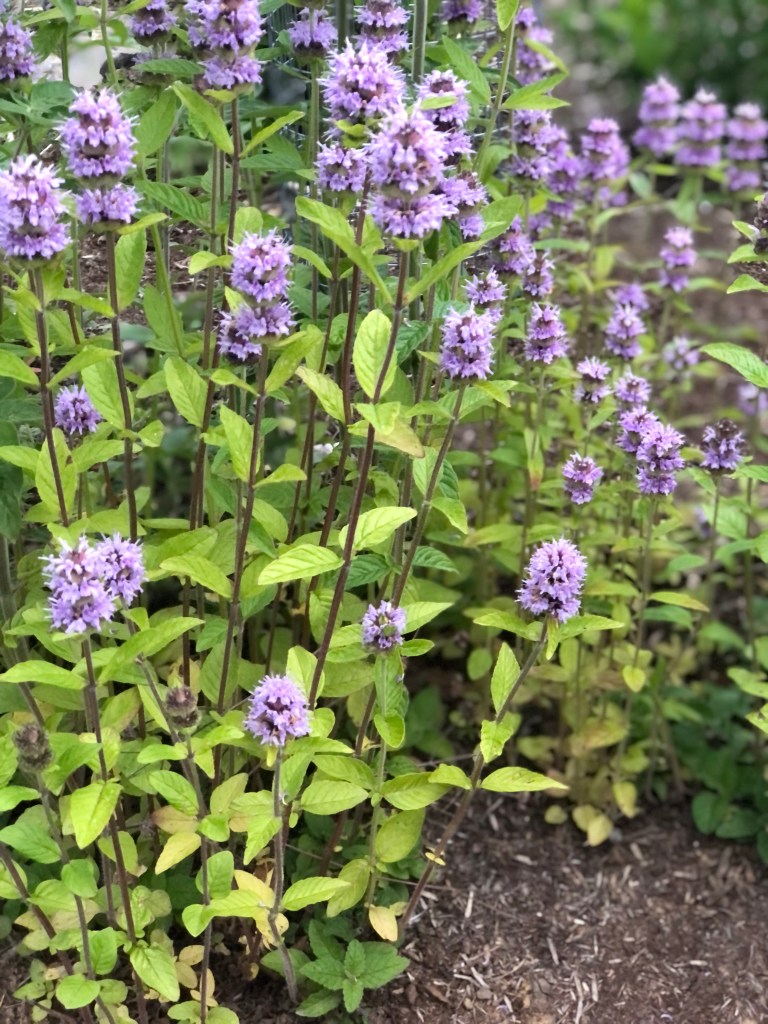
These four were new last year and have been excellent additions. The Downy Wood Mint, also called Downy pagoda plant does spread a bit, however the bees have been visiting it regularly.
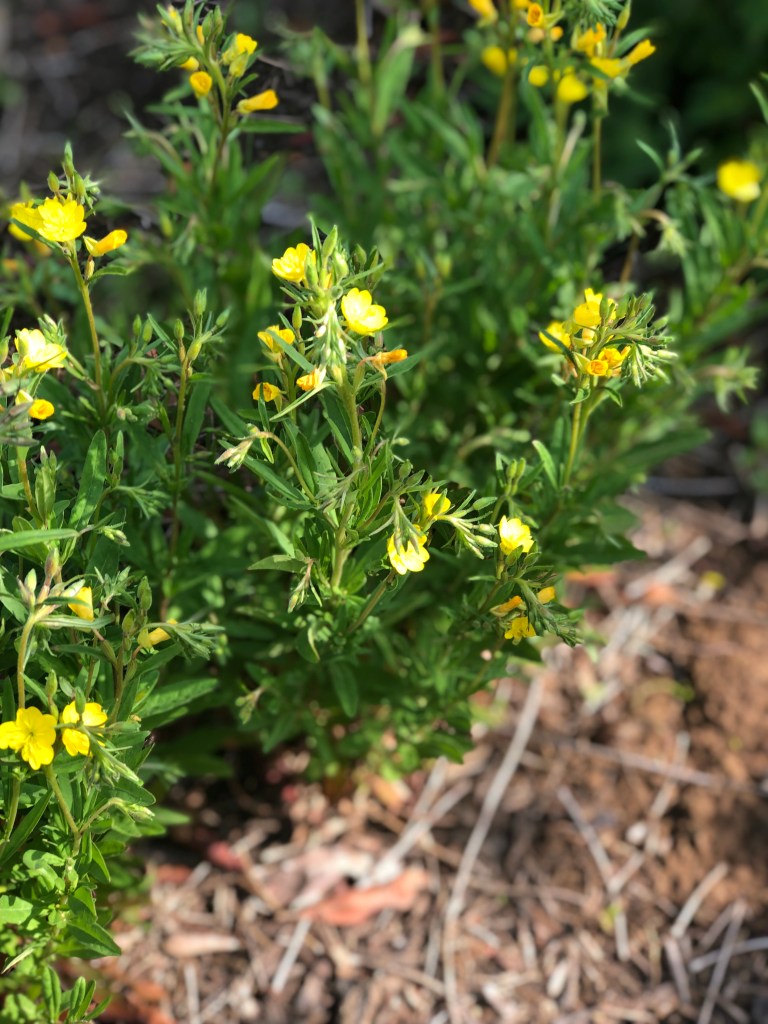
Oenothera perennis – Small Sundrops
The Small Sundrops – it was good to see them blossom. Last year, they were consumed by the rabbits and so did not get to see much of them.
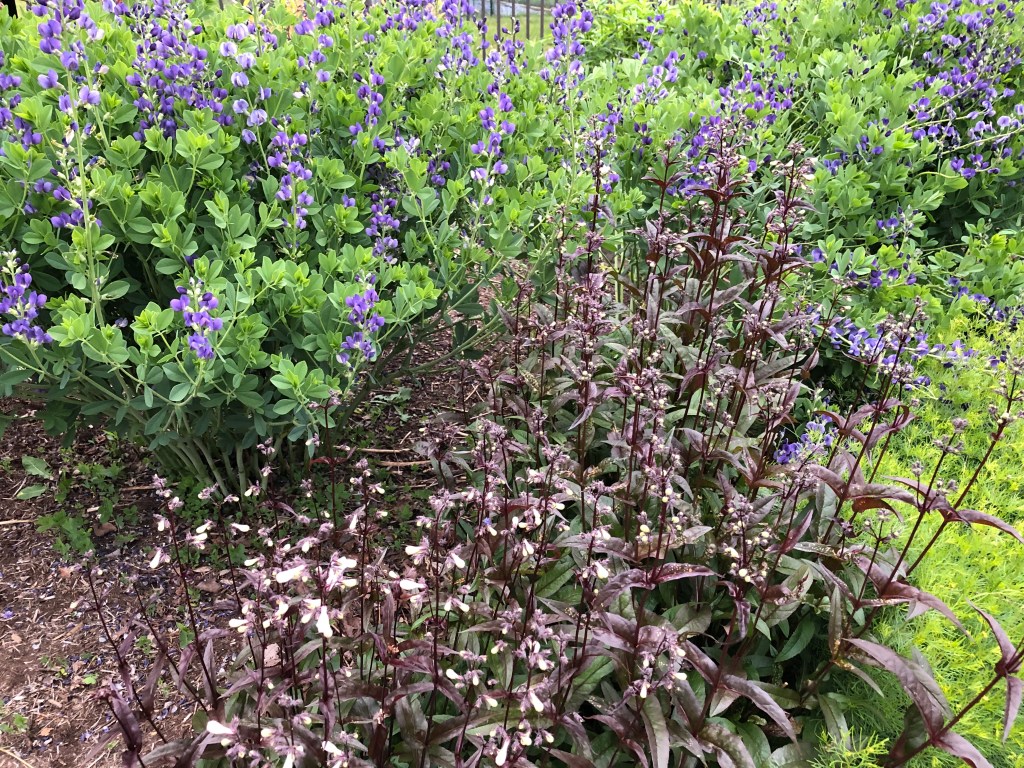
Background – Baptisia australis – Blue Wild Indigo Foreground – Husker Red Beardtongue
The Blue Wild Indigo has been a terrific plant to set the midsection of the garden. There are thee of these plants in the lower garden and one in the upper. They have good height (3 ft) and width (3ft). They have required little maintenance.
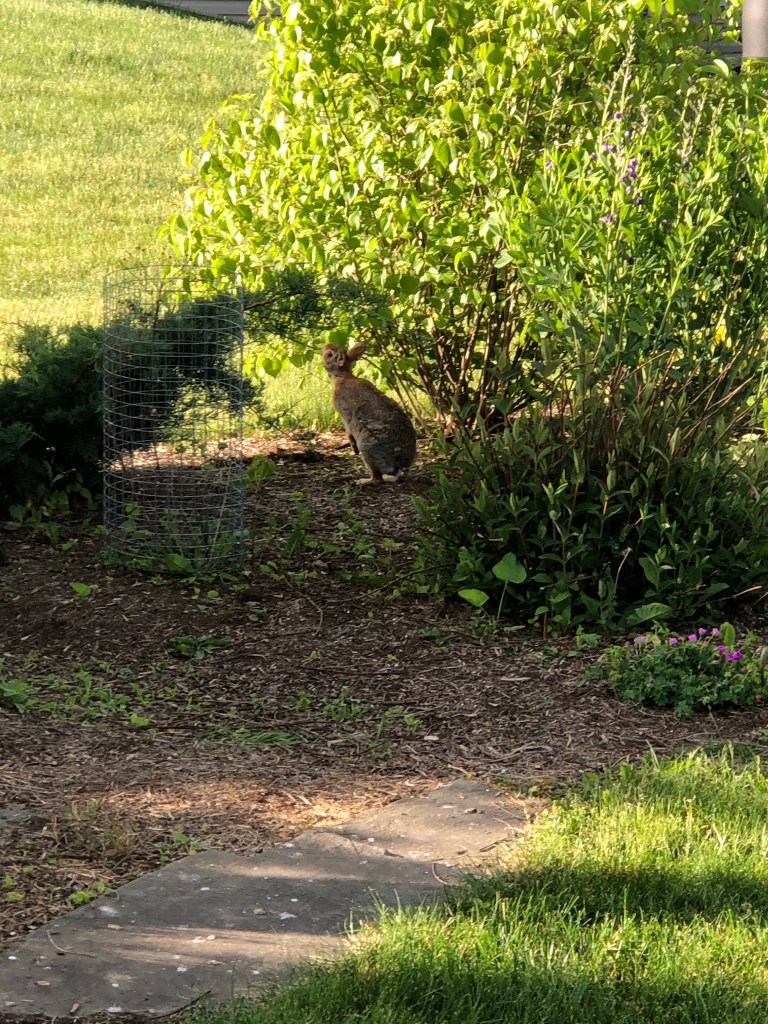
Rabbit
The rabbits continue to be an issue. Four have been relocated, but others seem to take their place. I have over a dozen plants fenced…those that seem to be the most tasty for rabbits, but the rabbits seem to move down the menu to something new.
“They found an interesting trend: typically overlooked smaller plots of wildflowers, less than 500m², produced a 1.4-fold increase in pollinator abundance over control plots. Based on these findings, they designed a field study using small patches for community farms in Washington State to test this idea. Planting these 11 small patches, only 30m² big, with floral strips and nests for pollinators they saw an overall increase in the number of recorded bees—rising from 1,360 in 2014 to 3,550 in 2018.”
So start with a small commitment to add a small patch of native plants to your yard!


 Pennsylvania Native Garden Journey