Planting a native garden is not only visually attractive, but it helps to increase biodiversity of your space through supporting native insects and birds. This is not a how-to blog, but just follows the journey associated with my native garden. Maybe it will provide an idea on what to do, or not to do. Or perhaps it may provide some inspiration for going native in your own yard.
A light snow that covered the ground this morning in central Pennsylvania. The flowers have gone to seed and the leaves transitioned from green to red/yellow/orange and then to brown.
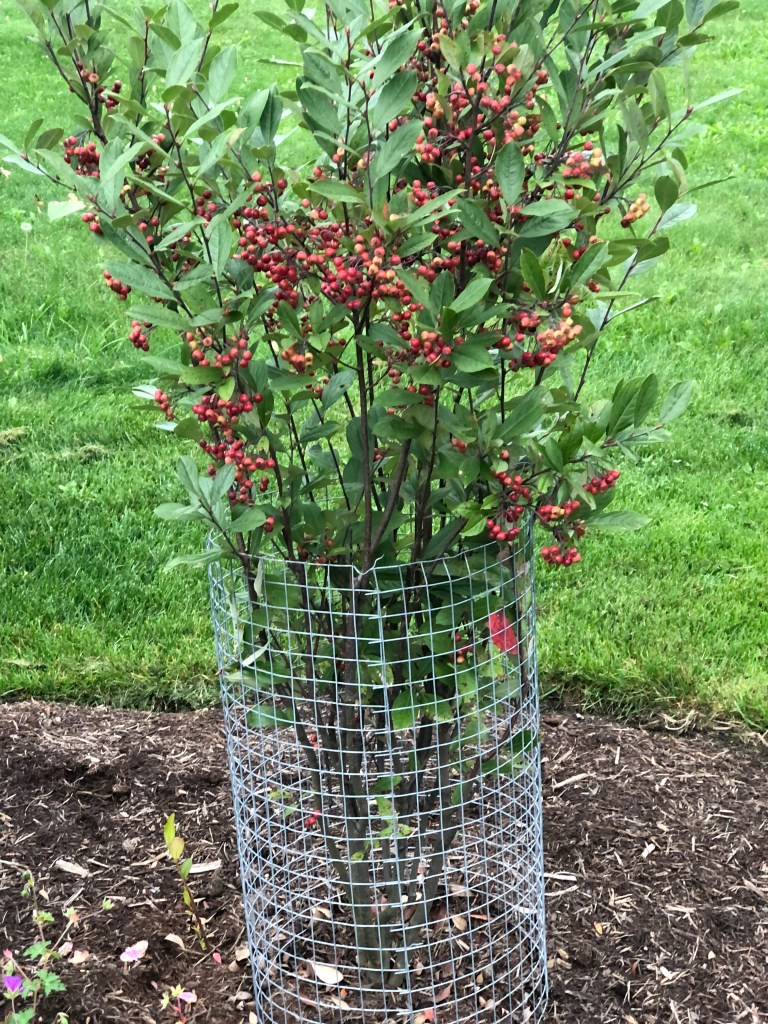
Protective fencing – wire screens have been placed around the shrubs to minimize damage from the rabbits.
No cutting back – With the exception of the Maximillian Sunflowers, none of the plants will be cut back until Spring.
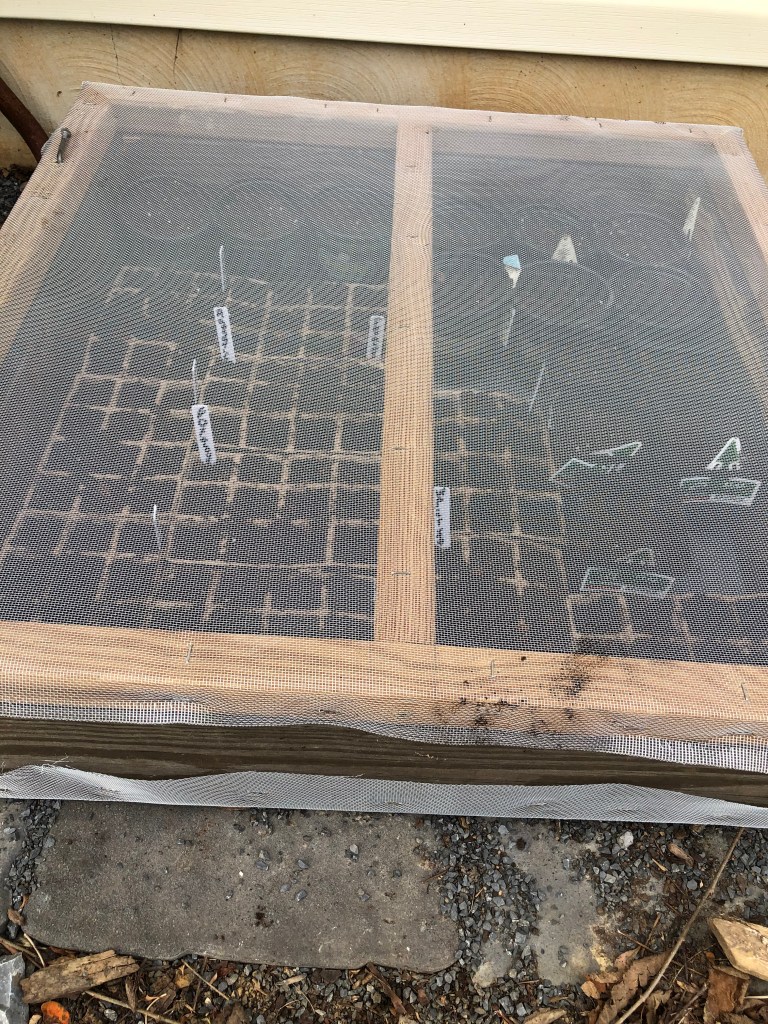
Perennial seed planting – A box with a screen on top and bottom was erected and seed-containing containers were place inside. This unit was placed outside to allow the native seeds to germinate.
Seed types include – White Beardtongue, Smooth Aster, Aromatic Aster, Wild Petunia, and Wild Senna.
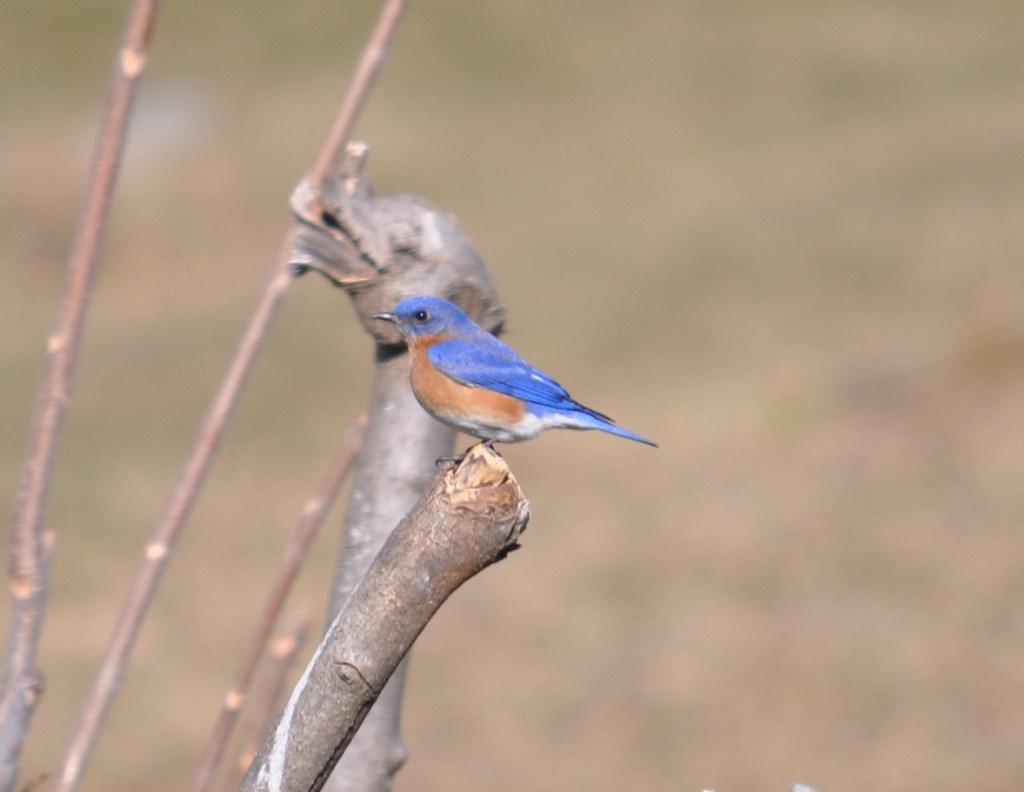
Wild bird activity – Earlier in November, the Dark-eyed Junco returned. Of course, there are the resident House Finches and a House Sparrows. We have daily visits from Black-capped Chickadees, a Carolina Wren, and Mourning Doves. Crows arrive each morning for feeding as well as the Bluebirds. (I only feed mealworms in the morning now after the Coppers Hawk started to stakeout the box feeder. I figured with the crows being around in the morning, I might have less problem with the hawk). Finally, there has been the occasional sighting of a few Robins, a White-breasted Nuthatch, and a Downy Woodpecker.
While I have experienced bear visits to the feeders in the Spring, this year there was activity in late September. Having just put the feeders out after this summer’s request to remove the feeders due to the bird illness issue, I did not want to let bears prevent me from having the feeders up.
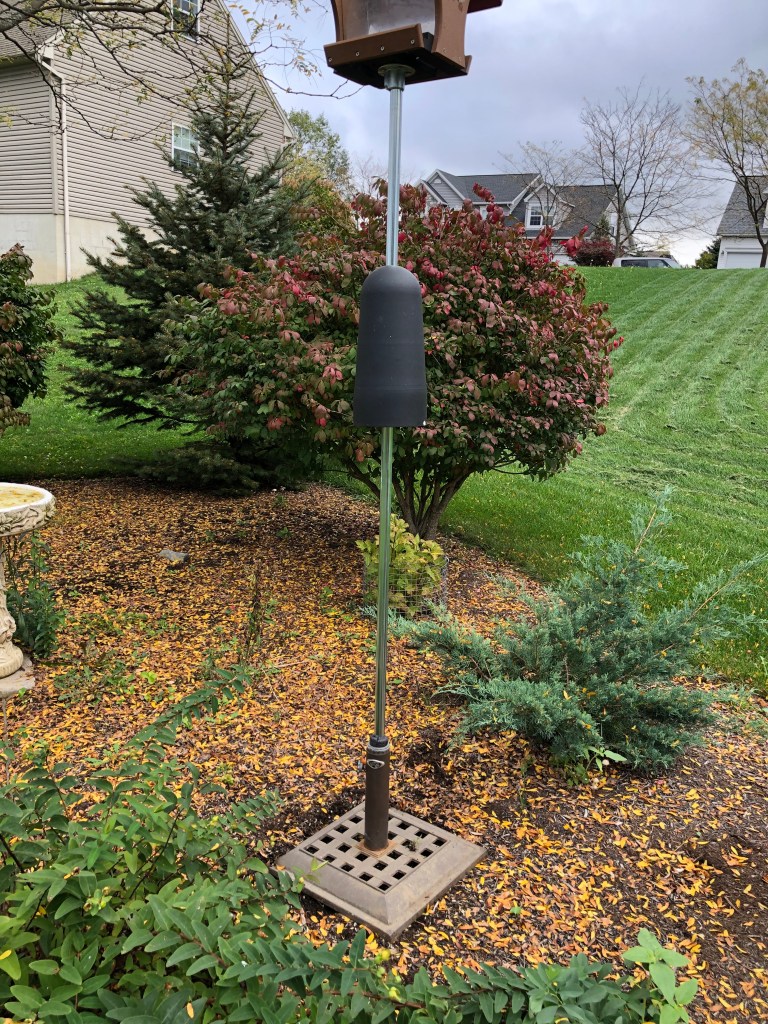
This is fourth bar I had to replace. The bear, in an effort to get the seed, knocks the unit over which either results in a bent bar or a broken bar.
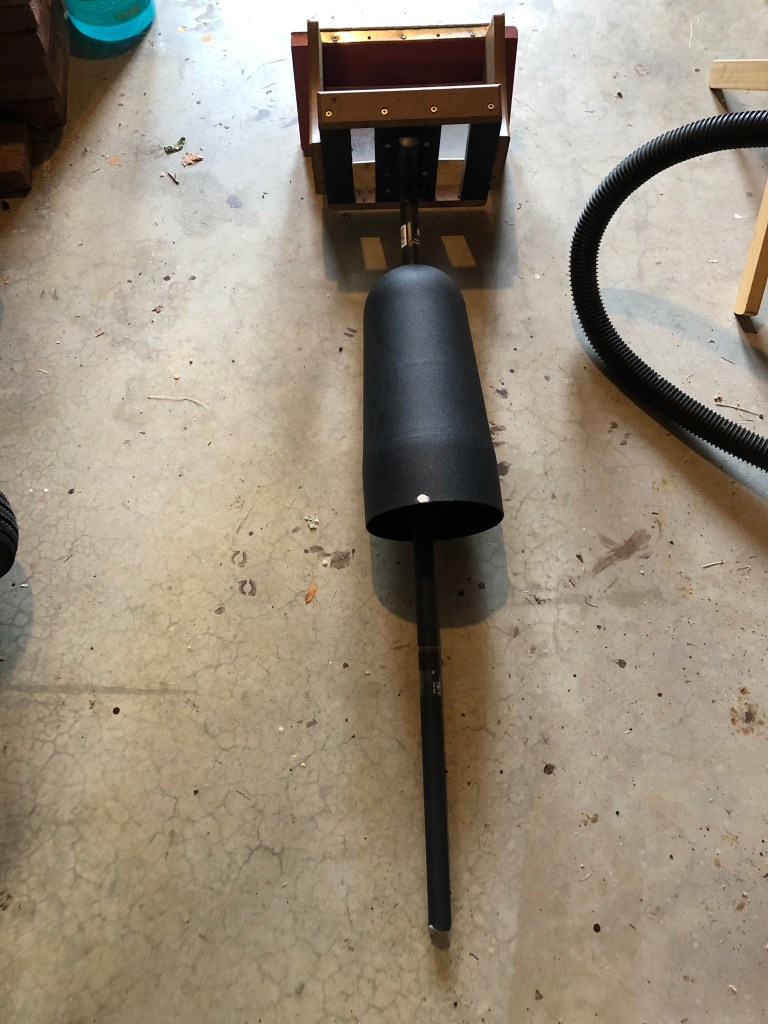
My thought was to put the feeder on a sturdy base that will allow the feeder to fall more easily. So I used a 3/4 inch diameter pipe inserted into a base that is used for a backyard umbrella.
This base should easily withstand the wind, but a bear can easily push it over without damaging the support and hopefully the feeder.
Fall has arrived and the weather has been glorious…..warm days and cool nights, but not to the point of frost. An occasional rain has kept the grass green.
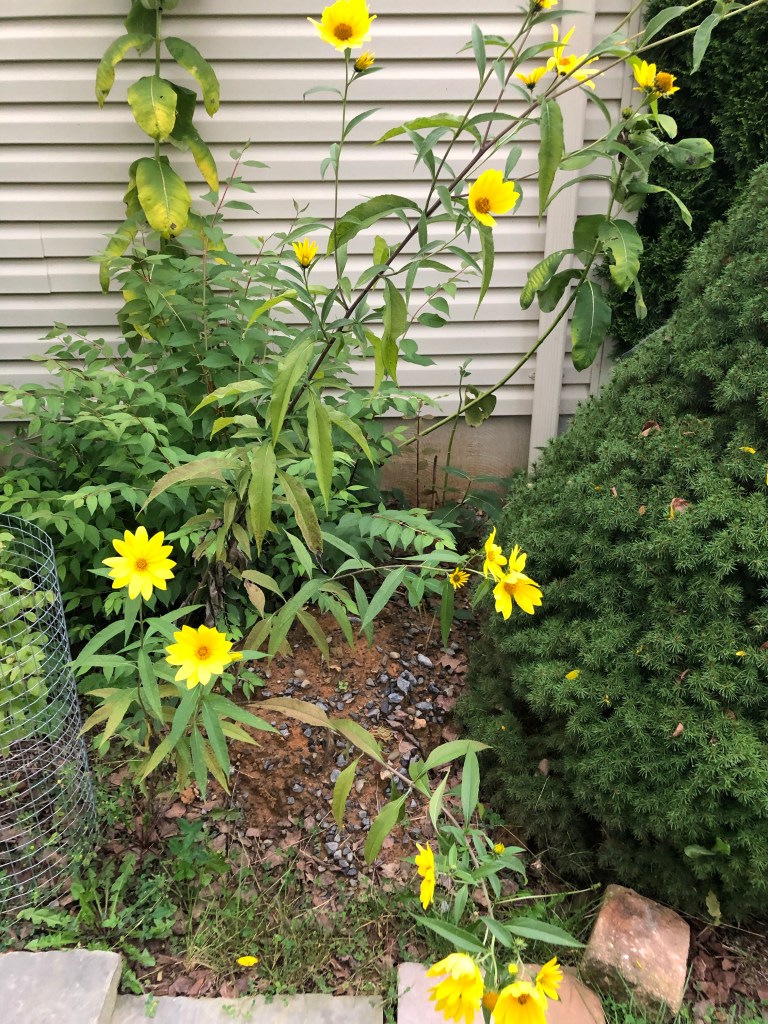
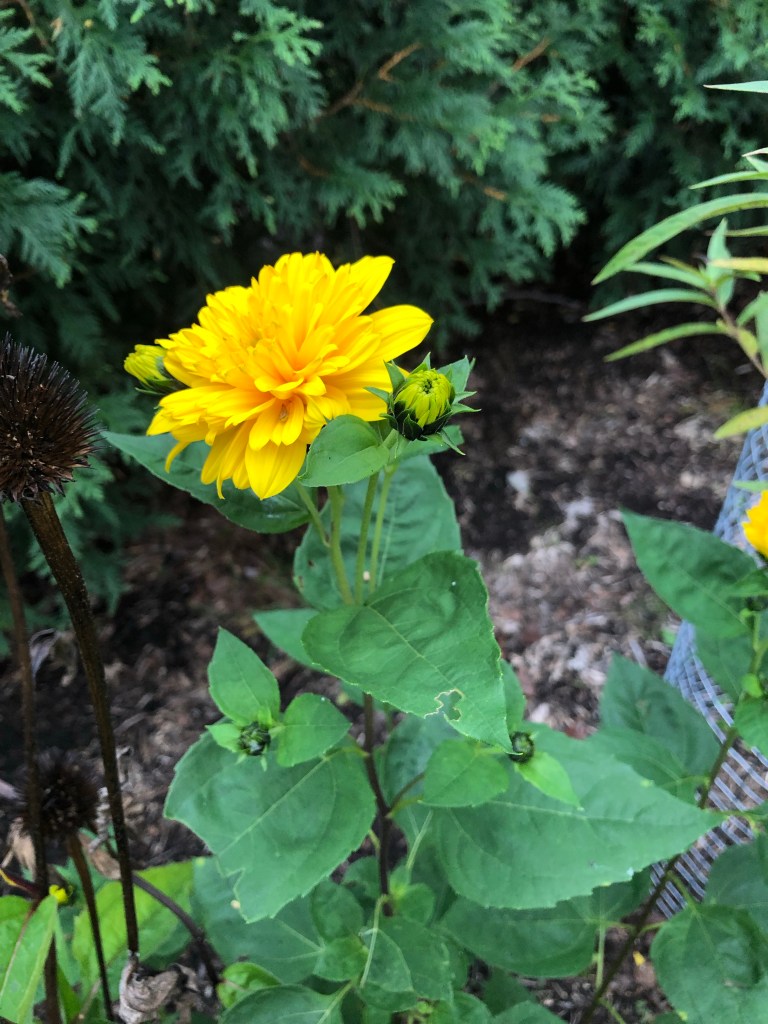
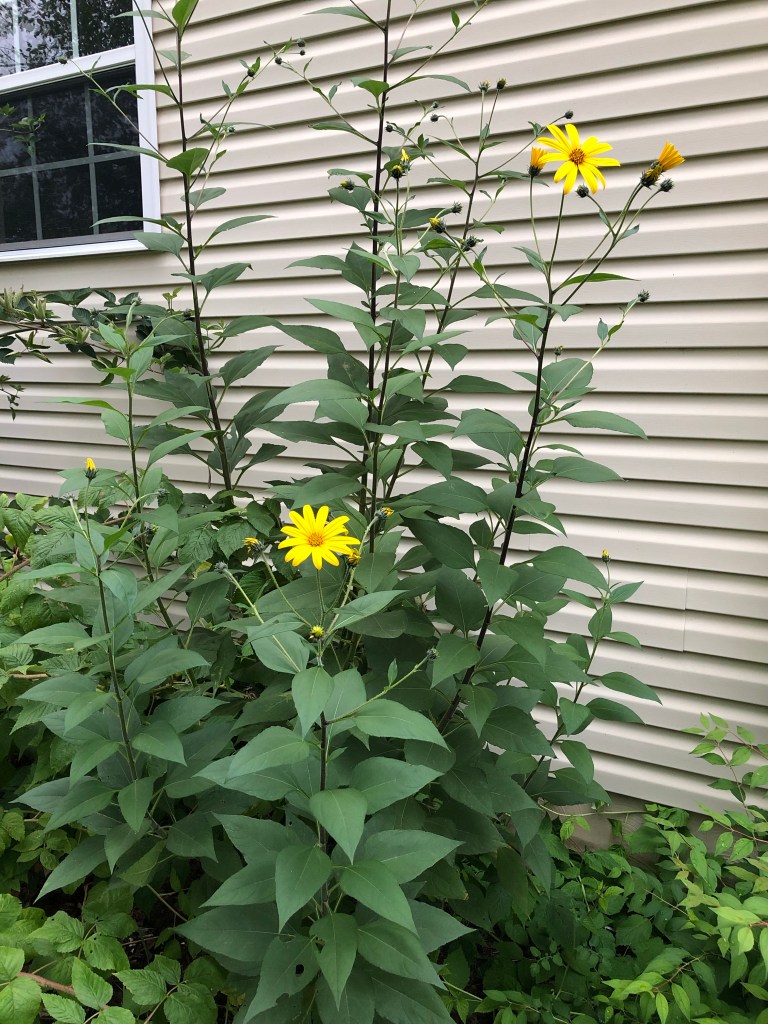
I planted a few different species of sunflowers last fall and really didn’t know what to expect. All were great, especially the Jerusalem artichoke.
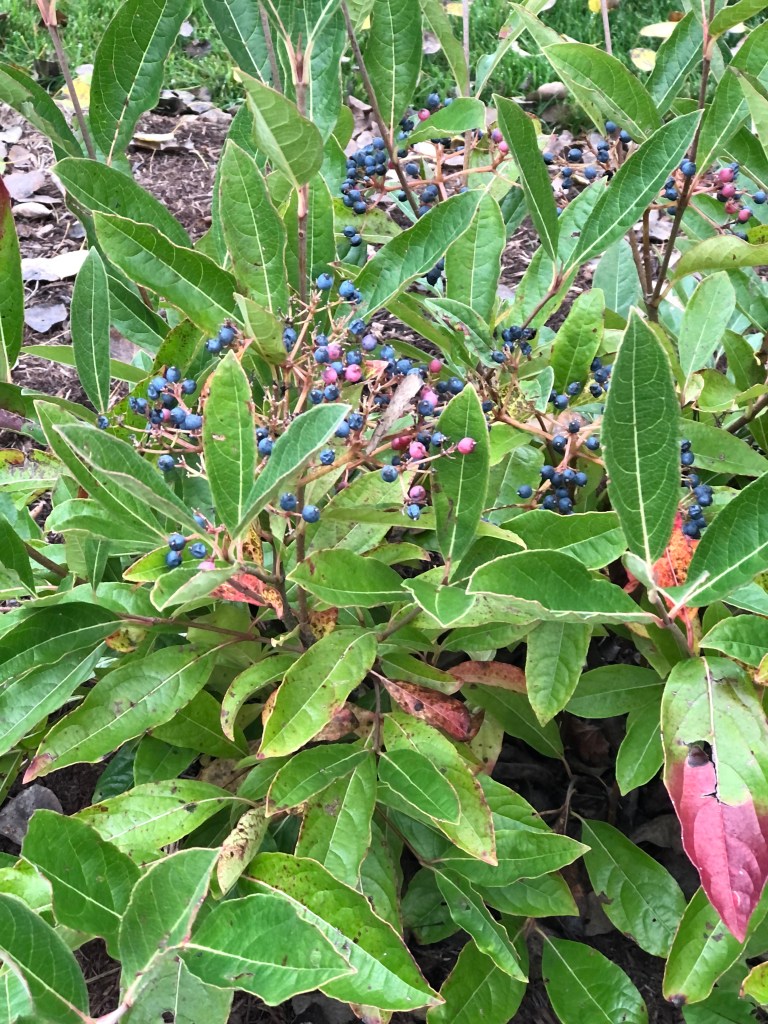
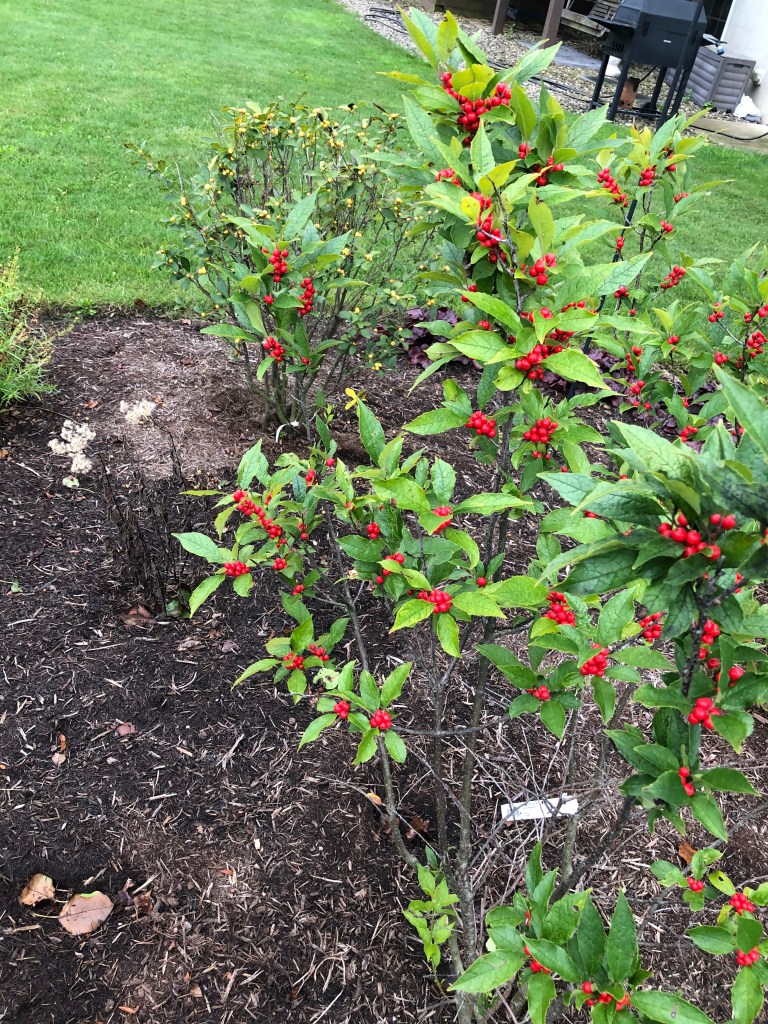
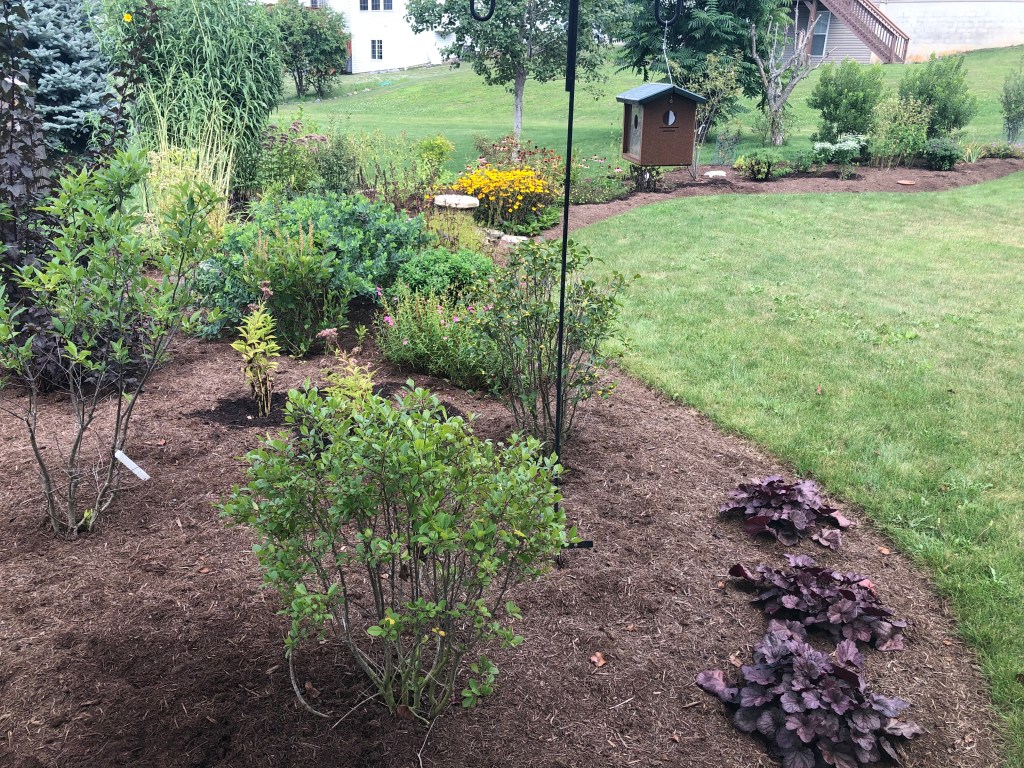
Viburnum Witherod BrandywineWinterberry – both red and gold (in the back)Red Chokeberry
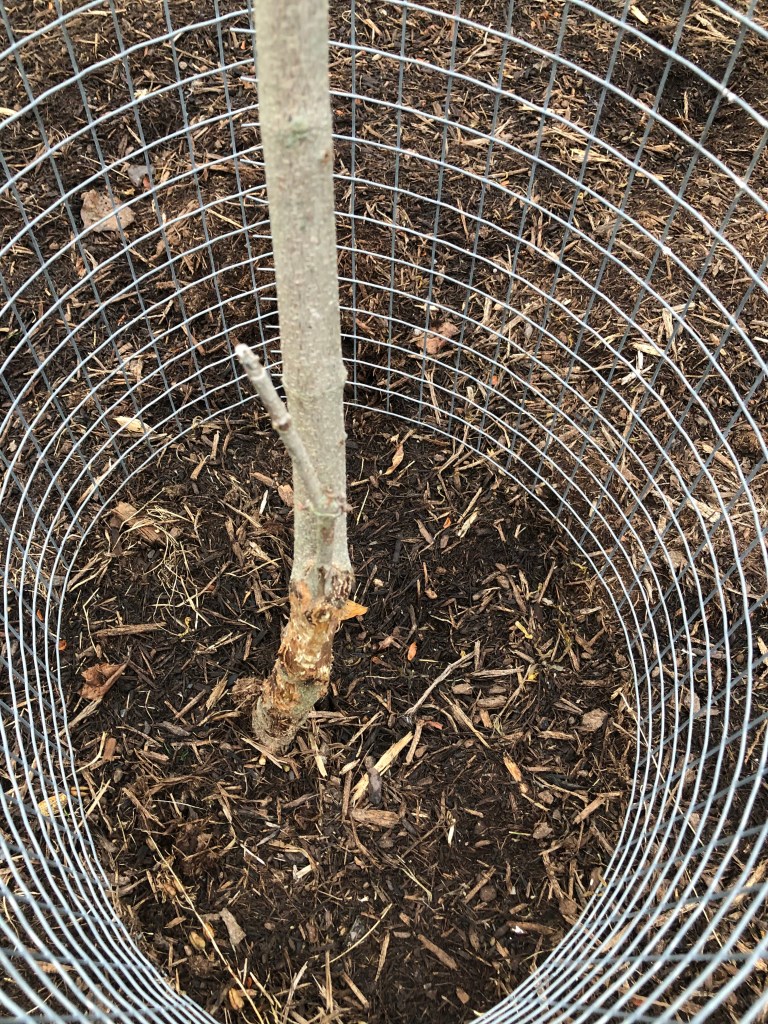
There was some rabbit damage to the dogwood tree. Unfortunately, I had removed the cage during mulching and did not replace it afterwards. A few weeks ago, I noticed there was significant girding around the base which will not be good for this tree. I replaced the caging, but probably too late.
As this native garden approaches 2 years since the first plantings, I feel it has been pretty successful. Most of the plants have done well, although a few plants have struggled.
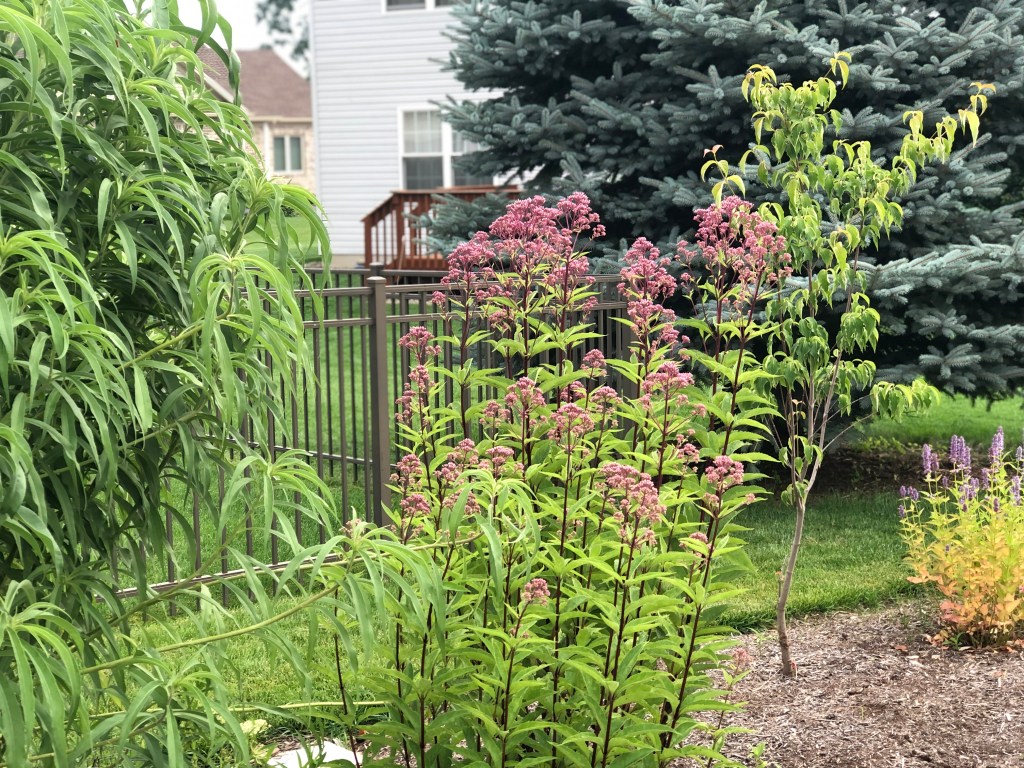
In August, I added a few plantings to fill some of the gaps. Two additional Joe Pye Weed plants were added as well as 3 Butterfly Weed. While the Joe Pye Weed that were already in place have done well, the previous plantings of Butterfly Weed have struggled a bit. So why add three more? To see if additional soil amendments might help. Plus they are attractive plants that the butterflies like.
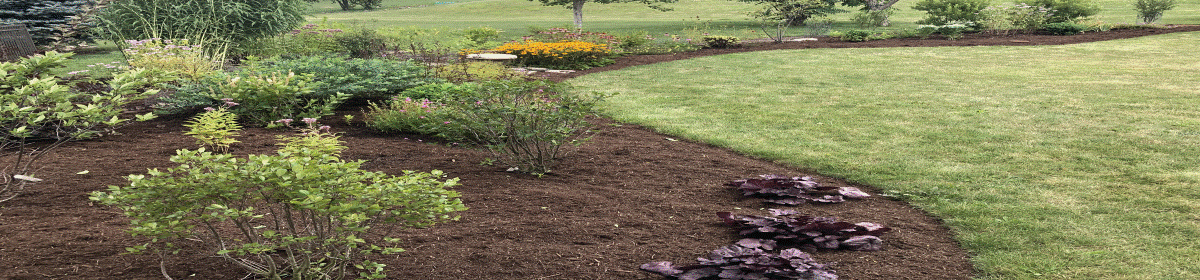
I did finish mulching this garden. I added approximately 6 cubic yards of mulch with a depth of 2 to 4 inches….more in spots where the previous mulch was thin.
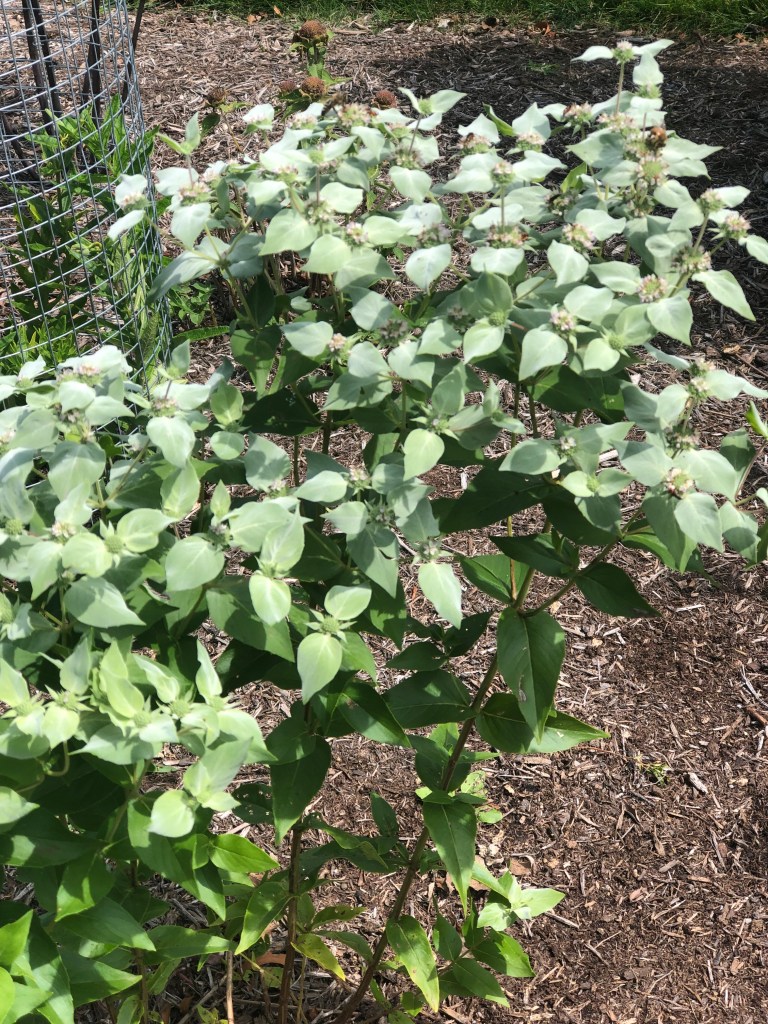
Mountain Mint
As the summer progresses, different plants take their turn blooming and with that, there are always plants available to the pollinators. In August, the Mountain Mint has a sea of bees moving from flower to flower.
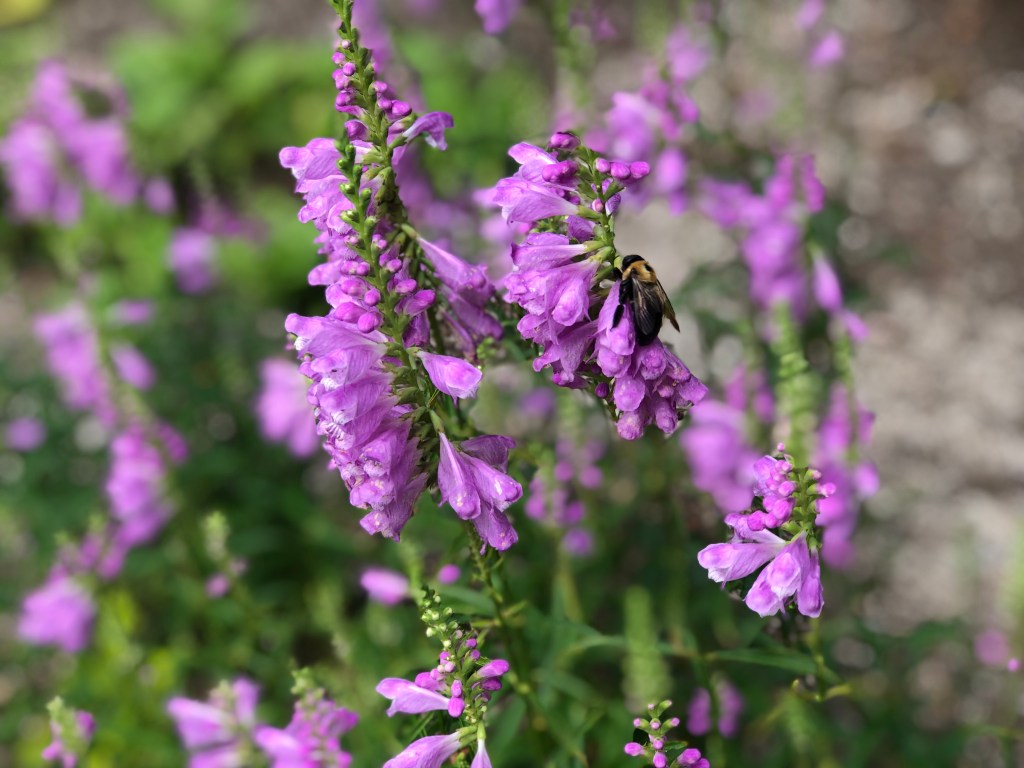
Obedient Plant
Another favorite of the bees is the Obedient plant. Here, a few Carpenter Bees are feeding..
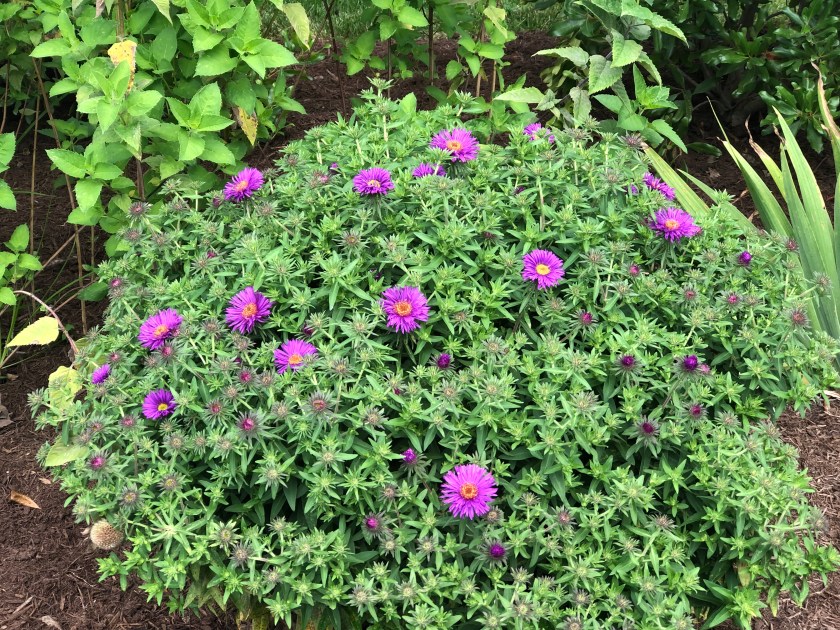
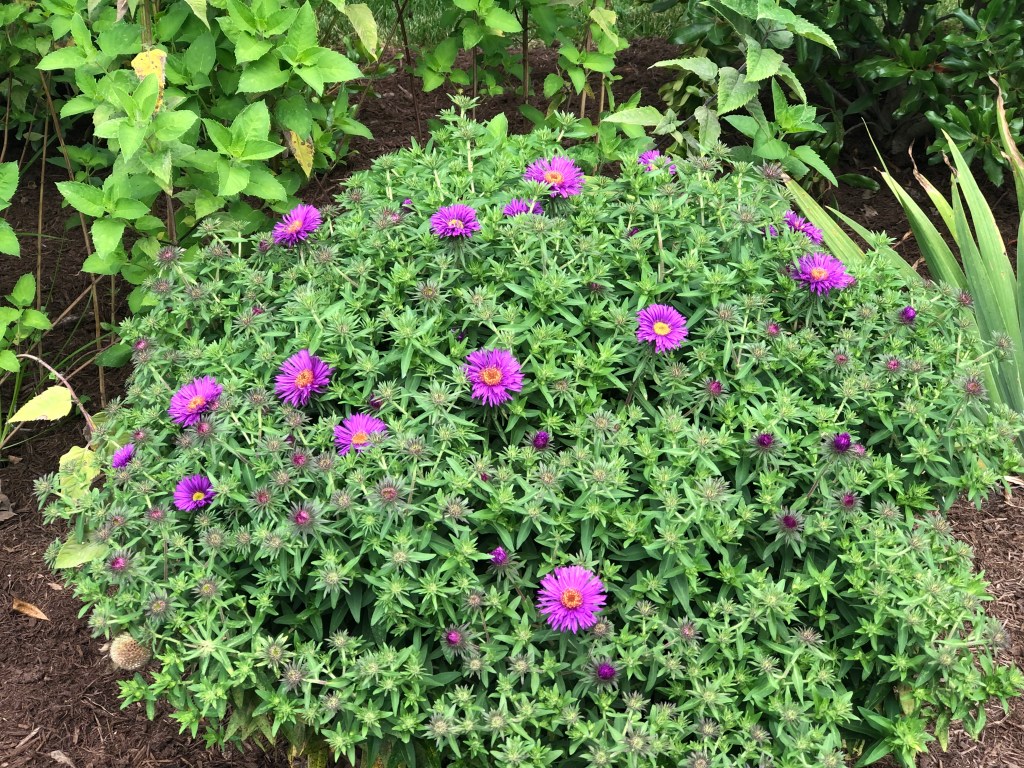
New England Asters
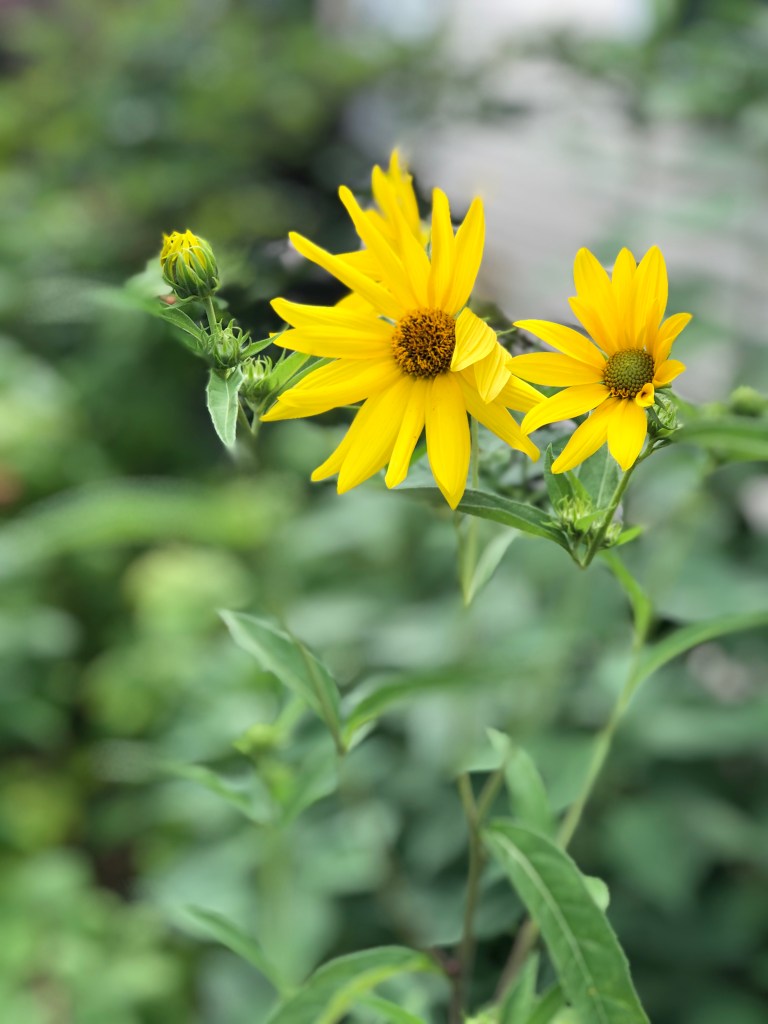
The New England Asters are starting to bloom, as well as the Thin-leaved Sunflower.
Thin-leaved Sunflower
In August, the PA State Commission removed their recommendation for the removal of bird feeders. So the bird feeder were cleaned and reinstalled.
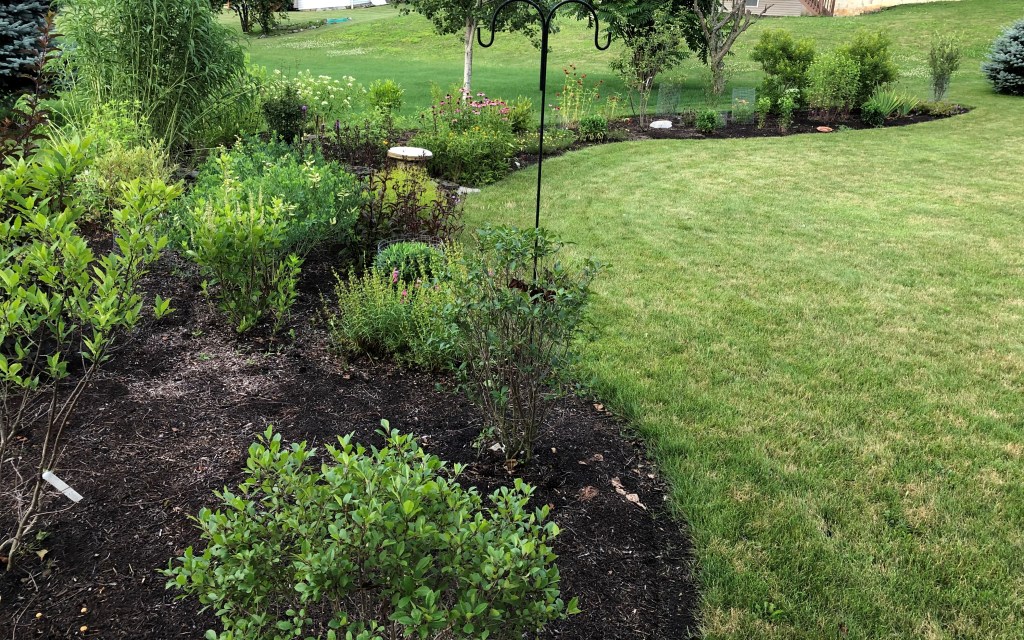
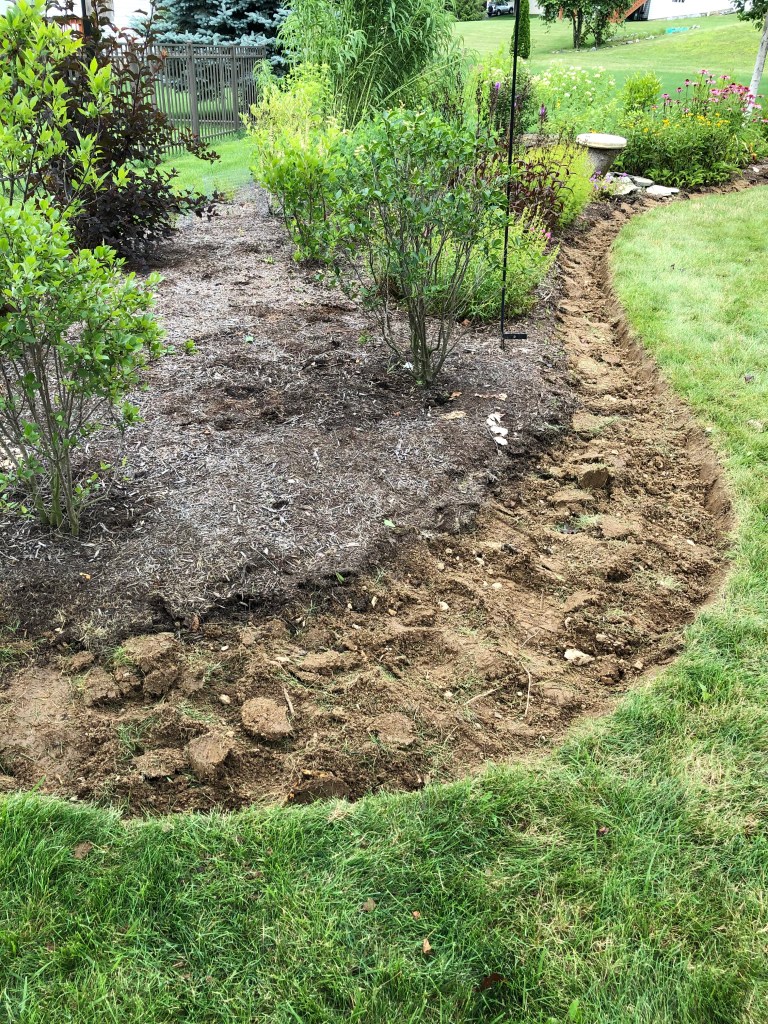
I decided to expand the garden a foot or so in order to move the law back away from the plants. Also plan to add a few plants to the edge by the Winterberry.
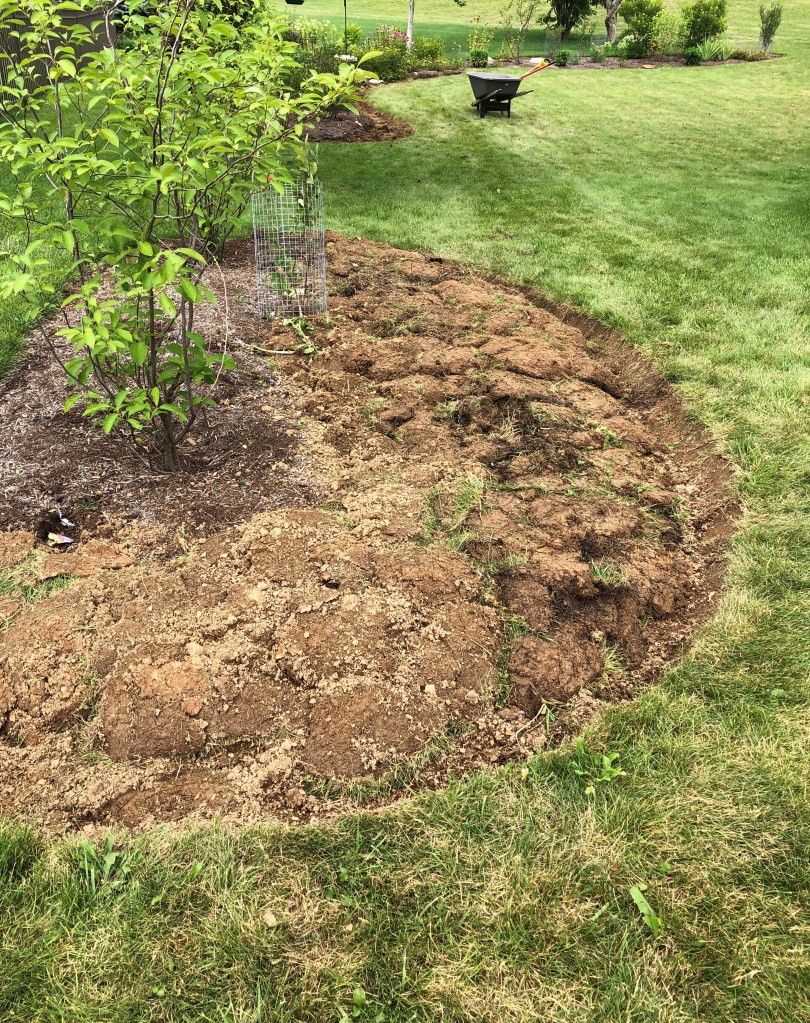
Also expansion of the area around the Spicebush plants. At this point, the sod was just turned over and will then be covered with mulch. Not sure yet what will be added to this space, but need to let the the clumps meld back together.
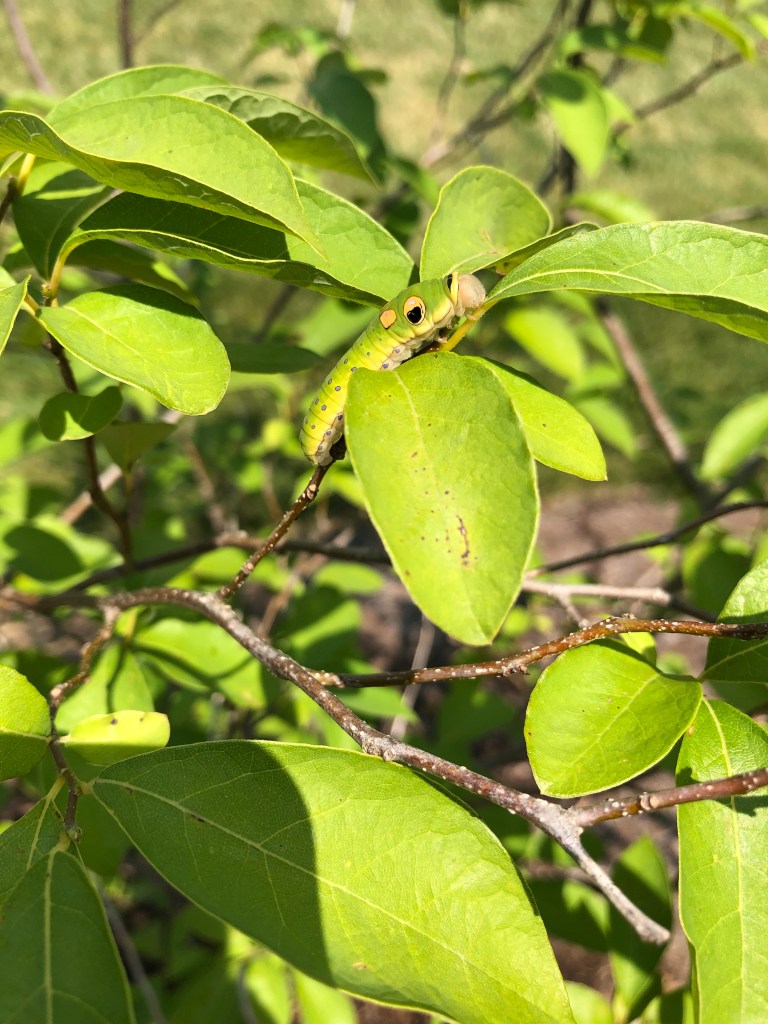
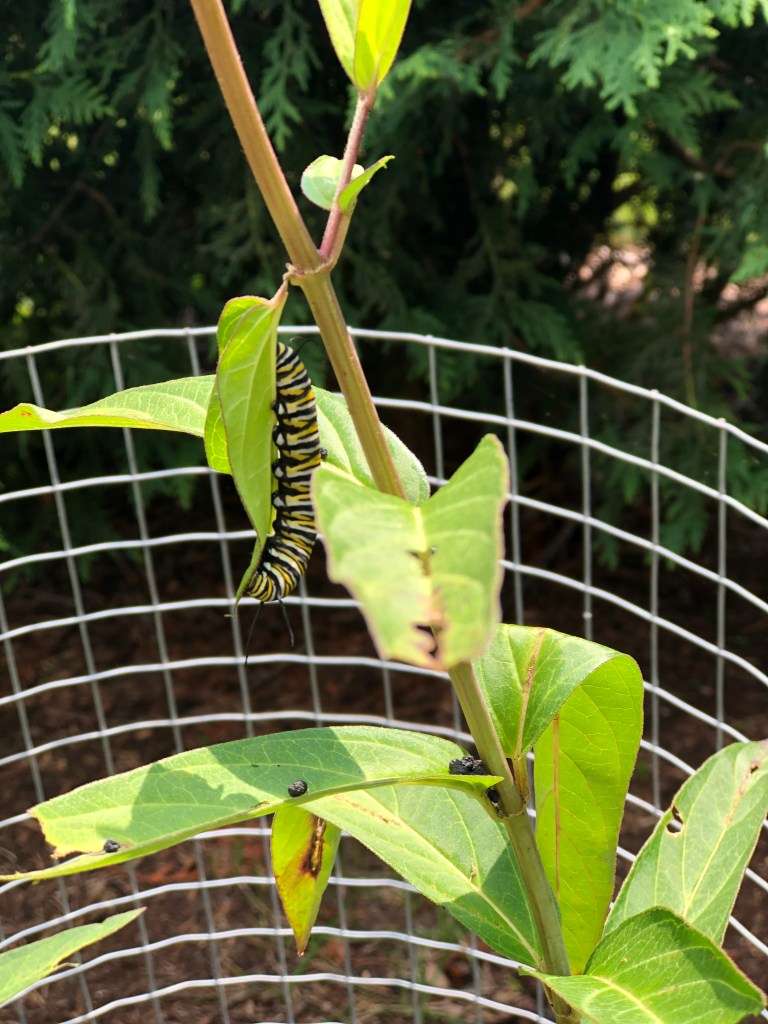
One goal of the native garden is to support insect life, and there is nothing better than having catepillars that will eventually turn into butterflies. To this point, it has been a thrill to have two distinct species.
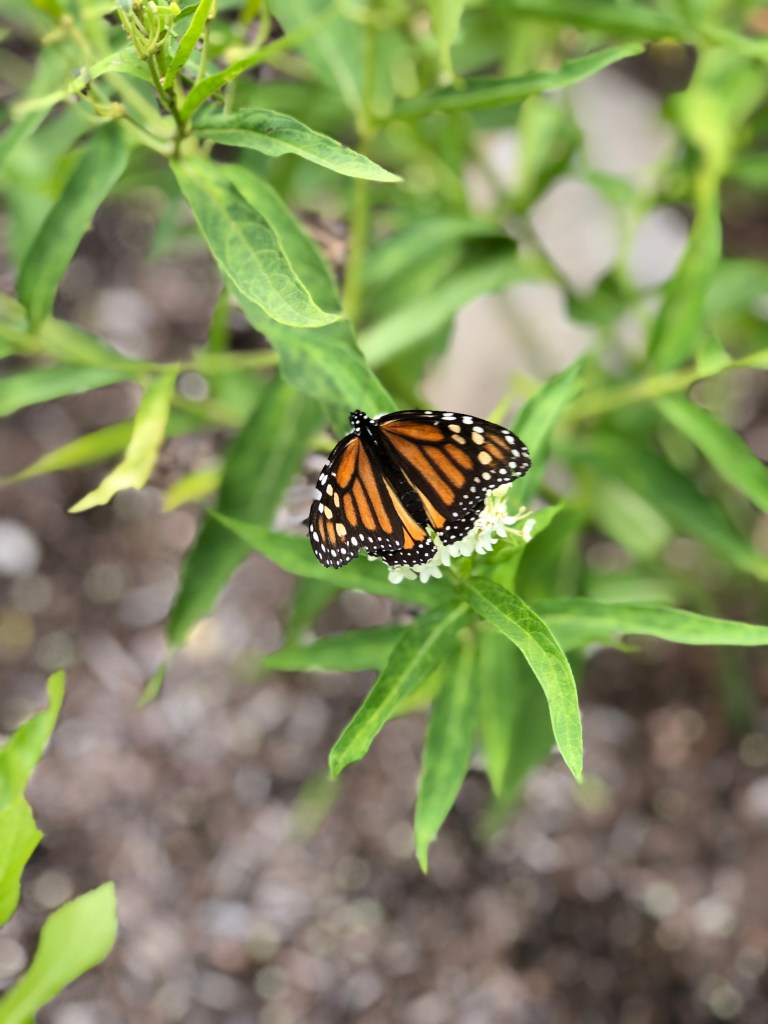
Catepillar of the Spicebush Swallowtail (Papilio troilus) feeding on Spicebush plantCatepillar of the Monarch butterfly (Danaus plexippus) feeding on Swamp MilkweedMonarch butterfly (Danaus plexippus)
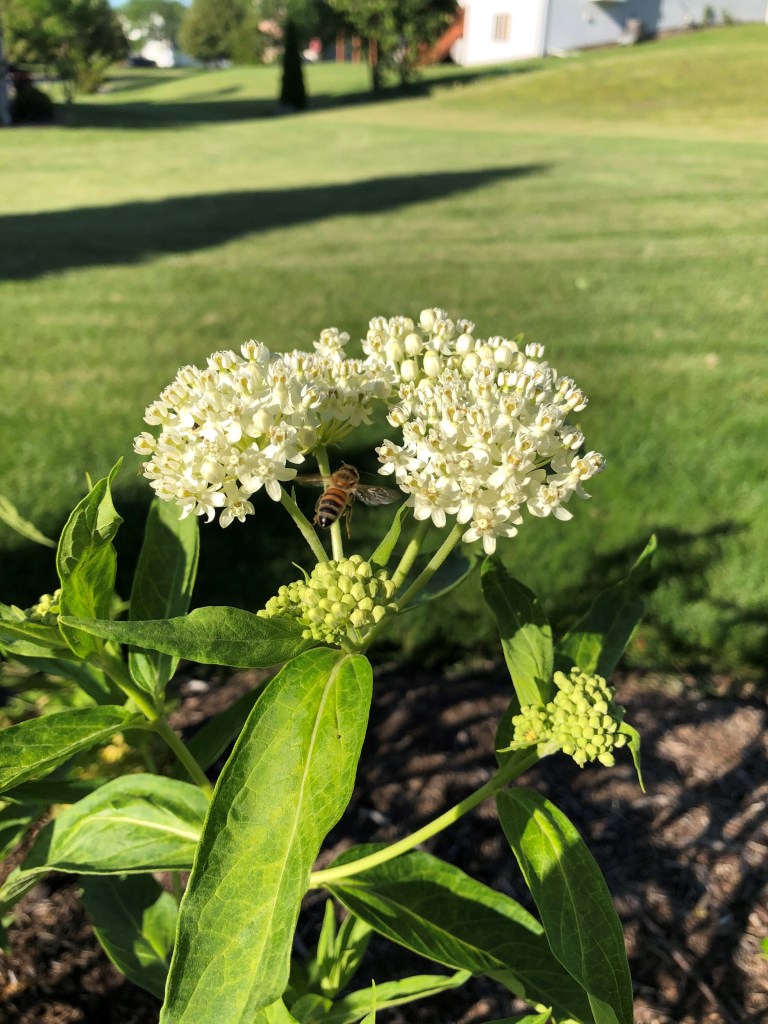
Members of the Asclepias family are essential plants for any native garden, especially if you want to attract butterflies. The first Monarch butterfly was spotted this past week. It seemed to be surveying the various plants. Of course milkweed is a critical plant for Monarch butterfly larvae.
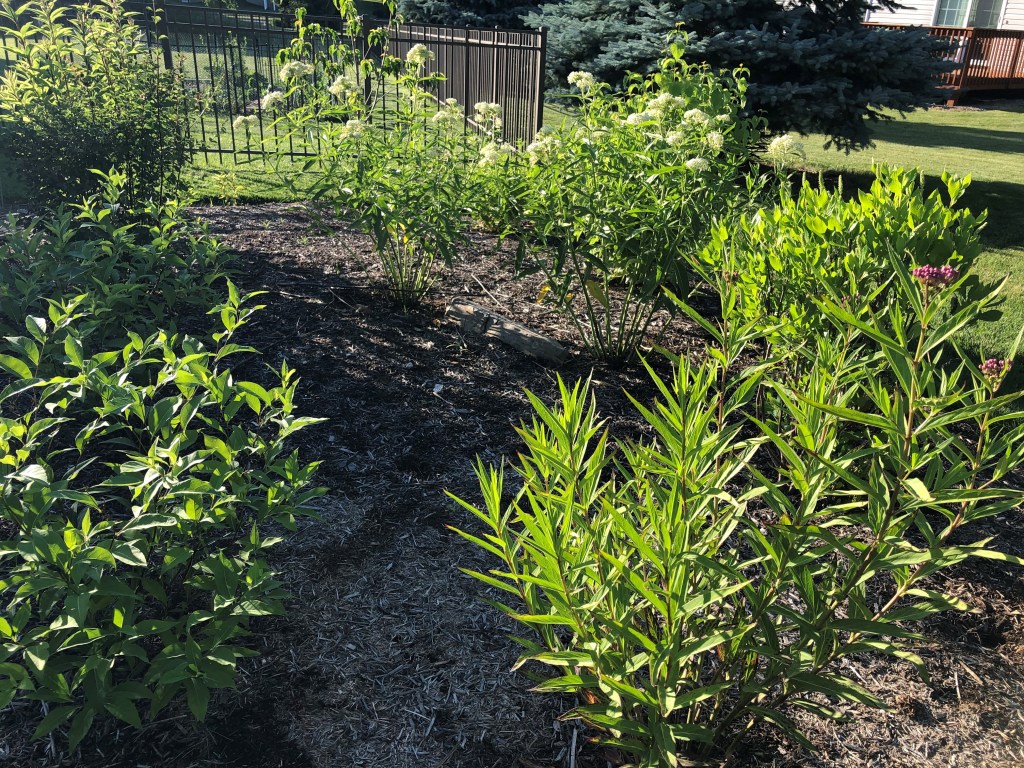
Swamp Milkweed plantings
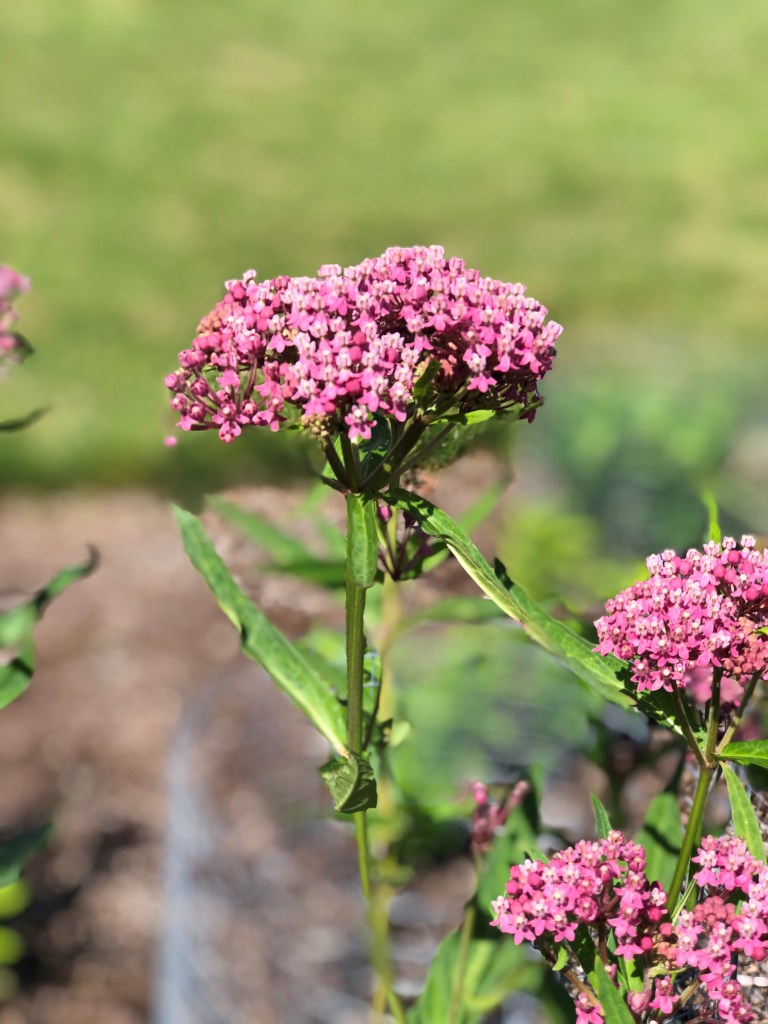
Ascelepias incarnata (Swamp Milkweed) handles sun to partial shade and grow in moist to wet soils (although my soil tends to be somewhat dry in the summer). They are 2 to 4 foot tall.
Ascelepias incarnata – Swamp Milkweed
Asclepias tuberosa (Butterfly Weed) likes drier soil and stands between 1 and 3 foot tall.
Asclepias tuberosa (Butterfly Weed) has not yet bloomed
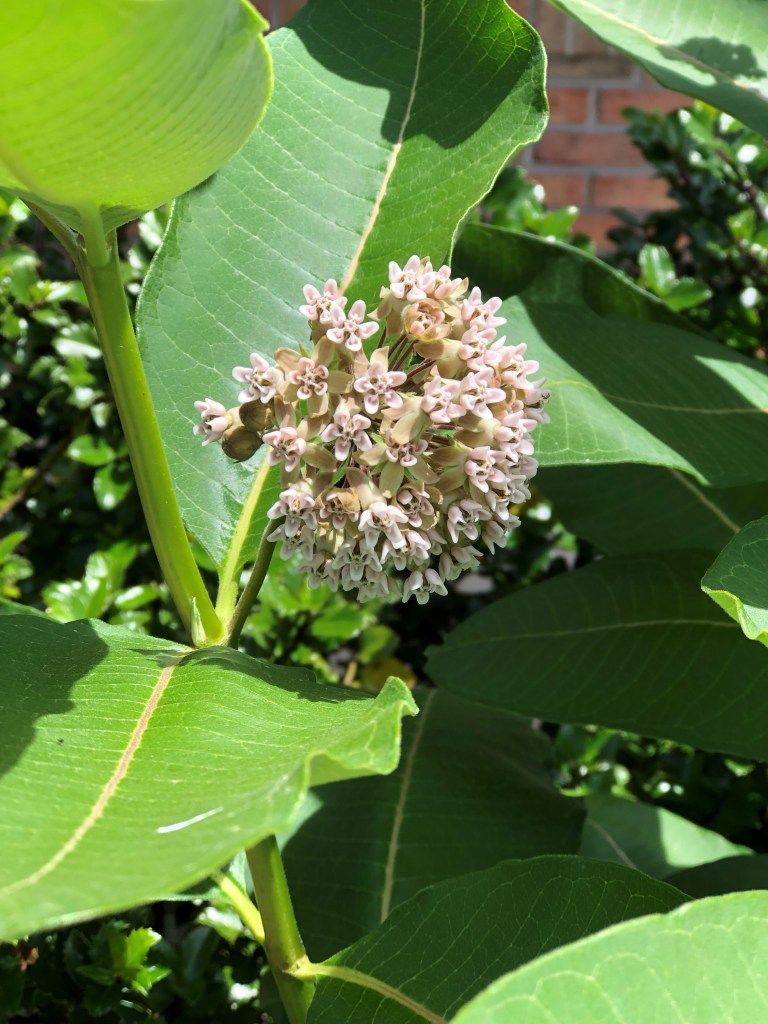
Asclepias syriaca (Common Milkweed) seem to pop up everywhere except where I want them. The plans tend to be tall (4 to 6 ft). Rabbits have been a problem with early season milkweed, eating the young plants before they have had a chance to grow. The flowers are very fragrant and attract a number of insects.
The bird feeders were removed as a response to an unknow disease affecting wild birds in this state and the surrounding states. Feeders act as a congregation site where disease can be more easily spread from bird to bird. So removing feeders helps to mitigate disease spread.
It is quite disheartening to have to do this. Having birds fly around in the backyard is one of the great joys of summer.
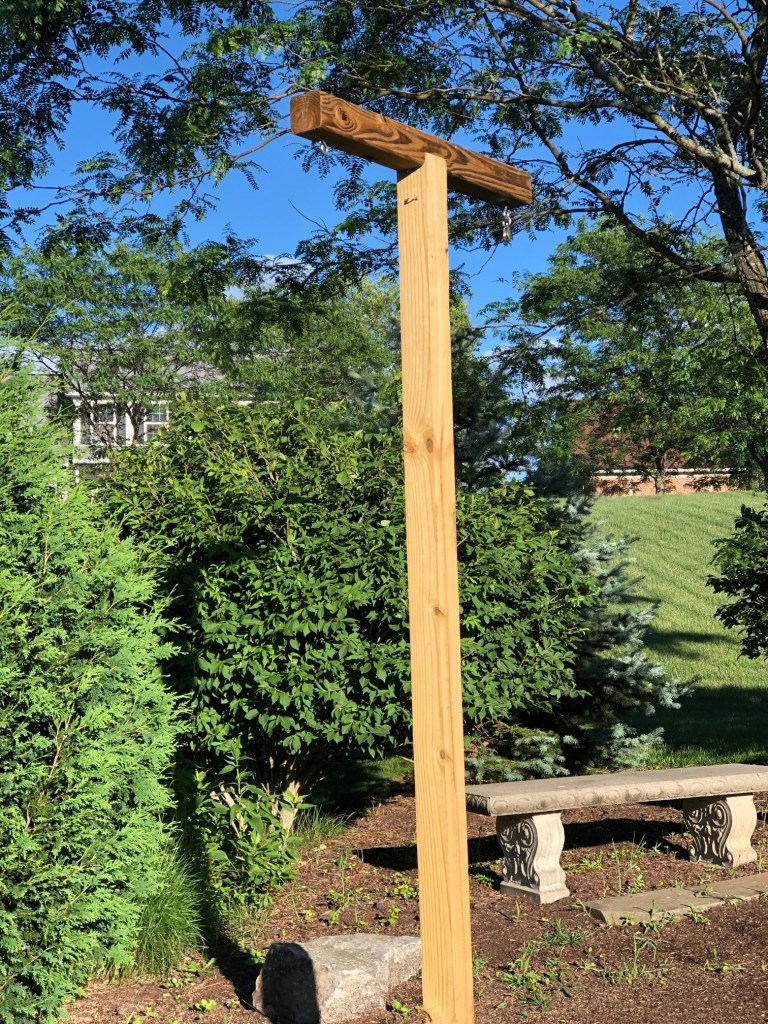
Bird feeders have been removed from post.
Unknown Wild Bird Disease Spreading in Eastern US, Time to Take Down the Bird Feeders
An unknown disease is spreading among wild birds in the mid-Atlantic and midwestern states. “Characterized by conjunctivitis, as well as neurological signs such as erratic flight, the unidentified disease first became prevalent in Ohio and Washington, D.C.” In hard hit areas, scores of dead birds have been found.
Experts are asking people to remove bird feeds and bird baths, congregation sites for birds, until more is known about this disease. Areas where birds accumulate together allows the disease to spread more rapidly. For anyone who feeds birds, it would be awful to find a yard full of dead birds.
HARRISBURG, PA – Wildlife health experts from the Wildlife Futures Program (WFP) at the University of Pennsylvania’s School of Veterinary Medicine (Penn Vet) and officials from the Pennsylvania Game Commission are investigating more than 70 general public reports of songbirds that are sick or dying due to an emerging health condition that is presently unknown.
As of July 1, 2021, reports from the public chronicle both adult and young birds exhibiting signs of the condition. The most common clinical symptoms include discharge and/or crusting around the eyes, eye lesions, and/or neurologic signs such as falling over or head tremors.
Affected birds are being tested for several toxins, parasites, bacterial diseases, and viral infections. To date, test results have been inconclusive.
Twelve species have been reported: Blue Jay, European Starling, Common Grackle, American Robin, Northern Cardinal, House Finch, House Sparrow, Eastern Bluebird, Red-bellied Woodpecker, Carolina Chickadee, and Carolina Wren.
WHERE: In Pennsylvania, the reports have been received from 27 counties, including: Philadelphia, and Bucks, Montgomery, Chester counties: 15 reports Cumberland, Dauphin, Franklin, Lancaster, Lebanon, Perry, Schuylkill, York counties: 19 reports
Numerous reports have also been received across the United States including the Mid-Atlantic region, extending into the Southeast and eastern upper Midwest. Affected birds were first reported in and around Washington, D.C.
WHO: Wildlife Futures ProgramOpens In A New Window; the Pennsylvania Animal Diagnostic Laboratory System (PADLS); the University of Pennsylvania School of Veterinary MedicineOpens In A New Window; the Pennsylvania Game Commission.
This is an emerging wildlife health event. Penn Vet will provide additional, timely information as it becomes available at https://www.vet.upenn.edu/about/news-roomOpens In A New Window
Experts are also encouraging the public to follow these FIVE precautionary measures until more is known:
Cease feeding birds and providing water in bird baths until this wildlife mortality event has concluded to prevent potential spread between birds and to other wildlife. Clean feeders and bird baths with a 10% bleach solution. Avoid handling dead or injured wild birds. Wear disposable gloves if it’s necessary to handle a bird. Keep pets away from sick or dead birds as a standard precaution. To dispose of dead birds, place them in a sealable plastic bag and discard with household trash. This will prevent disease transmission to other birds and wildlife.
Summer is here. The number of grackles has dropped to just a few permanent residents. Baby birds abound with their little wings fluttering as mother birds continue to feed them.
While we have a lot of birds at the two feeders, there aren’t any new types of birds seen in the yard.
House sparrows
House finches
Goldfinch
Song Sparrows
Chipping Sparrows
Mourning Doves
Bluebirds
Cardinals
White Breasted Nuthatch
Black capped Chickadee
Starlings
Grackles
American Robin
To this point, I have not seen any hummingbirds although I have been maintaining a feeder for more than a month. The Bluebirds have been visiting the bluebird feeder a good bit, although the House Sparrows have also figured out that food source.
We have not seen the Cooper’s Hawk although I did find the feather remains of a dove in the front yard.
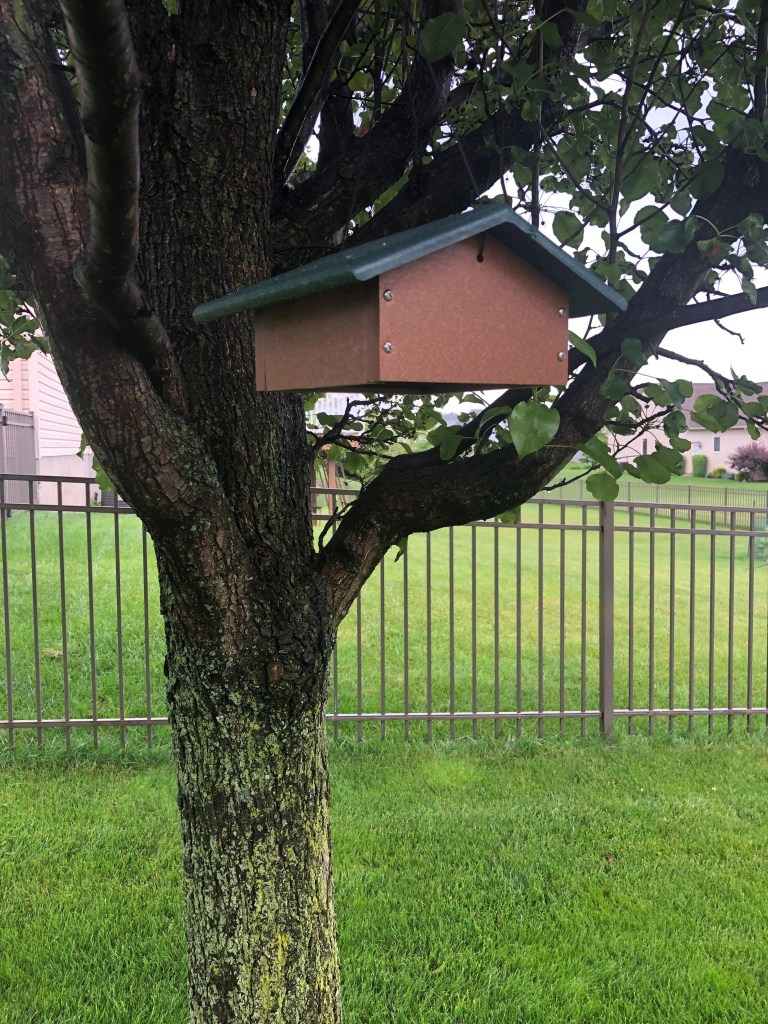
As a new addition, I have added an upside down suet feeder. The starlings and grackles were making short work of the suet, so I had stopped putting it out. I am hoping with the upside down suet feeder that we can attack our Downy Woodpeckers.
There has been sufficient rain in June, which has been great for the garden. Each week there has been at least one soaking rain, probably in the range of 1/2 inch.
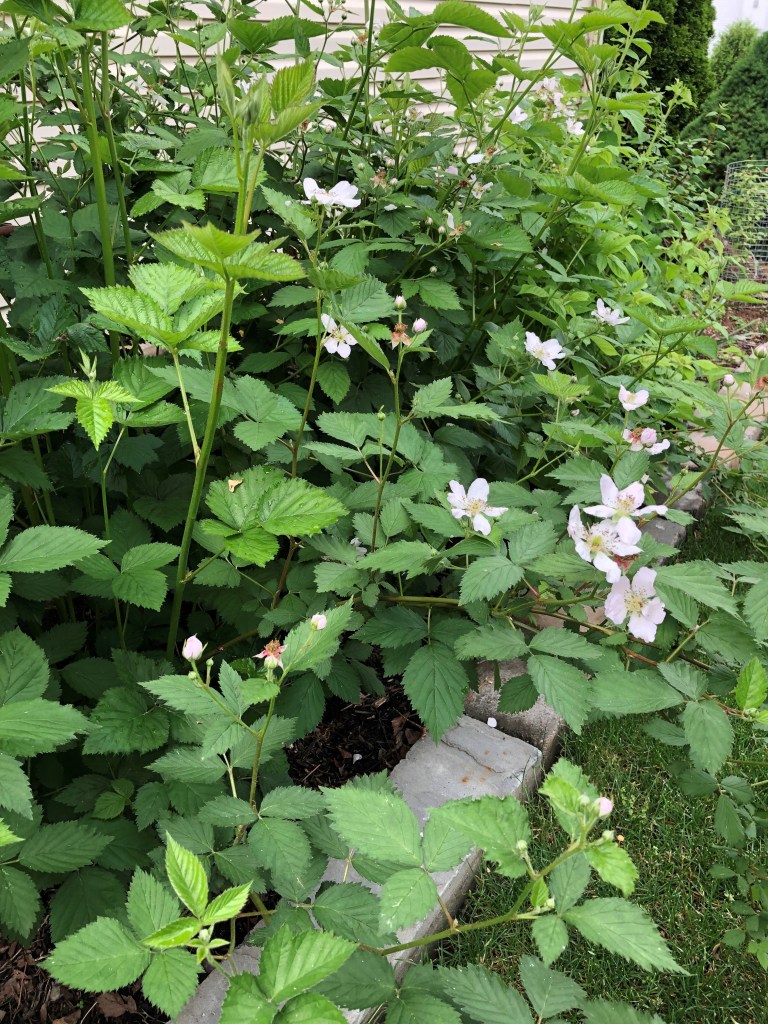
The blackberries are a nativar. I failed to trellis them, so they are a bit out of control.
In late March, I added a few new plants (New Jersey Tea, Highbush Cranberry, Black chokeberry, and Blakhaw virburnum). All plants are still alive which is great.
At this point, I am not planning on any new plantings now that summer is here.

 Pennsylvania Native Garden Journey