Planting a native garden is not only visually attractive, but it helps to increase biodiversity of your space through supporting native insects and birds. This is not a how-to blog, but just follows the journey associated with my native garden. Maybe it will provide an idea on what to do, or not to do. Or perhaps it may provide some inspiration for going native in your own yard.
After a period of sub-zero temperatures coming into January, this month has been hovering above the freezing mark with a number of rainy days.
The bird feeders have had consistent activity from House Finches, Chickadees, Tufted Titmouse, Cardinals, White Breasted Nuthatches, Downy Woodpeckers, Blue Jays, Goldfinch, Mourning Doves and Black-eyed Juncos. And of course the Crows.
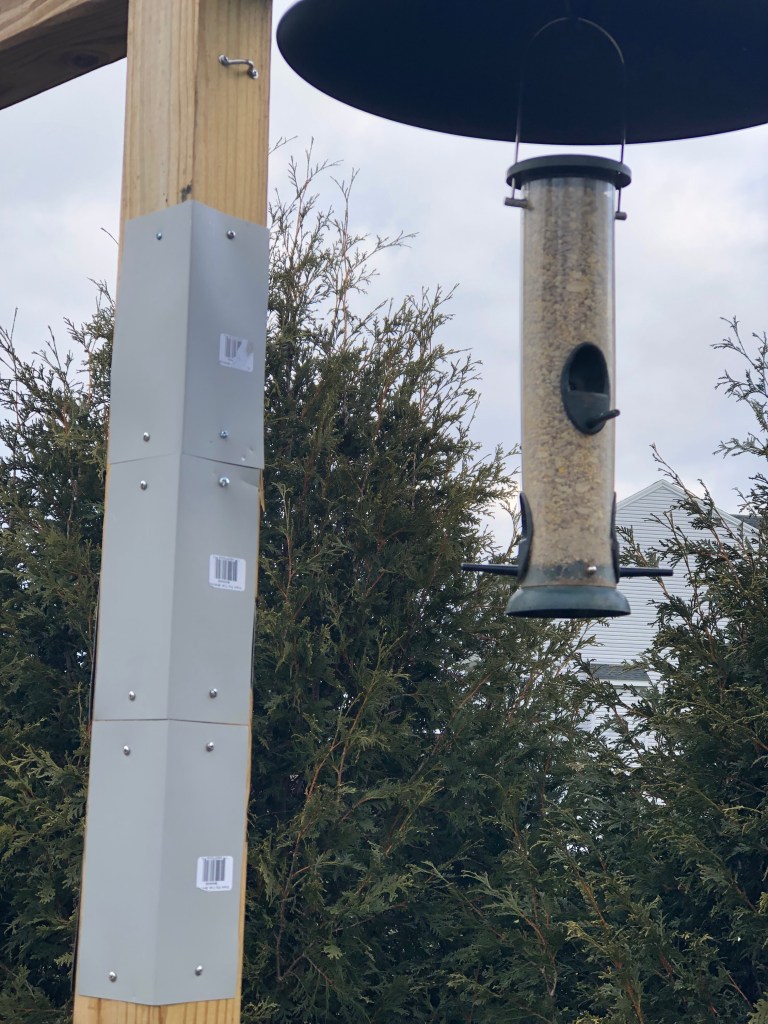
The new feeder, the Eliminator Squirrel Proof Bird Feeder, has worked extremely well so far, reducing pilferage from squirrels and lowering feed usage.
In addition to this feeder, there are 6 other feeders serving different feed….one tube feeder for safflower, a bluebird feeder with dried meal worms, the caged tube feeder with a no-mess blend of seed, a hopper feeder with shelled black sunflower seed, the bottom-open suet feeder for woodpeckers, and a small platform feeder for shelled peanuts.
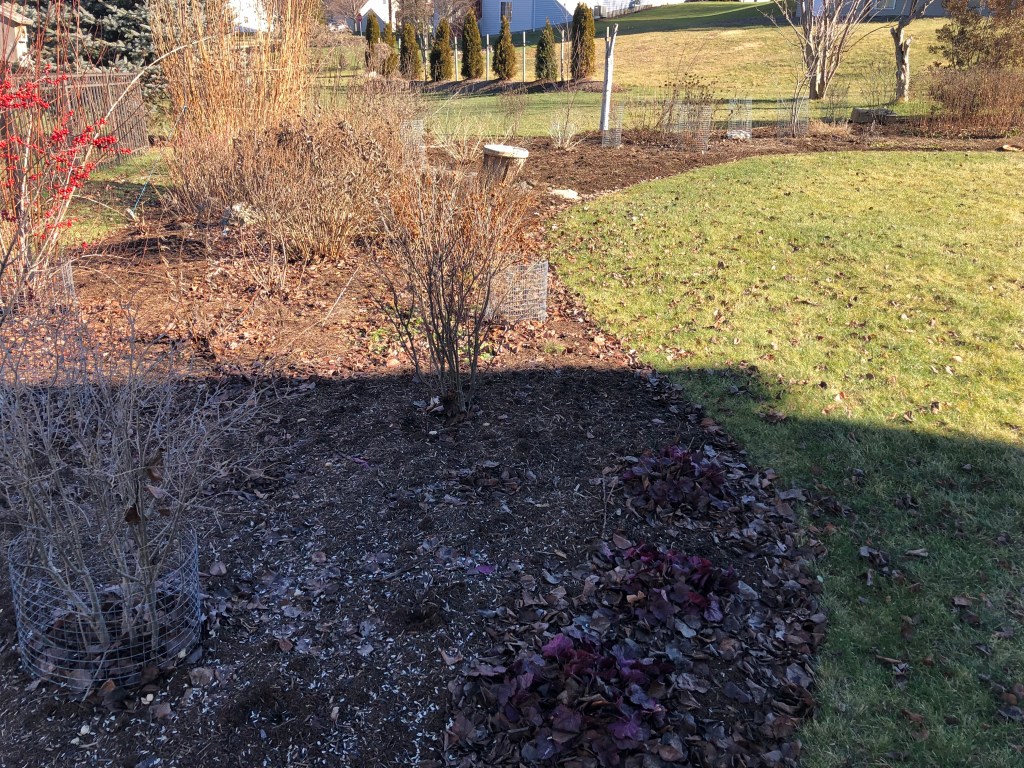
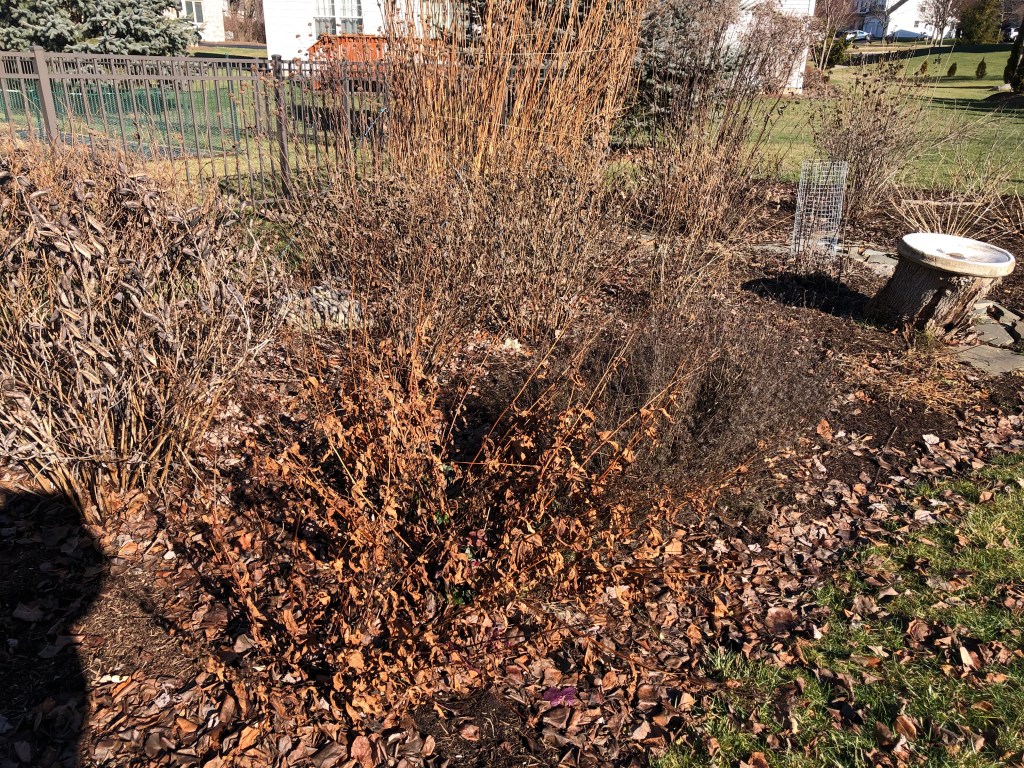
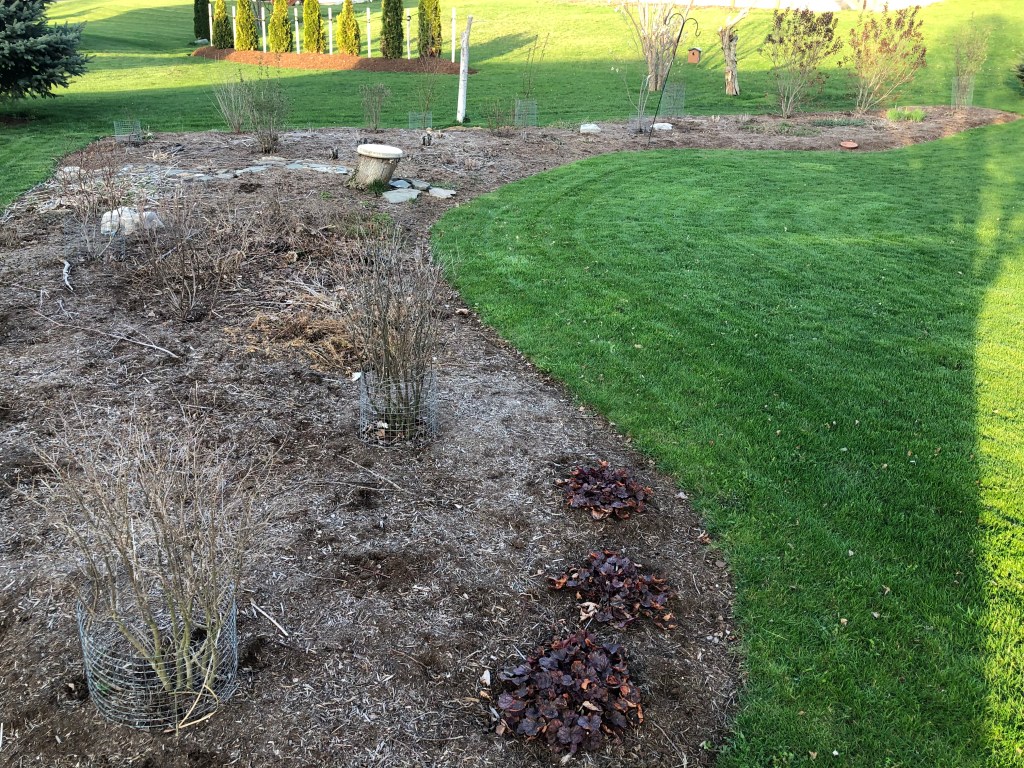
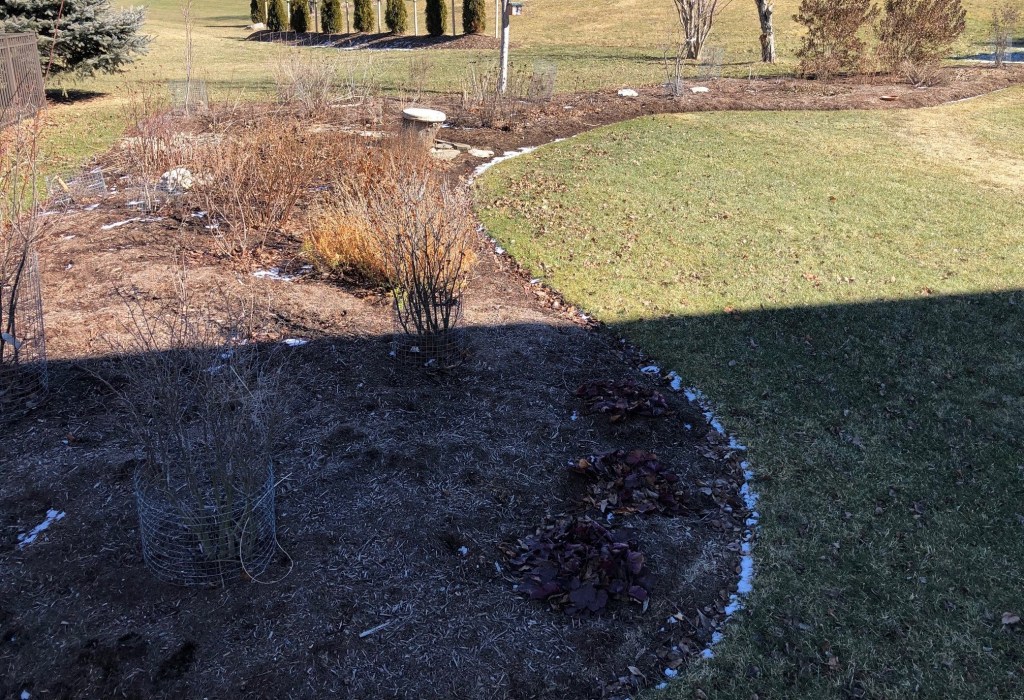
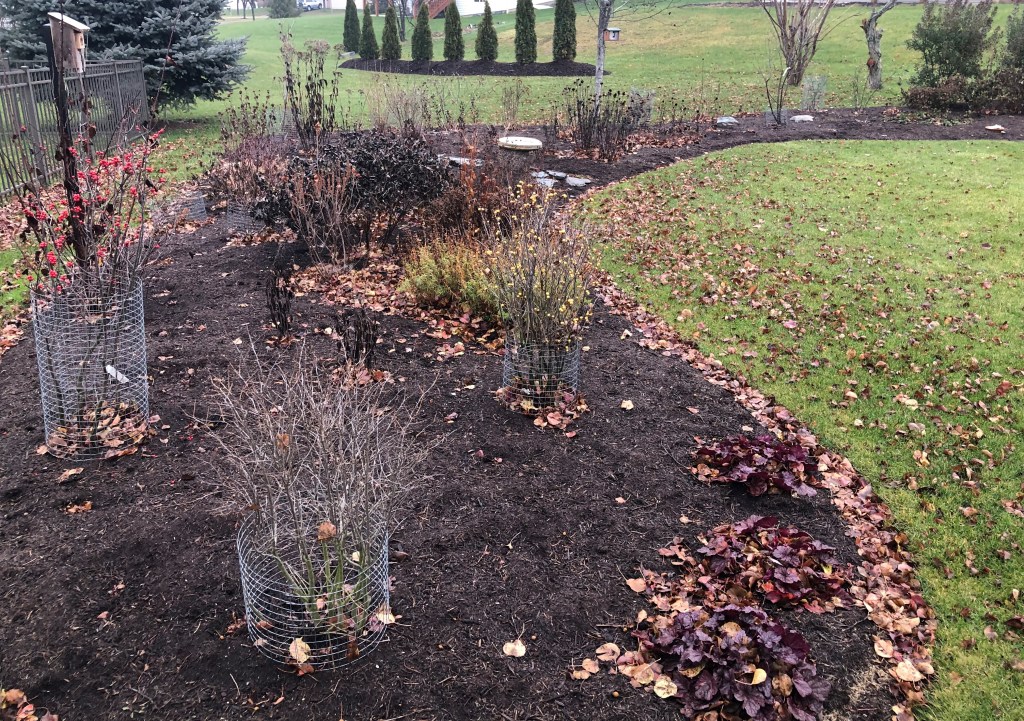
As for the garden, none of the dead plant material was removed. Leaf litter from the lawn was gathered and added underneath some of the plants where the soil was more bare. Skipping any garden clean-up for the Spring will provide for the overwintering of insect life and provide harborage for birds.
Summer was busy and I did not take the time to post. But this is not to say there wasn’t a lot of activity. Plants were added or moved around. The rabbits were active so there was cursing followed by more small fences being added. The weather was hot and dry. Not as much weeding was done as needed.
It feels that once we get past the last frost date, May 15, garden season starts in earnest. This is not to say that some serious work has not already taken place, but now we push headlong into our garden plans. And the weather has been nearly perfect with cool temperatures and ample rain, although perhaps too much of that rain on the weekends.
Trees – I planted two trees near the location where two trees were removed (to some degree).
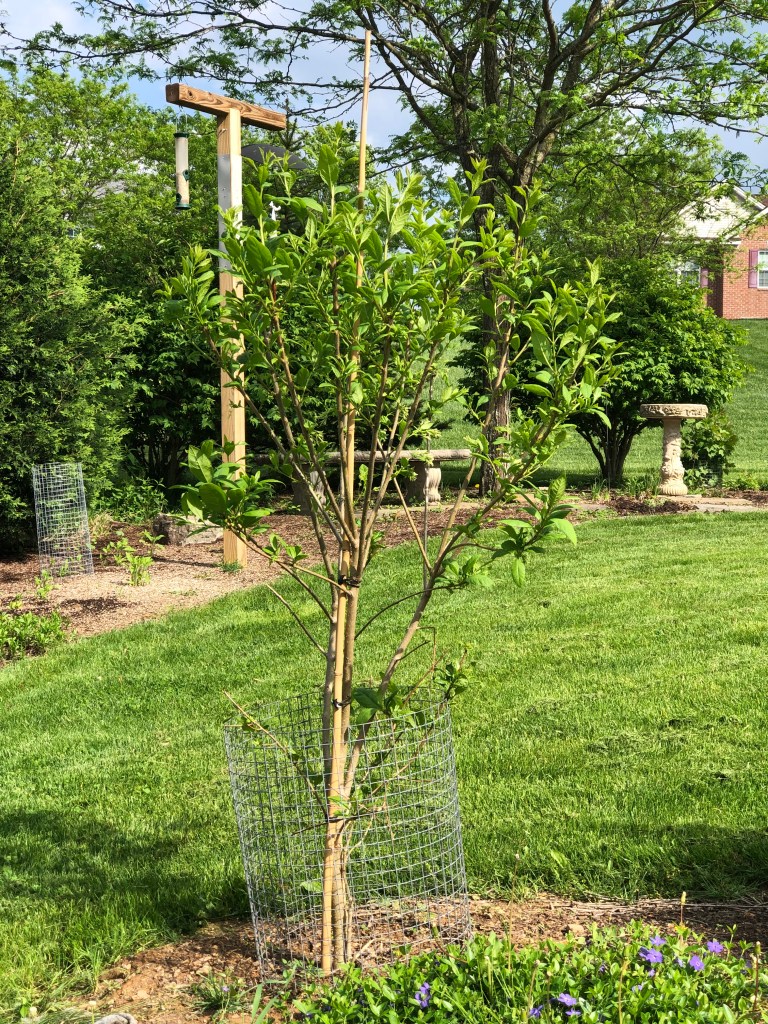
Chionanthus virginicus – White Fringetree
The White Fringetree was planted over a month ago, and it seemed as though the leaves were never going to pop. This tree replaced a weeping cherry tree that had reached its shelf-life.
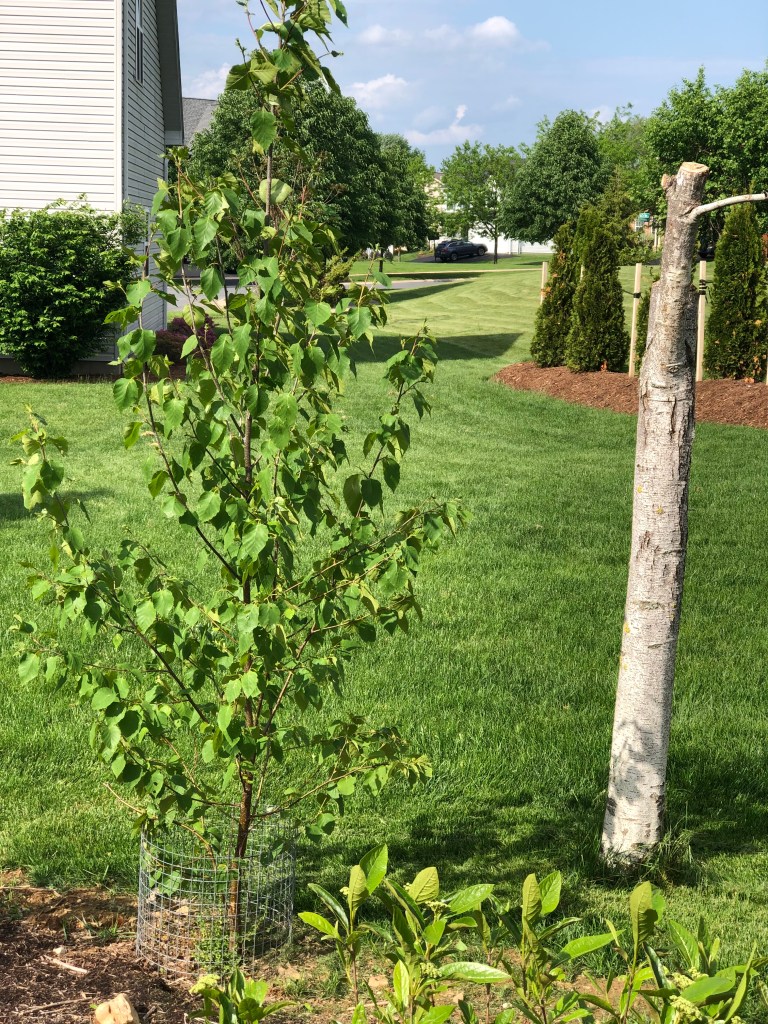
Betula papyrifera – Paper birch
The Paper Birch is replacing the Aspen tree that developed an incurable disease. I did leave the trunk of the Aspen in place as a snag (snags provide habitats for wildlife, and in this case, a landing spot for birds).
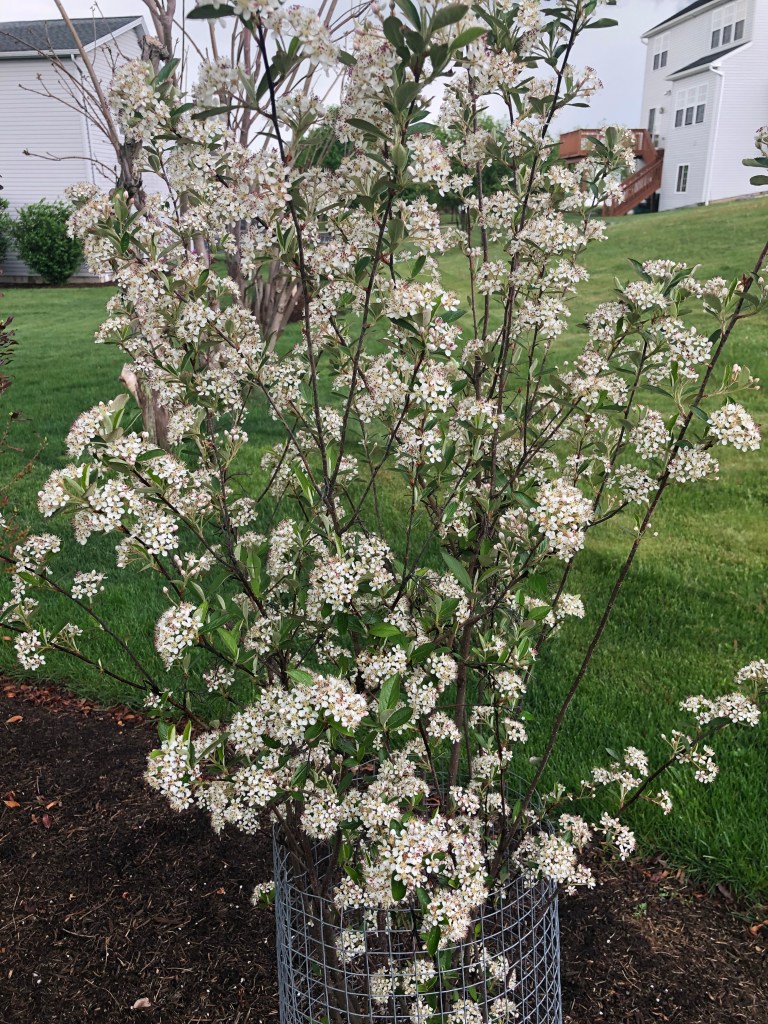
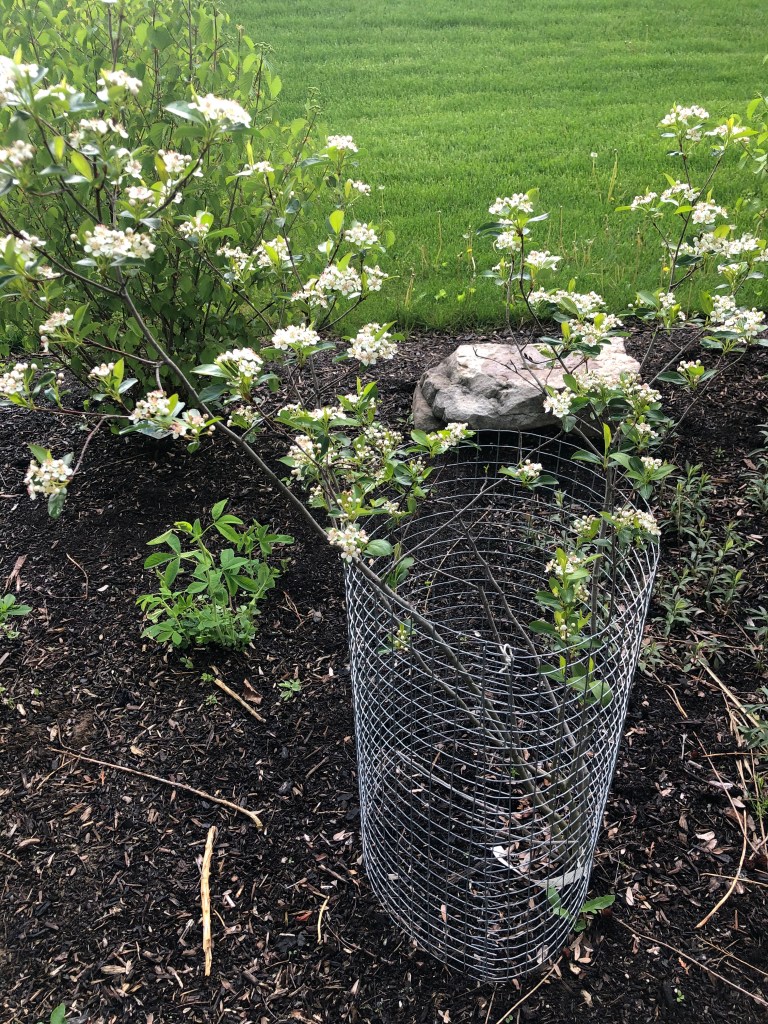
In addition to these two trees, I added one more Red Chokeberry and a very small Serviceberry.
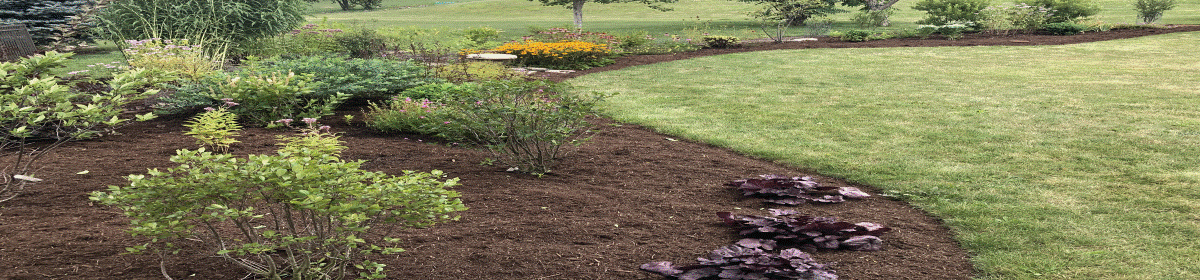
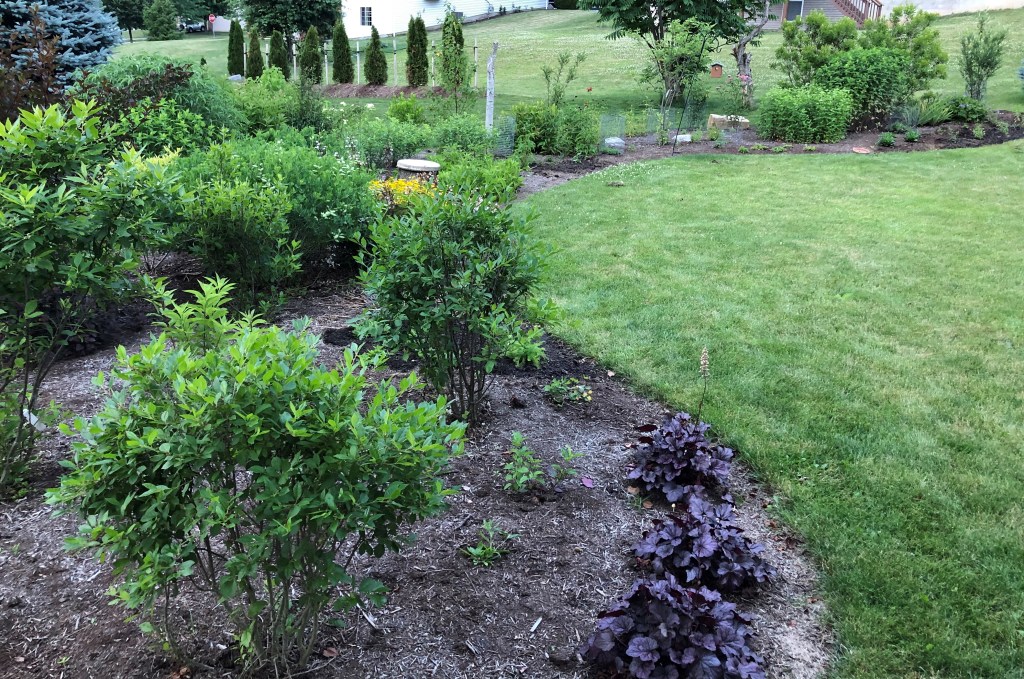
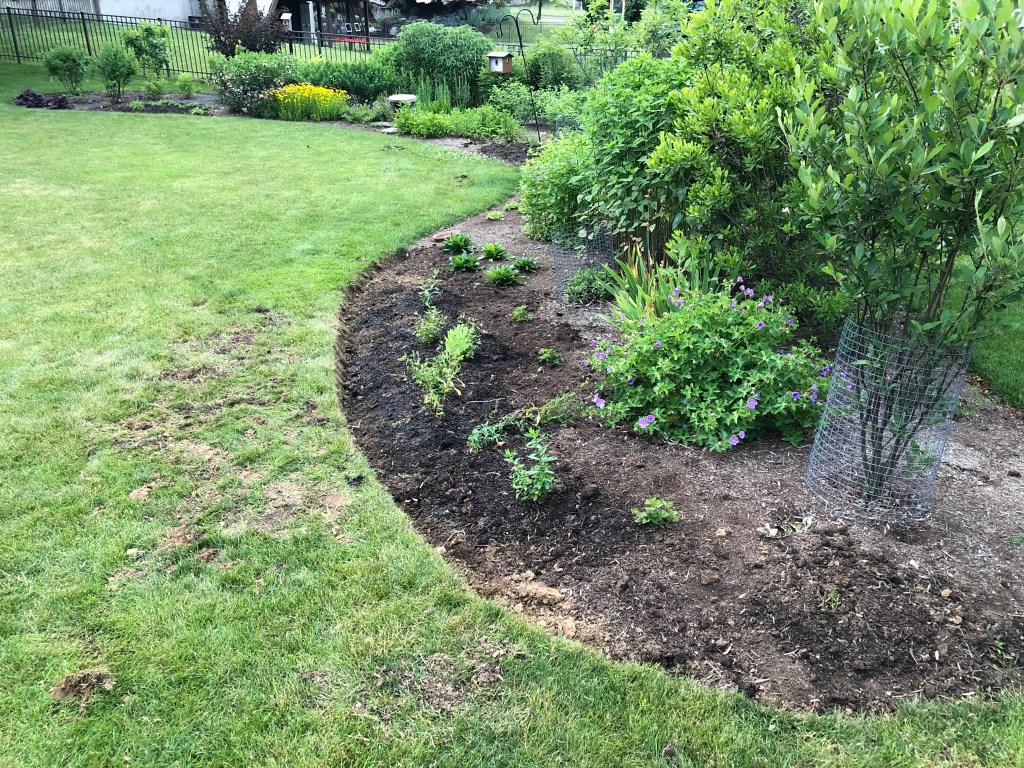
Plants – I added several new species of perennials. As I put in the garden, I left plenty of space between the plants because I really did not know how fast some of these plants would grow. Now that I have somewhat an idea of growth patterns, I realized I needed to add additional plants to fill in some of the spaces. Plus, this past year I expanded a few sections, and those sections now were ready for additions.
Blephilia ciliata – Downy wood mint (10)
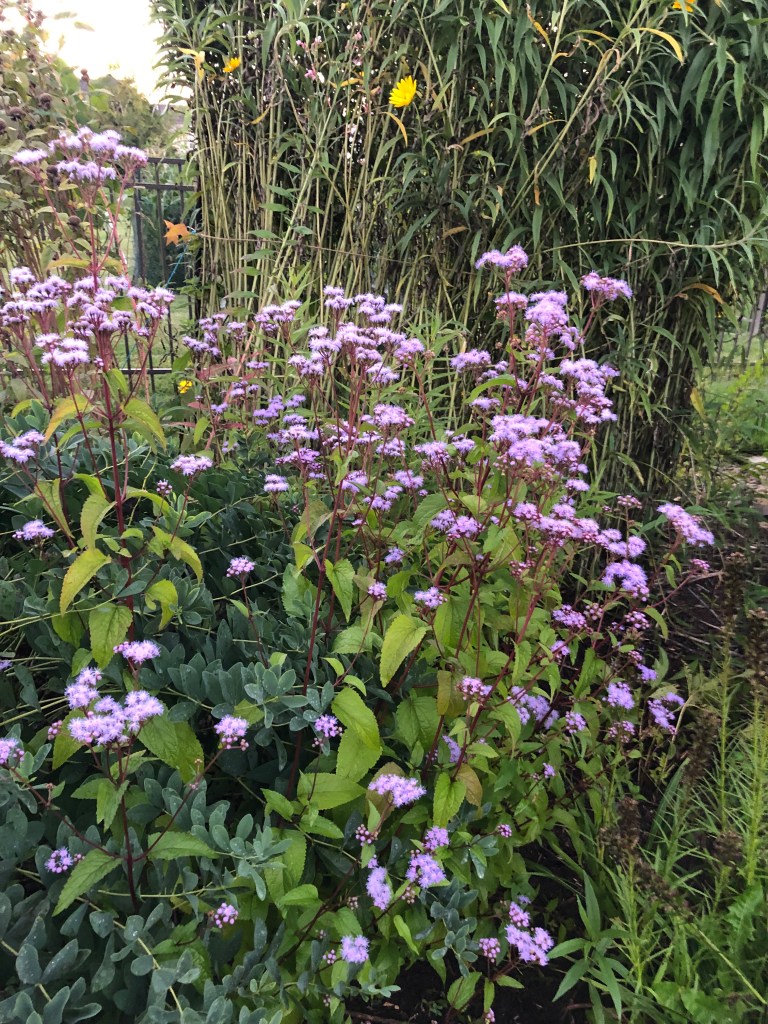
Conoclinium coelestinum – Blue mist flower (3)
Symphoricarpos orbiculatus -coralberry (1)
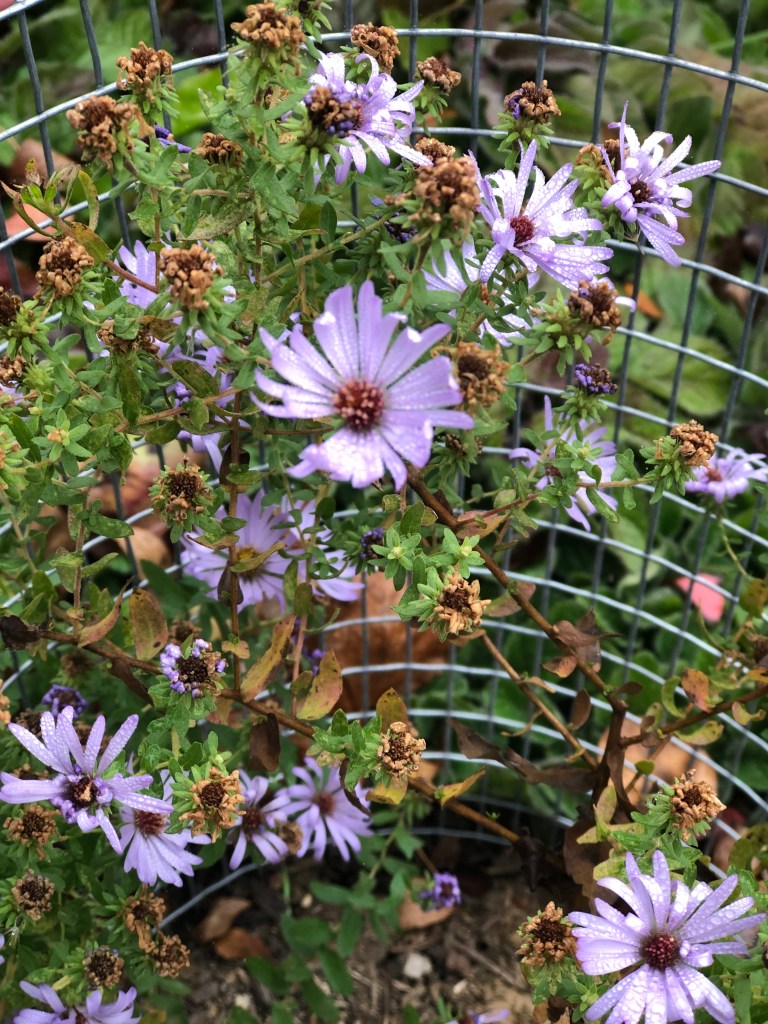
Symphyotrichum laeve – Smooth aster (1)
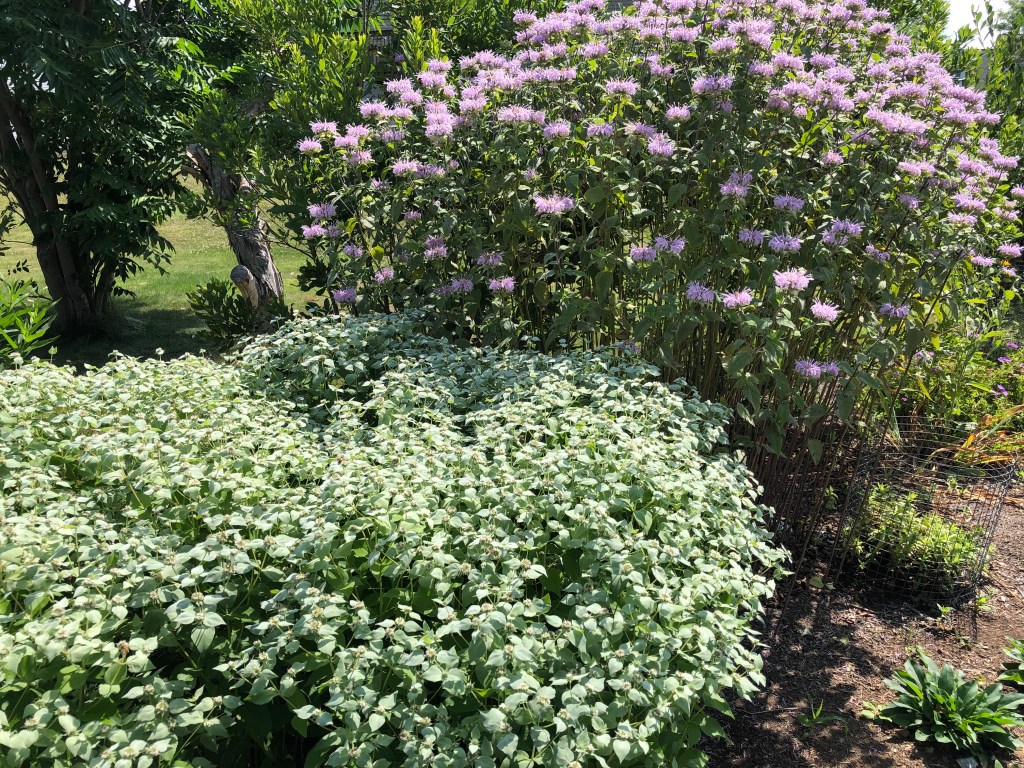
Pycnanthemum incanum – Hoary mountain-mint (1)
Vernonia hybrid – Ironweed (1)
Penstemon digitalis – Foxglove Beardtongue (5)
Gillenia trifoliata -Bowman’s Root (2)
For many species, I purchased just one as a trial. Most were purchased locally, although five species came from Tait Farms, located just south of State College. They had a really nice selection of native plants with most of those plants originating from Centre County. They were also in small containers, and with this, the pricing was lower. (Easier for me to give them a shot).
The criteria used for selecting these plants – Full to partial sun, dry to average moisture (although the blue mist flower and Bowman’s root are listed as preferring soil conditions that have a bit more moisture, so we’ll see if where i placed it will be sufficient.)
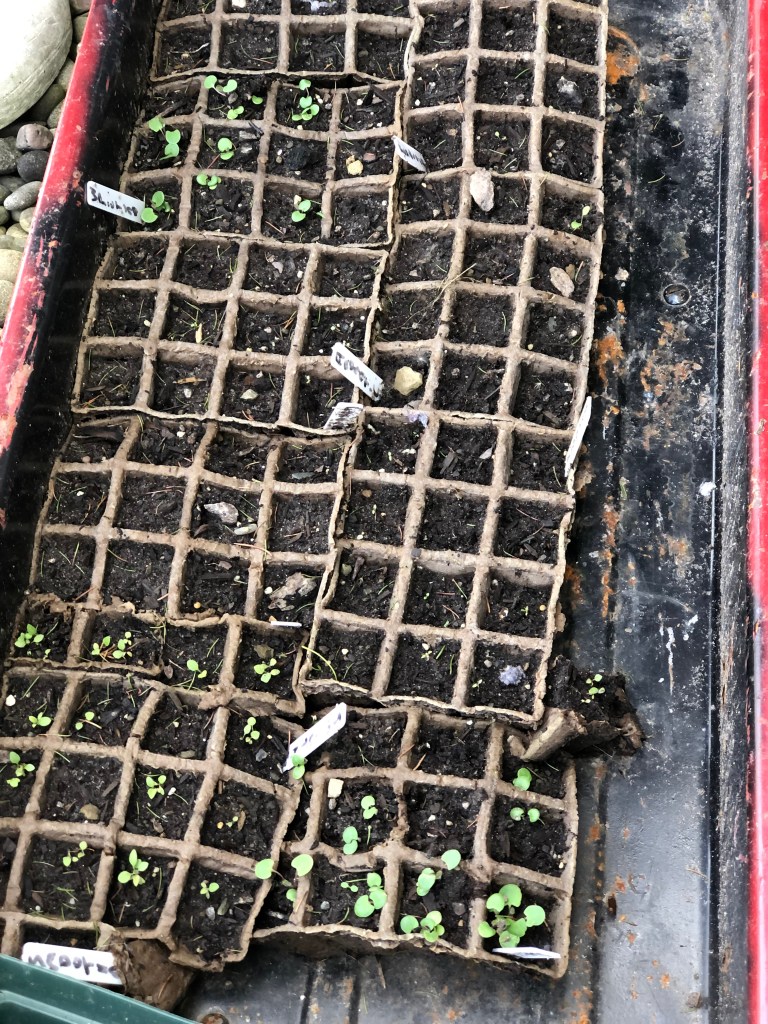
Seeds – My first foray into growing native plants from seed has been…underwhelming. I realize now that this is not like growing your basic varieties of annuals. I think I will leave the growing-from-seed thing to the professionals, although I will see this out.
Some signs of life, but not enough to justify the time.
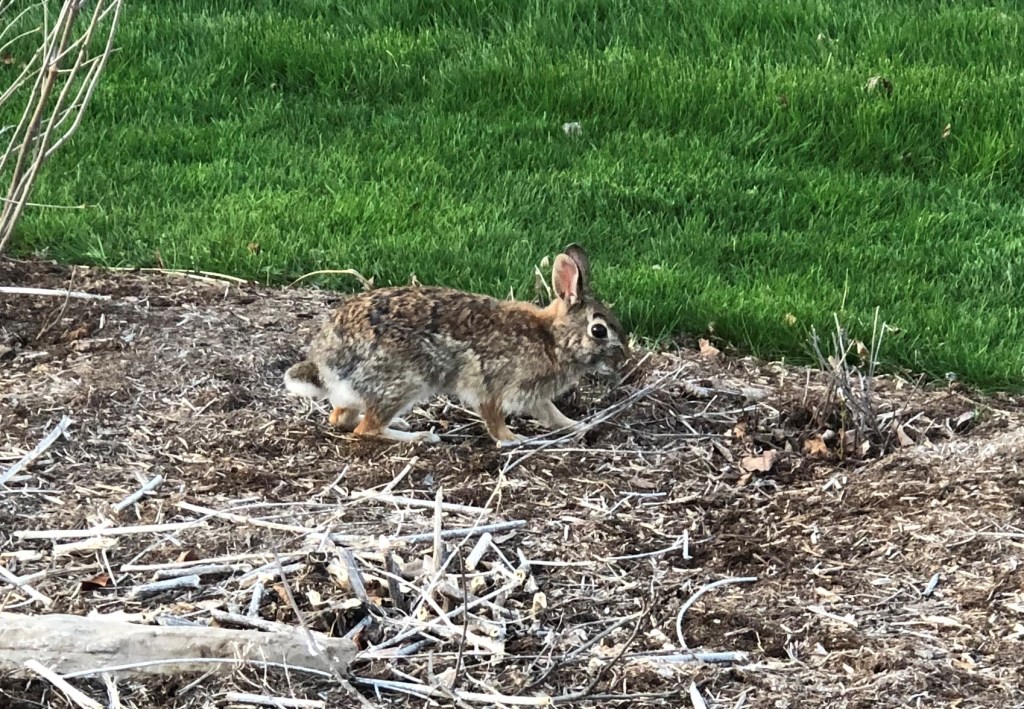
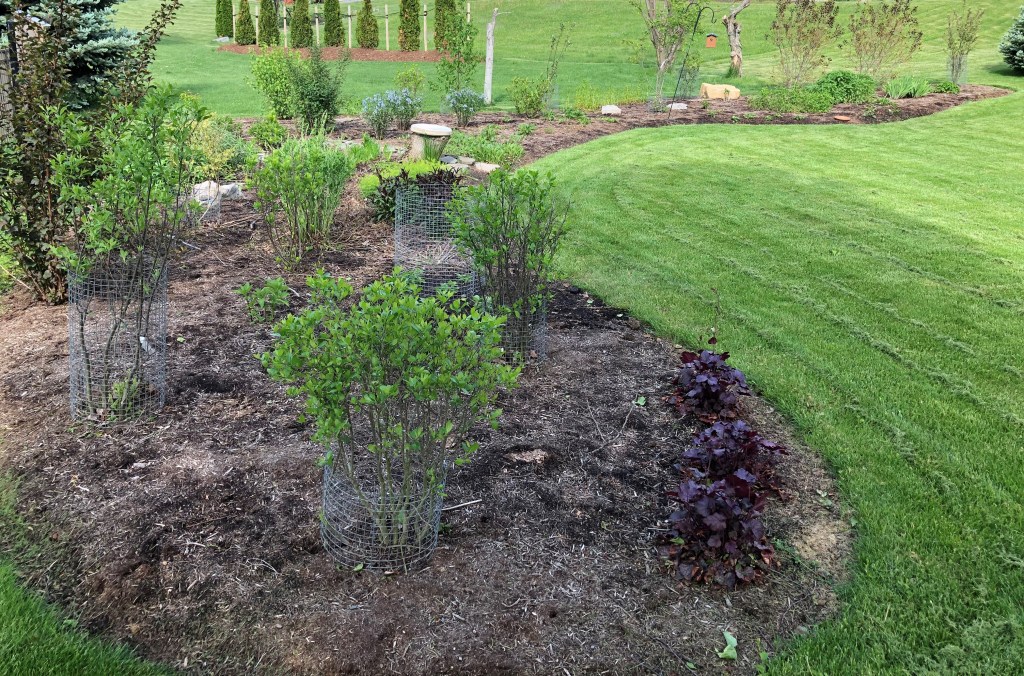
Rabbits – my hairy foes have been nibbling a bit too much this year. I momentarily removed on of my circular fences that was protecting a New Jersey Tea plant. It had blown over and instead of putting it back in place, I decided to wait until the next day. Huge mistake. The next day it was nothing but a stub of a plant, essentially cut off at the ground’s surface.
Deciding I cannot cage everything, I purchased Liquid Fence – deer and rabbit repellent. Not sure how well it will work, but I can say that it is one of the most foul smelling substances.
The rabbit just does not care that I am standing right there.
Coming to Life – Great to see what some rain and warmth will do.
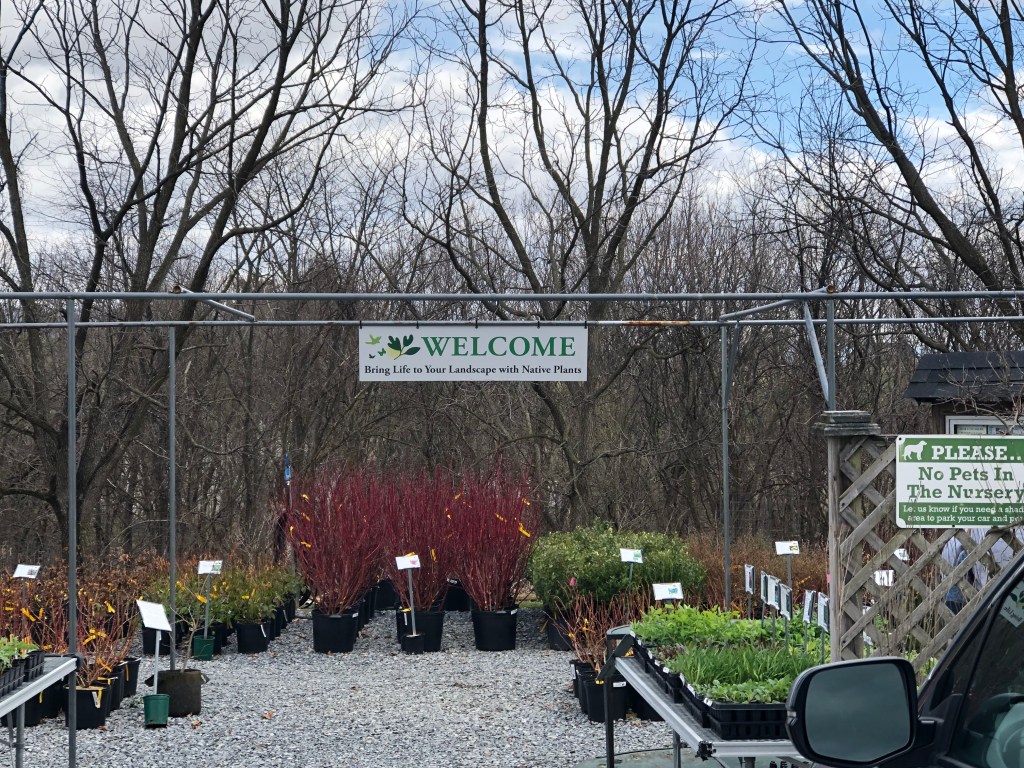
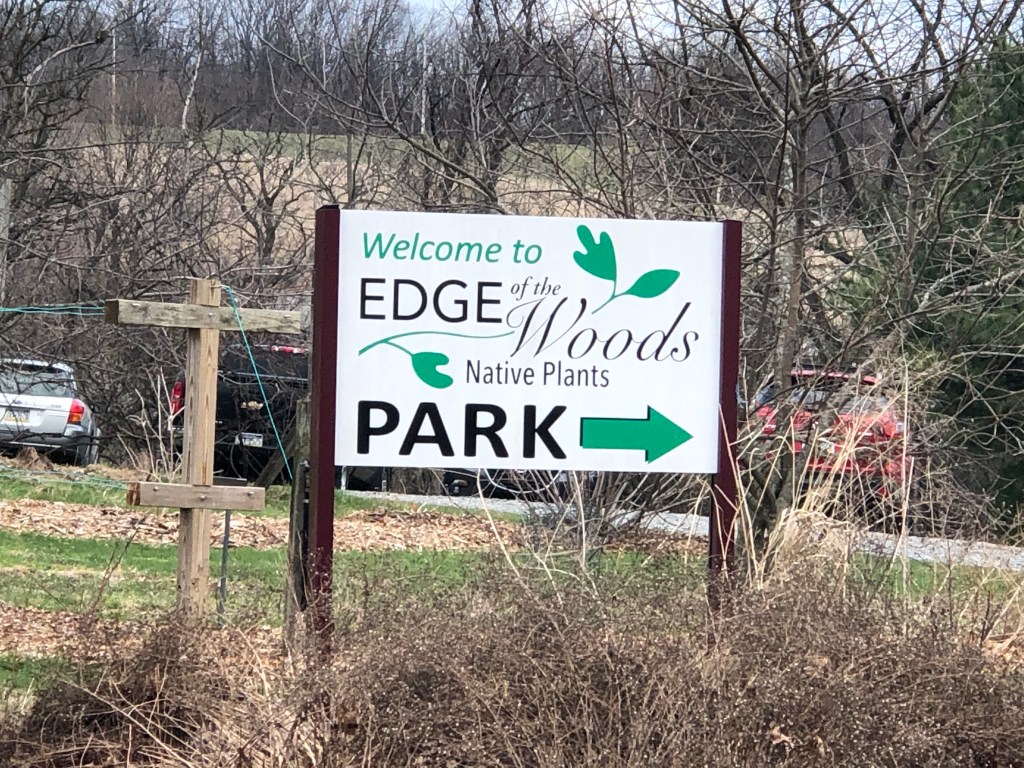
Spring is here and with almost-warm weather, it is time to add some plants. On a recent trip, I was fortunate to be traveling close to a nice native garden nursery in the Lehigh Valley. Edge of the Woods Nursery in Orefield, PA had a easy to view list on their internet site. I was able to pre-order 3 plants, and while there, picked up a few additional plants.
One thing I liked about this nursery was that they had smaller, and thus more affordable trees and shrubs. Another benefit of the smaller trees was that I was able to get them into my vehicle. The staff there was super helpful and didn’t seem to mind my never ending questions.
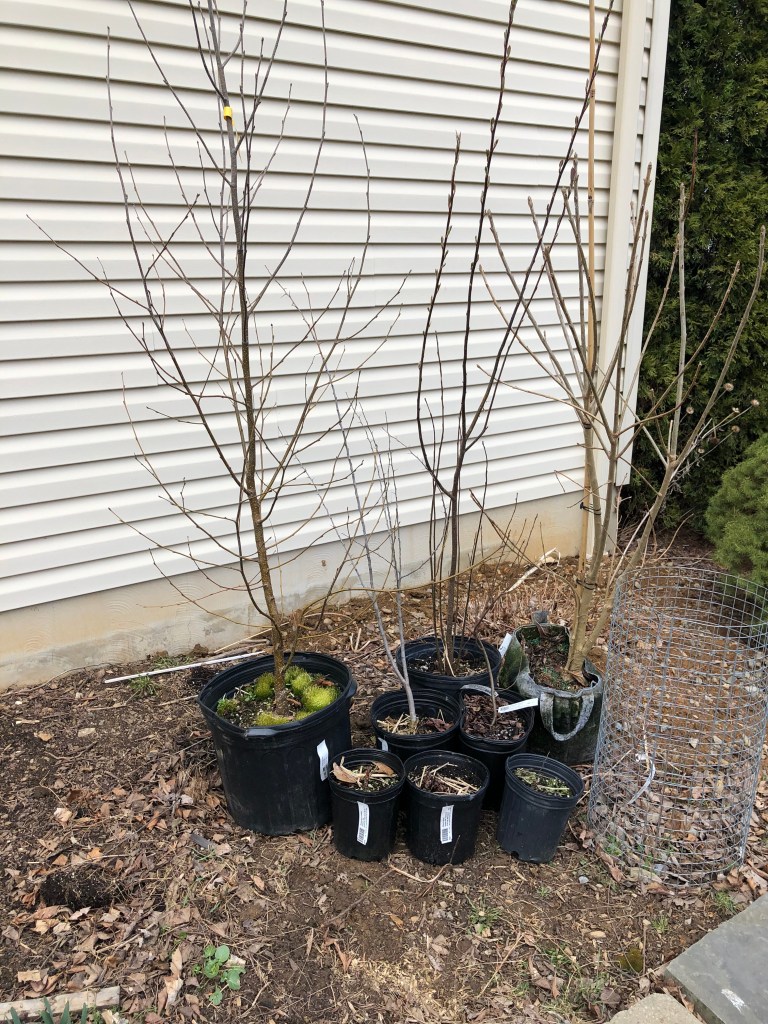
The list of plants I purchased included:
Paper Birch, Betula papyrifera – this tree will replace the Aspen tree that I removed.
American Fringetree, Chionanthus virginicus – this tree will replace the weeping cherry.
Red chokeberry, Aronia arbutifora – added this second one because it is a great looking plant
Serviceberry, Shadbush, Amelanchier canadensis – This will replace the dogwood tree that was removed after a rabbit girded the trunk.
Bowman’s Root, Gillenia trifoliatus – a perennial in the 2 to 3 foot range with white flowers in late spring.
Other plants purchased include a very small Hawthorne tree, an Upland Ironweeed (Vemonia glaca) and a white aster – Aster divaricastus
February’s weather has fluctuated from the 20’s to the 50’s, although most days have been below freezing. On the warm days, one feels like Spring is nearly here, only then to be reminded by freezing temperatures that there is a long way to go. Today, high winds announce that a few warm days are in store, but they are set to be followed by more days below freezing.
Planning has begun for Spring though. One of the first orders will be to remove the Aspen tree. It has shown signs of disease and there is no use in prolonging the inevitable, so it will be removed, well, mostly removed. A snag, or a partial tree, will be left in place to provide a landing spot for birds.
The weeping cherry will also be removed. As a grafted tree, its time has come as evidenced by an ever increasing die off of branches on the far side of the tree. I hope to replace this with a White Fringed tree, if one can be found locally. This is a small native tree that is said to be able to handle clay type soils and plenty of sun.
All of the plants were left in the garden over winter. Once temperatures are over 50F, the litter will cleaned up. Leaving the litter in place supports insect life.
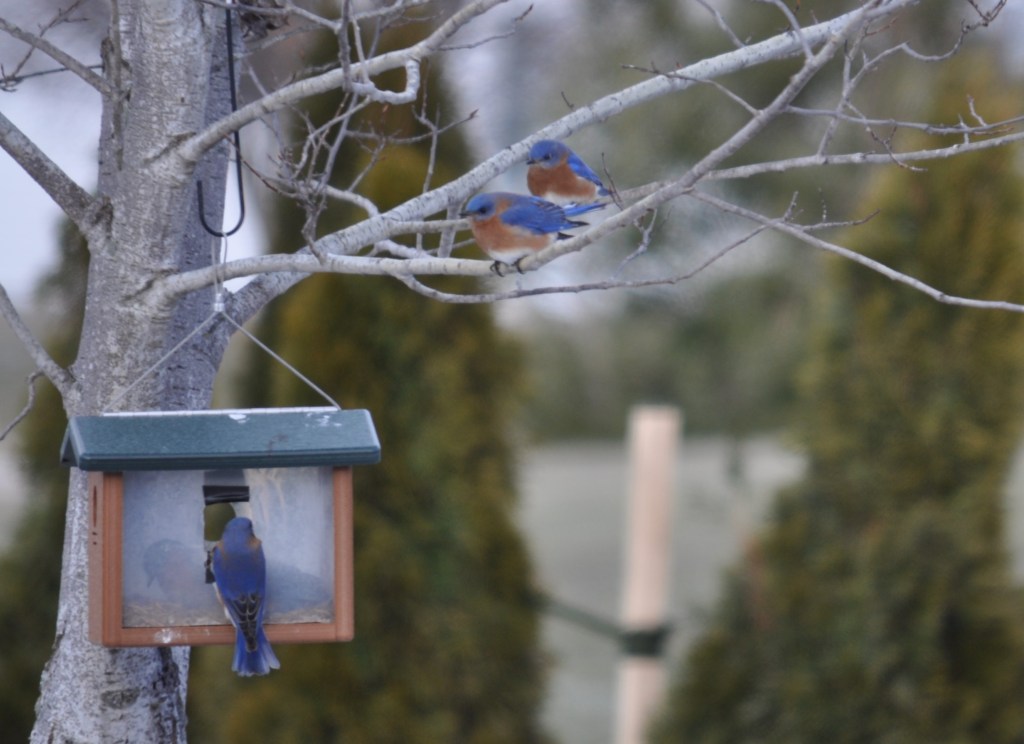
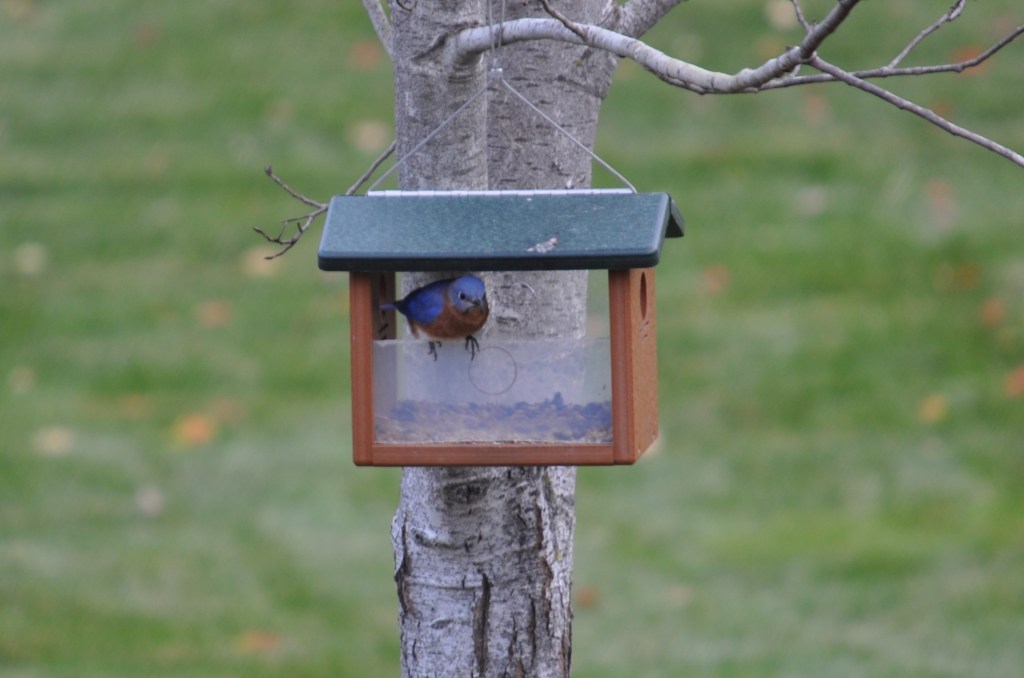
The cold weather is here, but thankful to have plenty of winged visitors. In addition to Bluebirds who have been feeding on the dried meal worms, there are Dark-eyed Junco, Black-capped Chickadees, Cardinals, House Finches, Mourning Doves, and a few House Sparrows. On occasion, there have been a few Robins. Of course, there are the crows and the daily visit from the Coopers Hawk.
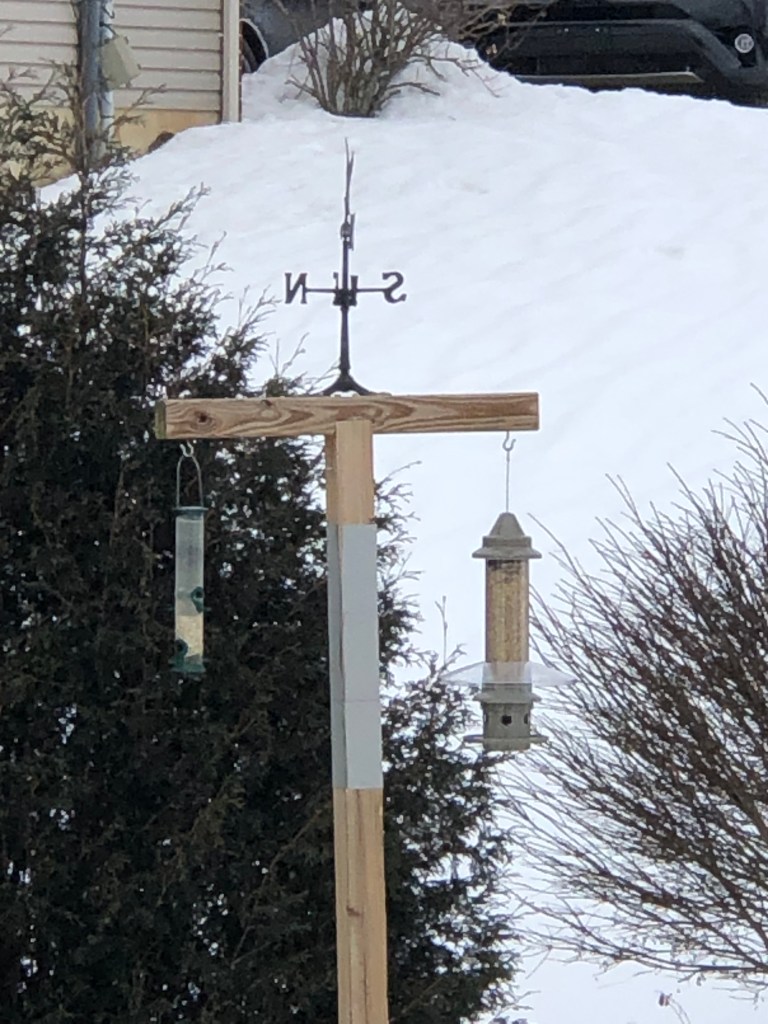
I installed some aluminum flashing on the feeder pole in an attempt to stop the squirrel from feeding on the seed. Hopefully, this will reduce the amount of daily theft that occurs.





 Pennsylvania Native Garden Journey