Originally posted Sept 10, 2020
- Water requirements are more manageable – The fall is not as hot and there is less worry for the new plants becoming heat stressed. In addition, water requirements are shortened in that the plants will soon become dormant as the temperatures drop.
- Ready for Spring – Plants are already in the ground when Spring comes around, so they are ready to being the growing process.
- One can take advantage of discounted pricing – Many garden centers will have end-of-the-season sales and clearances. While the types of plants available for sale may be limited, one should be able to find something they like in order to get their garden started.
- Start your foundation – Get plants that can serve as the foundation of your new garden.
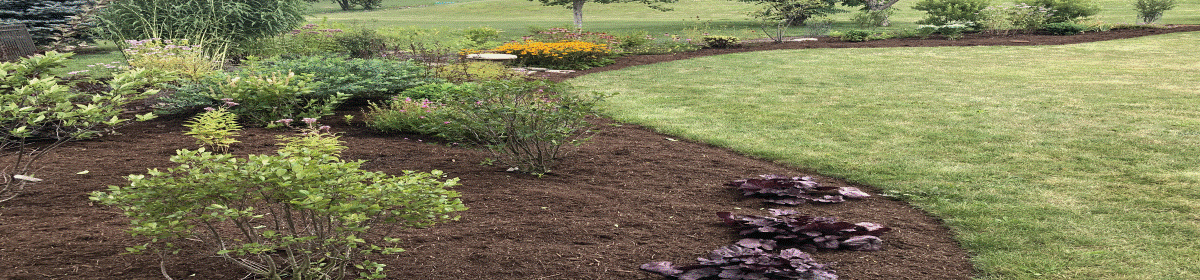
Last fall, September of 2019, I decided to start a native garden in my yard. There were some major benefits to beginning the process during this time of the year. The garden space ended up being larger than initially planned. But in the end, the size will depend on the space you have available as well as the time you have for maintaining. The key is getting it started.
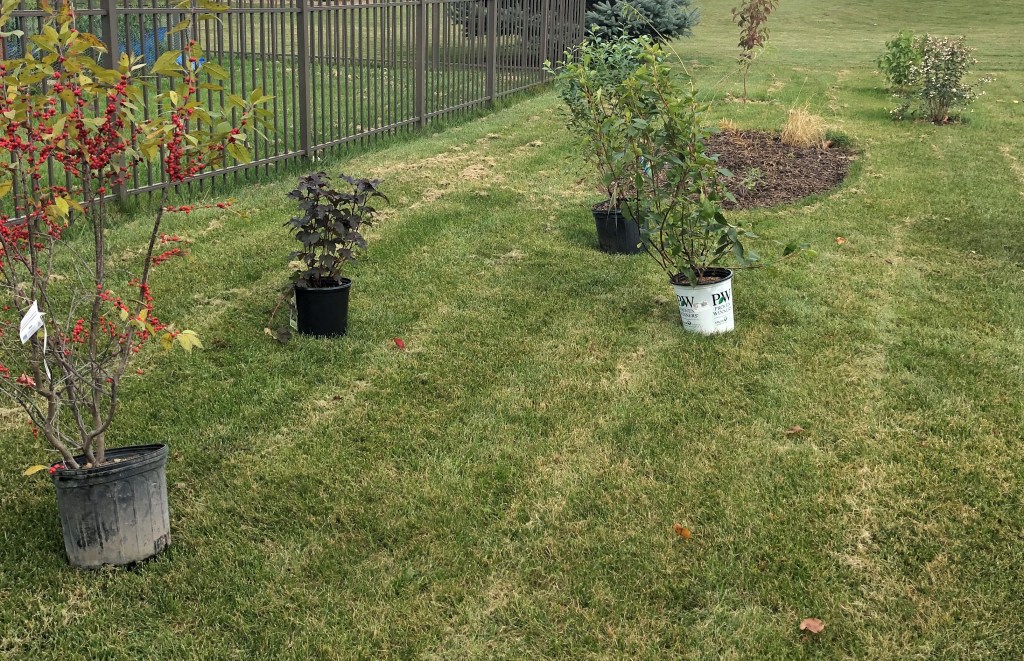
I focused on getting shrubs in the fall that would serve as foundation plants for my garden. At this time, I was not certain of the exact size of the garden, but knew the rough boundaries. I ended up with 7 shrubs and a Dogwood tree.
- Winterberry
- Ninebark
- Summersweet (2)
- Blueberry
- Snowberry
- White Dogwood
- Arrowwood Viburnum
A little later in the Fall, I added additional shrubs. (Of course I had to expand my initial garden borders.)
- Black chokeberry
- Red chokeberry
- Serviceberry
- Viburnum Witherod
- Winterberry (male)
I am happy to say that all survived the summer and provided a nice springboard into the Spring plantings.
Notes:
- Ample space was made between the plants to allow for growth.
- This location get 6+ hrs of sun, and the soil has a high clay content, so plants were chosen with that in mind.
- The soil around the plant root ball was amended, but not the entire garden space. Rather, after planting, the entire growing area was mulched using cardboard to cover and eliminate the grass (I did have to re-mulch the area in the spring where some grass did poke through.)
 Pennsylvania Native Garden Journey